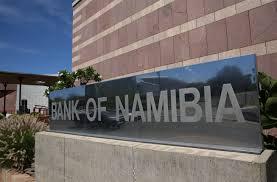
The Bank of Namibia kept its benchmark interest rate unchanged at 6.50 percent for a third consecutive meeting in April 2026, opting for caution as global uncertainty linked to Middle East tensions clouds the inflation and growth outlook.
- +Namibia holds rates for third straight time as Middle East war clouds outlook
The decision underscores the central bank’s dual objective of supporting domestic economic activity while maintaining the Namibian dollar’s one-to-one peg with the South African rand.
The decision underscores the central bank’s dual objective of supporting domestic economic activity while maintaining the Namibian dollar’s one-to-one peg with the South African rand.
Annual inflation eased to 2.1 percent in March from 2.4 percent in February—its lowest level since 2020—offering short-term relief to policymakers. However, the apex bank warned that price pressures are likely to build in the coming months, projecting inflation to average 3.7 percent this year, slightly above earlier estimates.
Policymakers said risks to the outlook are skewed to the upside, driven by exchange rate volatility, potential increases in administered prices, and spillovers from the ongoing global conflict.
Ebson Uanguta, the central bank governor highlighted these concerns, noting that external shocks could quickly reverse recent gains in price stability. The Southern African nation now joins a growing list of African economies—including Kenya, Egypt, Ethiopia, South Africa, Morocco, Angola and Mozambique—that have paused monetary easing as renewed inflation risks complicate policy decisions.
The escalation of tensions involving the United States, Israel and Iran has pushed global crude prices above $100 per barrel since February, raising concerns about prolonged supply disruptions.
Particular focus has been on the Strait of Hormuz, a key shipping route for roughly a fifth of global oil supply, where disruptions have heightened volatility in energy markets.
To cushion the domestic impact, Namibia’s government has reduced fuel levies by 50 percent for at least three months through June. The bank also revised down its growth forecasts for 2026 and 2027, citing weaker performance in key sectors such as metals and diamond mining—critical pillars of the economy.
The South African Reserve Bank recently held its policy rate at 6.75 percent, reinforcing the cautious stance across the region. The country’s decision highlights the tightening policy constraints facing African central banks. While inflation remains relatively contained, external shocks—particularly from energy markets—are limiting room for rate cuts.