Few structural constraints have quietly undermined Nigeria’s economic potential as profoundly as the nation’s dysfunctional land administration system. In a nation of more than 220 million people with enormous housing, industrial and agricultural needs, access to land for residence and business remains unnecessarily complicated, expensive and exclusionary.
- +Land reform: The missing link in Nigeria’s economic prosperity
More than four decades after the enactment of the Land Use Act, Nigeria still struggles with a land tenure system that frustrates investment, slows urban development and locks enormous wealth outside the formal economy.
More than four decades after the enactment of the Land Use Act, Nigeria still struggles with a land tenure system that frustrates investment, slows urban development and locks enormous wealth outside the formal economy.
The implications are enormous. Land is the foundation of virtually every productive activity (housing, agriculture, manufacturing, mining, logistics and infrastructure). Yet Nigeria operates a land ownership and titling framework that makes it extremely difficult for individuals and businesses to secure legal titles or use land as collateral for financing. Instead of functioning as an economic enabler, land administration has become a barrier to prosperity.
At the heart of the problem lies the Land Use Act of 1978, introduced during the military administration of Olusegun Obasanjo. The law vested control of all land in each state in the hands of the governor, who administers it in trust for the people. While the intention was to make land accessible and prevent speculation, the system has evolved into a bureaucratic confusion.
Today, obtaining a certificate of occupancy, perfecting land titles or transferring property can take months, or even years, depending on the state. The cost of registration, consent fees, stamp duties and other charges can amount to as much as 15-30 percent of the property value in some states. For small businesses, developers and ordinary citizens seeking to build homes, these costs and delays make formal ownership unattainable.
The result is a largely informal property market. Estimates by housing experts suggest that Nigeria has a housing deficit exceeding 20 million units. Yet only a small fraction of the nation’s housing stock is formally registered or financed through mortgages. Industry analysts say that less than 10 percent of property assets in Nigeria are formally titled, leaving the overwhelming majority outside the banking system.
This means trillions of naira in real estate assets cannot be used as collateral to obtain loans for business expansion or investment. In economic terms, these properties become ‘dead capital’, valuable assets that cannot generate financial leverage because they are not formally documented.
In developed economies, real estate constitutes a major pillar of financial markets. Property assets underpin mortgage lending, infrastructure financing and investment vehicles such as real estate investment trusts. When property rights are clear and transferable, land becomes a powerful instrument for wealth creation and economic growth.
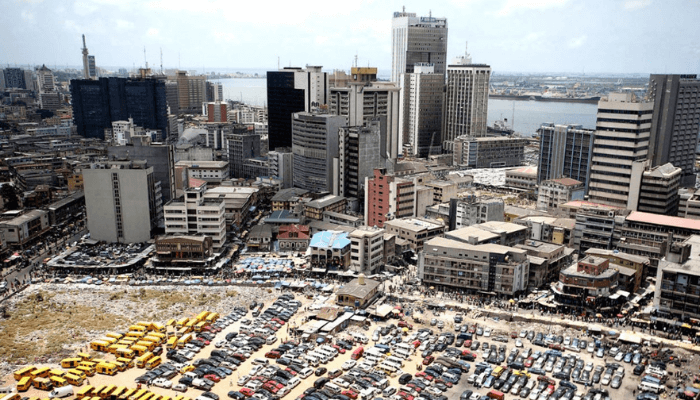
Nigeria’s inability to unlock this potential has far-reaching consequences. The real estate sector, which should be one of the largest contributors to employment and investment, remains underdeveloped relative to the nation’s population and urbanisation rate. Cities like Lagos, Abuja and Port Harcourt continue to experience severe housing shortages, rising rent costs and the proliferation of informal settlements.
Attempts to reform the system have been sporadic and largely unsuccessful. During the administration of Umaru Musa Yar’Adua, the government initiated a land reform programme aimed at modernising land records and simplifying ownership processes. The initiative, however, stalled before meaningful implementation.
Similarly, Goodluck Jonathan attempted to audit government land assets and improve transparency in land administration. But like earlier reforms, the effort failed to address the deeper structural issues embedded in the Land Use Act.
The consequences extend far beyond housing. Agriculture, the sector expected to diversify Nigeria’s oil-dependent economy, also suffers from insecure land rights. Farmers often rely on informal arrangements that discourage long-term investment in irrigation, mechanisation or large-scale cultivation. Without secure land titles, agricultural producers struggle to obtain credit from financial institutions. Nigeria’s industrialisation ambitions face similar constraints.
Sadly, Nigeria sits within a continent that possesses enormous unused agricultural and industrial land. According to the World Bank, sub-Saharan Africa holds nearly half of the world’s uncultivated but arable land. If properly managed through clear land governance systems, these resources could significantly reduce poverty, create jobs and stimulate economic growth.
But without reform, Nigeria risks wasting this advantage.
The way forward requires both legislative courage and administrative innovation. Nigeria must confront the limitations of the Land Use Act. Amending the law, now embedded in the constitution, would allow for decentralised, efficient and transparent land administration.
States must accelerate land digitisation and cadastral mapping. Digital land registries would drastically reduce disputes, fraud and bureaucratic delays. Some states, particularly Lagos, have begun modernising their land records, but progress remains uneven nationwide.
The cost of land registration must be significantly reduced, and the nation should develop a nationwide property database linked to financial institutions. Once land titles are verifiable and transferable, banks can confidently expand mortgage lending and property-backed financing.
Above all, land governance must become transparent and accountable, as corruption, multiple allocations and land grabbing remain persistent problems in several parts of the nation.