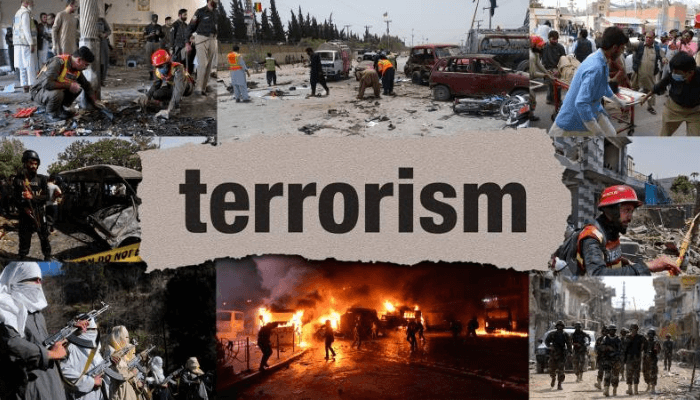
The just-concluded Antalya Diplomacy Forum 2026 in Türkiye has reinforced a growing international consensus that Nigeria’s war against terrorism—particularly in the North-East—is no longer a domestic struggle. Instead, it is a global security priority requiring urgent, coordinated action.
- +Nigeria’s war on terror becomes international priority
Held from April 17 to 19, the forum brought together participants from 155 countries, including 21 heads of state and 61 ministers.
Held from April 17 to 19, the forum brought together participants from 155 countries, including 21 heads of state and 61 ministers. Security analysts said the theme, “Mapping Tomorrow, Managing Uncertainties,” aligned closely with Nigeria’s need to confront evolving threats from transnational terror networks.
Defence Minister Christopher G. Musa used the platform to advocate for stronger global collaboration in tackling insecurity across West Africa and the Lake Chad Basin. He emphasised that while Nigeria has sustained military pressure on insurgent groups, the complexity of modern terrorism—especially its financing—demands deeper international involvement.
A major concern raised by Nigerian officials was the alleged flow of funds to terrorist groups from external sources, particularly from parts of the Middle East. Although no country was publicly named, the issue reportedly dominated several high-level and closed-door discussions.
Officials stressed that defeating insurgency requires more than battlefield victories. They called for greater transparency and accountability in international financial systems, warning that charities and informal transfer networks could be exploited to sustain extremist activities in Africa.
Outcomes from the forum indicate a shift from rhetoric to action. Nigerian delegates disclosed a “definitive consensus” among international partners that terrorism in Nigeria constitutes a shared global threat, which is expected to drive enhanced intelligence-sharing and tighter financial regulations.
Central to this approach is the adoption of a “shared responsibility” framework. Under this model, Nigeria’s domestic counter-terrorism operations would be supported by coordinated international efforts, ensuring that intelligence gathering, surveillance, and enforcement are aligned across jurisdictions.
In an interview in Kano, Frontier for Peace Advocacy and Governance Initiative (FPAGI) executive director Mercy Musa said discussions at the forum mark a departure from previous engagements where commitments often remained largely declaratory. She noted that the meeting reflects a growing willingness to back diplomatic positions with concrete steps.
The renewed attention is also linked to the broader implications of instability in the Lake Chad region. Musa said the crisis has fueled migration, disrupted economic activities, and contributed to the spread of transnational crimes such as arms trafficking. Insurgent groups like Boko Haram and ISWAP continue to exploit these vulnerabilities.
However, security analysts noted that alleged foreign-linked funding presents a delicate diplomatic challenge. Many countries at the forum maintain strong ties with Nigeria, necessitating a balance between cooperation and accountability. Experts warn that without mechanisms to disrupt illicit financial flows, military gains may be difficult to sustain.
For Nigeria, the key takeaway is that the fight against terrorism is entering a new phase defined by collective action and measurable outcomes. Commitments made in Antalya are expected to translate into joint operations, stronger intelligence partnerships, and stricter oversight of financial systems.
As the global community shifts toward implementation, expectations remain high. For millions in northern Nigeria affected by years of insurgency, the success of these efforts could determine the pace of recovery and long-term stability. The forum has reframed Nigeria’s campaign as a critical front in the global fight against terrorism.