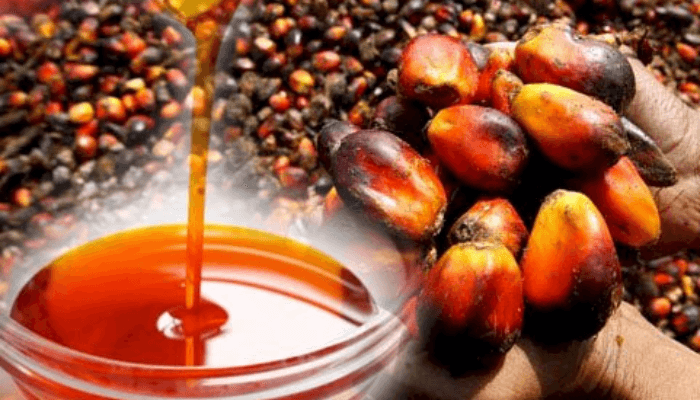
Before Malaysia’s palm oil boom, the golden red fruit thrived in Nigerian soil, perfuming kitchens and shaping household diets with a taste few could resist.
- +Palm oil: lessons for Nigeria from Malaysia
Over time, however, that same crop journeyed across continents to Southeast Asia, where it found new life in Malaysian plantations.
Over time, however, that same crop journeyed across continents to Southeast Asia, where it found new life in Malaysian plantations. Today, Malaysia stands as a global powerhouse in palm oil exports, while Nigeria, once a dominant force, increasingly looks outward to meet its needs.
Nigeria currently produces between 1.2 million and 1.5 million tonnes of palm oil, far below its estimated domestic demand of about 2.4 million tonnes. The shortfall is routinely bridged through imports from Malaysia and other producing nations. This reversal raises a pressing question. How did a country that once introduced oil palm to Malaysia become dependent on imported supply?
Historically, Nigeria’s position was formidable, because In 1965, when global palm oil demand stood at roughly 1.5 million tonnes, Nigeria accounted for about 43 percent of the market. Today, with global demand at about 14 million tonnes, the country holds just seven percent.
“Due to neglect and lack of strategic investment in the sector by successive governments, Nigeria’s production capacity has dwindled, adding that the country ranks fifth globally in palm oil production, lagging behind Indonesia, Malaysia, Thailand, and Colombia,” noted Alphonsus Inyang, president of the National Palm Produce Association of Nigeria.
Meanwhile, Malaysia’s industry continues to expand. For instance, in 2025, the country recorded its highest ever crude palm oil production at 20.28 million tonnes, a 4.9 percent increase from the previous year, according to the Malaysia Palm Oil Council (MPOC).
The shift in trade patterns is equally striking as sub-Saharan Africa has now overtaken South Asia and the Asia Pacific to become the largest importing region for Malaysian palm oil, exposing a widening opportunity gap for Nigerian investors.
According to the MPOC 2025 annual report, imports into sub-Saharan Africa rose by 11.9 percent to 4.12 million tonnes. Nigeria itself posted a notable increase, with imports climbing by 15.1 percent to 285,825 tonnes, driven by strong domestic consumption. Kenya led the surge, emerging as the world’s second largest individual importer of Malaysian palm oil in 2025, with volumes reaching about 1.21 million tonnes.
Malaysia’s secret, Nigeria must learn from Malaysia’s palm oil boom has been defined by deliberate strategy and sustained momentum, driven by a mix of market coordination, policy clarity, and aggressive global positioning.
Central to this was a business matching platform that directly connected buyers and sellers, unlocking trade deals and expanding market access. This was reinforced by strong stakeholder engagement and consistent thought leadership, where expert papers and panel discussions addressed health, nutrition, sustainability, market challenges, and policy trends shaping regional demand.
These coordinated moves translated into tangible outcomes. In 2025 alone, Malaysia’s palm oil sector generated about $24 billion in revenue, underpinned by strong global demand, strengthened export linkages, increased trade confidence, and deeper on ground market visibility. “In order to grow, the seed must take deep, strong and unshaken root and once that is done, the root will share its growth with the world,” the MPOC 2025 report stated.
Beyond trade strategy, Malaysia anchored its growth on credibility and sustainability as investments in the Malaysian Sustainable Palm Oil framework and a National Traceability System helped assure global buyers of quality, transparency, and environmental compliance, further solidifying its export advantage.
The country also expanded its influence through culture and communication with MPOC deploying edutainment and digital marketing to counter global misinformation and connect with younger audiences. Campaigns such as ‘Palms Up’ and a palm oil themed episode of the popular animation ‘Upin’ and ‘Ipin’ generated hundreds of millions of impressions across Asia and the Middle East, reinforcing both awareness and demand.
While these strategies delivered results for Malaysia, experts caution against direct replication, because Nigeria’s pathway, they argue, must be shaped by its own realities. “Nigeria has to develop models unique to its terrain in other to stand competitively on the global market,” noted Joe Onyiuke, national president of the Oil Palm Growers Association of Nigeria(OPGAN).
Other experts point to the need for renewed investment in replanting plantations, value addition, and strategic partnerships as critical levers to boost productivity, capture more value across the supply chain, and reposition Nigeria within the global palm oil market.