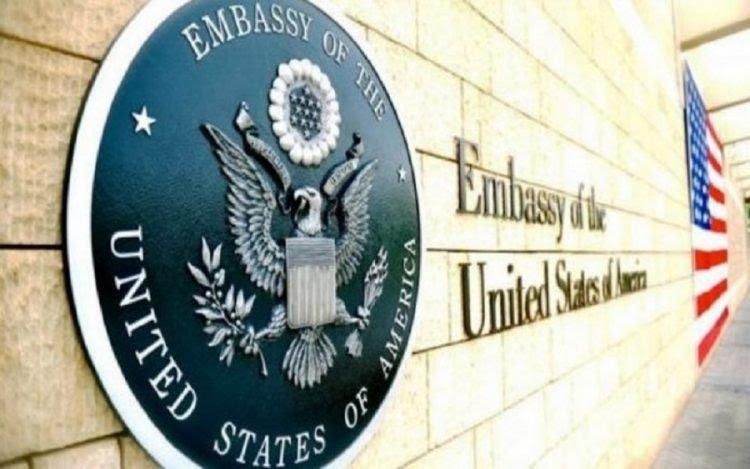
The security climate in Nigeria has taken a troubling turn as the United States Department of State authorised the departure of non-emergency government employees and their families from Abuja, citing an imminent and heightened risk of terrorist attacks. This move, which transitions the embassy’s status to a partial evacuation, coincides with a sweeping updated travel advisory that classifies 23 Nigerian states as high-risk areas for American citizens.
- +US raises alarm on Nigeria, flags 23 states high risk
In Abuja, the alarm is specific and urgent.
In Abuja, the alarm is specific and urgent. U.S. officials warned that terrorists are plotting strikes against a wide array of targets, ranging from government buildings and places of worship to more vulnerable public spaces like schools, shopping malls, hotels, and transport terminals. The embassy has warned that these groups may act with little to no notice, prompting the State Department to shift its stance from a general warning to an active withdrawal of personnel to ensure their safety.
“Crime is widespread in Southern Nigeria,” the advisory noted, adding that foreigners, particularly U.S. citizens, are often perceived as high-value targets for ransom operations.
Despite the heightened warnings, the department advised U.S. citizens who must travel to Nigeria to take precautionary measures, including enrolling in the Smart Traveler Enrollment Program (STEP) to receive real-time updates and emergency assistance.
Beyond the capital, the broader landscape of the country remains volatile, with the U.S. Embassy identifying 23 states where the threat levels range from dangerous to life-threatening. A significant portion of northern Nigeria—including Borno, Yobe, Adamawa, Bauchi, Gombe, Kaduna, Kano, Katsina, and Zamfara—has been placed under a ‘Level 4: Do Not Travel’ advisory. In these regions, the persistent threat of terrorism and kidnapping remains the primary driver of the restriction, as local security forces struggle to contain insurgent activities.
The advisory is not limited to the north. In the south, the coastal and oil-rich states of Akwa Ibom, Bayelsa, Cross River, Delta, and Rivers are also flagged as Level 4 zones due to a combination of kidnapping, civil unrest, and maritime crime.
While Abuja itself is categorised under Level 3, which advises citizens to reconsider travel, the specific threat of terror attacks has overridden standard protocol, leading to the current evacuation order. American citizens currently in the country are being urged to exercise extreme caution, maintain a low profile, and avoid large gatherings as the security situation continues to fluctuate.