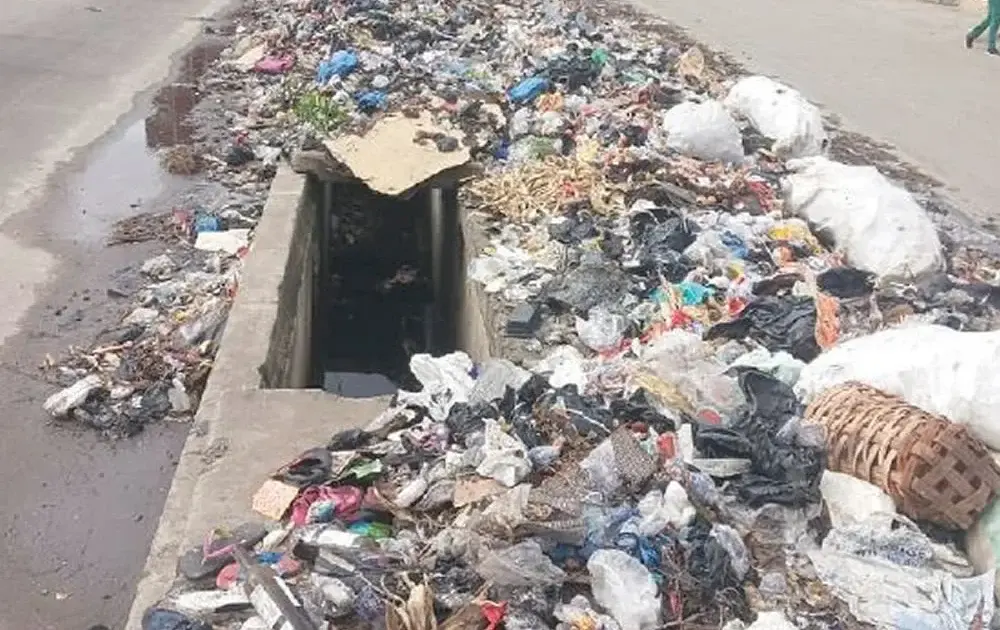
Public health fears are mounting across Lagos as operational challenges at the Olusosun dumpsite leave heaps of refuse uncollected across communities, raising fears of a possible epidemic. CHIJIOKE IREMEKA writes that with the country still battling Lassa fever, the growing mountains of waste have become breeding grounds for rats, flies, mosquitoes and other disease-carrying vectors, heightening the risk of disease outbreaks
- +Epidemic fears loom as refuse mounds overrun Lagos streets, markets
For 41-year-old nurse, Ify Chidiebere, the towering heaps of uncollected refuse littering Adelaja Close in Mafoluku, Oshodi, Lagos, are more than an unpleasant sight.
For 41-year-old nurse, Ify Chidiebere, the towering heaps of uncollected refuse littering Adelaja Close in Mafoluku, Oshodi, Lagos, are more than an unpleasant sight. To her, they are a ticking public health time bomb.
Each day, she walks past overflowing waste bins and mounds of decomposing garbage that line the streets, fearing that the worsening sanitation crisis could trigger outbreaks of water-borne and vector-borne diseases if urgent action is not taken.
As a healthcare professional, Chidiebere has seen firsthand how poor environmental sanitation fuels disease outbreaks, particularly during the rainy season.
She worries that the rotting waste has transformed parts of the neighbourhood into breeding grounds for mosquitoes, flies, rats and other disease-carrying vectors capable of spreading infections rapidly in densely populated communities like Oshodi.
“The situation is becoming alarming. The refuse is left unattended for days, sometimes weeks, and whenever it rains, dirty water from the waste flows into drains and surrounding areas.
“This increases the risk of diseases such as cholera, typhoid fever and diarrhoea. Mosquitoes also breed in the stagnant water around these refuse dumps, raising concerns about malaria and other mosquito-borne diseases.
“Everyone here shares the same fears because the waste keeps piling up despite repeated complaints. The foul odour hanging over parts of the neighbourhood has become a daily torment for many of us,” she told Saturday PUNCH.
Chidiebere added that the uncollected refuse has clogged drainage channels, worsening flooding whenever heavy rain falls.
According to her, residents have repeatedly appealed to the Lagos Waste Management Authority and the Private Sector Participation operators, popularly known as PSP operators, who have been evacuating waste, but all they have received are promises.
For many families, especially those with young children and elderly relatives, the worsening environmental conditions have heightened fears about their health and safety.
“I’m worried that children playing near these refuse dumps could be exposed to harmful bacteria and disease-causing organisms, leaving their parents to spend scarce money on treatment instead of food and other necessities,” Chidiebere lamented.
The nurse said the situation demands immediate intervention by the authorities responsible for waste management and environmental sanitation.
According to her, regular evacuation of refuse, improved waste management infrastructure and stricter enforcement of sanitation regulations would significantly reduce the health risks confronting residents.
“Keeping our environment clean should not be the responsibility of government alone. Residents must also support efforts to maintain proper sanitation because our health depends on it,” she added.
For Chidiebere and many of her neighbours, mounting refuse seen all around has become a daily reminder of the urgent need for a sustainable waste management system and stronger collaboration between government agencies and residents.
She fears that unless decisive action is taken soon, what began as a waste management problem could spiral into a major public health emergency.
About 20 kilometres away, residents of Agulajika Street in the Ijesha area of Lagos share similar fears.
For 54-year-old businessman, Bernard Johnson, the growing piles of refuse scattered across the community are signs of an environmental crisis waiting to happen.
He said waste generation in the area has continued to rise without a corresponding increase in evacuation, leaving overflowing waste bins and illegal dumpsites dotting several parts of the neighbourhood.
“The volume of refuse being generated continues to increase, but there has been no matching effort to remove it in recent times. We are appealing to the government to intervene before the situation gets out of hand. Everywhere smells,” Johnson said.
He warned that the persistent delays in evacuating refuse had not only turned the community into an eyesore but had also heightened fears of disease outbreaks and flooding during the rainy season.
Like Chidiebere, he expressed concern that residents had begun disposing of faecal waste at some refuse dumps because of the worsening sanitation crisis.
According to him, the decomposing waste attracts rats, flies and other disease-carrying pests, while blocked drainage channels caused by indiscriminate dumping increase the risk of flooding whenever heavy rain falls.
The father of four stressed that a cleaner environment would not only improve public health but also enhance the quality of life for residents.
At the heart of the worsening waste crisis is the Olusosun landfill in Ojota, where a severe breakdown in waste management operations has left Lagos increasingly vulnerable to disease outbreaks.
Ageing equipment, frequent machinery failures and badly deteriorated access roads within the landfill have slowed waste disposal operations, leaving hundreds of compactor trucks stranded and unable to discharge their loads.
The disruption has created a backlog in refuse evacuation across the state, resulting in mountains of garbage accumulating in residential neighbourhoods, markets, roadsides, commercial districts and other public spaces.
Saturday PUNCH visited several locations across the state, including Lawanson, Charity in Oshodi, Sadiku, Iyana-Itire, Agulajika, Baderi, Mafoluku, Akinlawanson, Saubana, Cele in Ijesha, Festac, Mushin and Tom Jones Junction in Idumota on Lagos Island.
According to epidemiologists, the situation is particularly alarming as Lassa fever continues to spread across several states.
They explained that Lassa fever is primarily transmitted through contact with the urine and faeces of infected Mastomys rodents, commonly known as multimammate rats, which thrive around refuse dumps. The experts warned that the growing mountains of uncollected waste provide abundant food and breeding grounds for the rodents, increasing the likelihood of their migration into residential communities and heightening the risk of disease outbreaks.
Epidemiologists are public health experts who study how diseases spread within populations, identify those most at risk and develop strategies to prevent and control outbreaks.