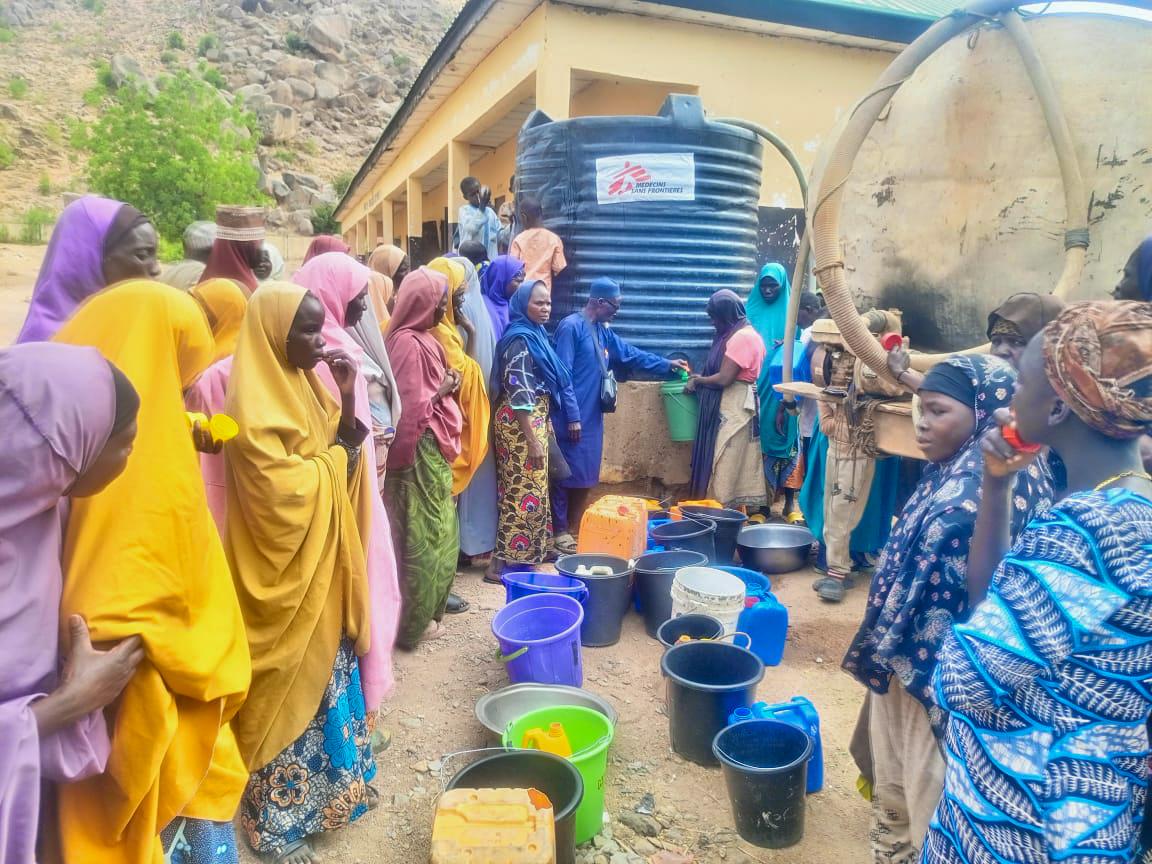
More than 5,000 residents of Ngoshe in Gwoza Local Government Area of Borno State have fled to nearby Pulka following a recent wave of armed attacks, leaving families in overcrowded conditions with little access to food, water, or shelter.
- +Borno attack displaces over 5,000 as aid falls short in Pulka
The displacement follows violence in early March that forced residents to abandon their homes and seek refuge in Pulka, about 15 kilometres away, where many are now sleeping in open spaces and along roadsides.
The displacement follows violence in early March that forced residents to abandon their homes and seek refuge in Pulka, about 15 kilometres away, where many are now sleeping in open spaces and along roadsides.
According to Médecins Sans Frontières (MSF), one of the displaced persons, Safiya Aga, described how residents fled after their homes were destroyed.
“Our homes were bombed, everything we owned was destroyed. We fled with almost nothing,” she said in a statement released by the organisation.
Strained conditions, rising risks MSF said the displaced population faces severe shortages of basic necessities, warning of a growing risk of disease outbreaks due to poor sanitation and lack of clean water.
The organisation, which began a four-week emergency intervention on 10 April, said it has distributed relief items to more than 900 families, including cooking utensils, sleeping mats, mosquito nets, and water containers. It is also supplying about 16,000 litres of clean water daily and rehabilitating sanitation facilities.
However, the group said the scale of need far exceeds current assistance.
“People urgently need food and improved access to water, sanitation and hygiene services,” said Abdoulaye Mahmoudoune, MSF’s emergency field coordinator, in the statement. “We cannot meet these overwhelming needs alone.”
Despite the scale of the displacement, there has been no detailed public update from emergency management authorities on coordinated relief efforts for those affected.
Nigeria’s national and state emergency agencies—including the National Emergency Management Agency (NEMA) and Borno State Emergency Management Agency (SEMA)—are typically responsible for leading humanitarian responses in such situations.
As of the time of filing this report, there was no immediate response from the agencies on assistance provided to those displaced in Pulka.
The latest displacement underscores a recurring pattern of violence in Gwoza and surrounding communities, once heavily affected by insurgency.
Communities in southern Borno have experienced repeated attacks over the years, forcing residents into cycles of displacement, return, and renewed violence.
Data from conflict monitoring groups such as Armed Conflict Location & Event Data Project show that attacks on rural communities in Borno State have persisted despite ongoing military operations targeting insurgent groups.
Security analysts say remote communities like Ngoshe remain vulnerable due to limited state presence and difficult terrain.
Shrinking aid, growing needs The situation in Pulka also reflects broader concerns about declining humanitarian support in northeast Nigeria.
MSF warned that funding gaps and a reduction in humanitarian assistance are putting critical healthcare and relief services at risk across Borno State, with health facilities already under strain.
MSF called on humanitarian organisations to urgently scale up assistance in Pulka, particularly in food aid and water, sanitation and hygiene services.
The organisation also urged donors to increase funding to prevent further deterioration of living conditions for displaced populations.
For many of those displaced, survival now depends on how quickly additional support arrives.