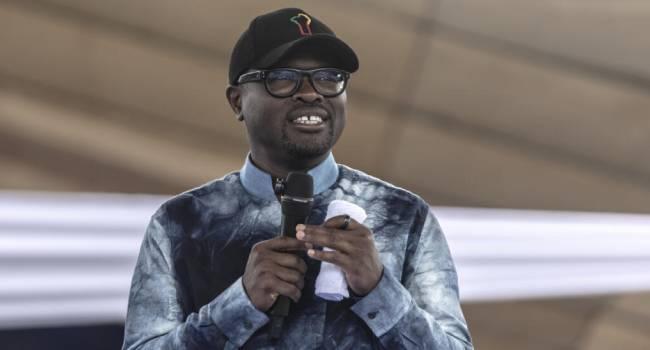
Benin’s new leader visited Niger on Tuesday, the first such presidential trip to Niamey since a 2023 coup, in a sign of easing tensions between the neighbours.
- +Benin President In Niger, A First Since Coup Sparked Tensions
Niger’s military leaders, who broke off ties with traditional ally France, closed the border with Benin after accusing the country of harbouring “French bases” bent on destabilising Niger.
Niger’s military leaders, who broke off ties with traditional ally France, closed the border with Benin after accusing the country of harbouring “French bases” bent on destabilising Niger.
Junta chief Abdourahamane Tiani greeted Benin President Romuald Wadagni, who came to power on May 24, Tele Sahel showed in its live coverage.
The two leaders were expected to discuss relaunching security cooperation between the countries, which are both battling jihadist violence.
Niger has teamed up with fellow junta-led Burkina Faso and Mali to create a confederation called the Alliance of Sahel States.
The three quit the West African bloc, ECOWAS, accusing it of being in the pay of the West and not doing enough to help them in their fight against jihadists.
The visit “is part of the active neighbourhood diplomacy that President Wadagni intends to pursue with all the states bordering Benin”, the Beninese presidency said in a statement.
Wadagni spent several hours in Niger and was expected in Burkina Faso later in the day. His first international trip was to Nigeria on Monday.
In an initial sign of improving relations, Niger’s Prime Minister Ali Lamine Zeine had attended Wadagni’s inauguration in Cotonou, where he spoke of “a new path”.
Main roads in Niamey on Tuesday were decorated with flags of the two countries, and hundreds of Beninese gathered to greet the presidential convoy.
Wadagni, the former finance minister and chosen successor of ex-president Patrice Talon, won the election with 94 per cent of the vote.
A few days after his victory, Nigerien Interior Minister Mohamed Toumba said he was waiting for “goodwill gestures” from the new president, “for Benin to come out and say that it has nothing to do with France’s interests and that Benin is not facilitating France’s presence on its territory in order to attack its neighbours.”
Niger regularly accuses Benin of harbouring French military bases which it says are training jihadists.
Talon was even named by Tiani as one of the “sponsors” of jihadists who attacked Niamey airport in January.
Benin and Paris have consistently denied the accusations. In recent years, Benin’s north that borders Niger has been plagued by increasingly deadly jihadist violence.
Odilon Koukoubou, a political scientist in Cotonou, said the visit could help reduce tensions between Benin and the Sahelian AES states.
“It felt as though the military leaders of the AES resented Patrice Talon more than they resented Benin itself. Patrice Talon’s departure offered a window of opportunity that had to be seized quickly,” he told AFP.
Niger and Benin share economic interests: the port of Seme-Kpodji in Cotonou is the easiest route for bringing supplies into Niamey and for the export of its raw materials. According to Nigerien official figures, 80 per cent of Niger’s freight passed through this route before the dispute.
A huge pipeline that exports Nigerien oil via Benin has remained in operation. But the only bridge linking the two countries, separated by the Niger River, remains closed, with heavy security measures, according to local residents.