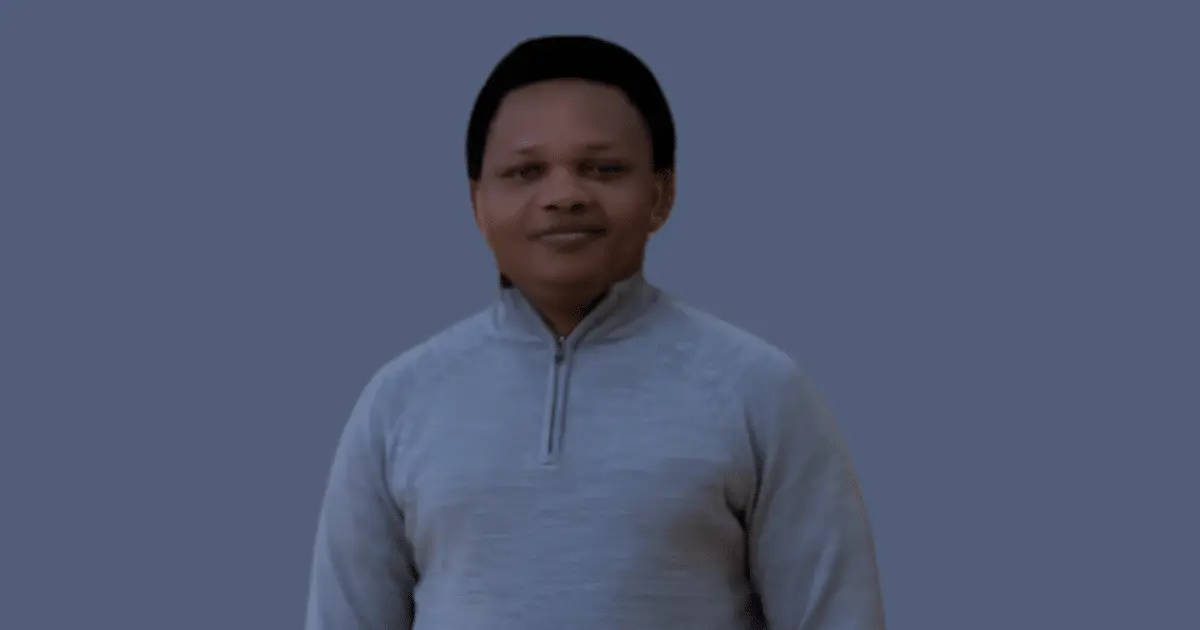
Meet Nigerian innovator building STEM platform to support less-priviliged African kids
Before moving to Europe, Nsisong Okon experienced firsthand the hustle culture in Lagos, Nigeria, learning to write code and build things from scratch.
Before moving to Europe, Nsisong Okon experienced firsthand the hustle culture in Lagos, Nigeria, learning to write code and build things from scratch. Even though some of the early ventures he tried his hand at failed, he wasn’t discouraged.
After the birth of his son, he moved abroad in search of greener pastures. In his voyage so far, he has contributed to the EU tech ecosystem and helped shape certain infrastructure development. Not only that, but he’s also building a community back home to support less-privileged children, helping them learn STEM skills that can provide an escape route from poverty.
In this edition of Techpoint Diaspora, we follow Nsisong Okon’s journey from his early struggles in Lagos, Nigeria, to Portugal, and his generosity in giving back to his homeland via his STEM initiative.
I was born in a village in Akwa Ibom State, and I attended primary and secondary schools there before moving to Lagos in 2008. I started my tech journey from the database side before I moved to Java.
I attended NIT to acquire the necessary skills, and in 2009, I became an Oracle-certified expert. Prior to this, it was the big boys from eTransact, Interswitch, and Chams that ruled the market, until Google came in and opened up the tech ecosystem in Lagos and Nigeria.
Luckily, I was one of the few candidates selected for Google’s Get African Businesses Online (GABU) initiative, a program that leveraged Google’s technologies to help some businesses go online. After this, I attended the University of East London from 2010 to 2013, earning a degree in software engineering, before returning to Nigeria for my internship. The decision was based on my mum’s advice. She was fond of saying, “You need a certificate; even if you don’t use it, keep it.”
I was part of the team that deployed a system for Lekki Concession Company Limited (LCC), but when it came to the automation of the toll gates, we weren’t qualified; they had to bring in expatriates because there was no local content at the time.
A group of guys invited me to join them in building a voucher platform, but the startup died. Then COVID-19 hit, and a lot of things happened. First, I diversified. I had to do other things because if you’re in tech, you have to do so many things.
Because I’m also good with business automations, I became a consultant for a company, and later on, I was invited to join in building Mr Taxi in Lagos. I worked with them, and I developed the system, but the startup shut down.
However, it was time to leave Nigeria when I had my child, because I didn’t want to raise him in that environment. So I moved to Portugal, and I’ve been working remotely since 2020 after getting a job with a Dutch firm.
I chose Portugal because it’s cool. I also needed an environment that is convenient for my child, and Portugal remains one of the best countries for that.
Last year, we started a company called Fancy Box. We have two products: the first is for the EU market, and it serves logistics companies. It’s an AI-driven predictive system mostly used for trucks. It’s basically a device attached to trucks called a tachograph that monitors everything the driver does. In the EU, Tachographs and telematics data are mandatory for any vehicle with more than nine people (including the driver).
Under EU regulations, a driver must take 45 minutes of rest after driving for four-and-a-half hours; the rest can be split into two periods (15 minutes and 30 minutes). So it’s this device in the vehicle’s system that tracks such information. Previously, the data was downloaded manually, but it’s now automated. With this data, we can remotely, in real time, predict whether a driver will get fatigued. Remember, a fatigued driver would likely have an accident.
I used to think you could make things happen in Nigeria if you wanted to, but over time, I realised that, unless you want to venture into politics, you can’t make much impact. Since politics isn’t something I’m interested in, I had to migrate.
The second product under Fancy Box is STEM4Kiddo.
I run an NGO in Nigeria, and we used to organise training for the youth. But we had to pivot after realising that a lot of youth need money at the end of the day; many of them don’t want to learn, they just want money to start something without knowledge. So we changed the scope from focusing on youths to kids. We’re targeting children because the aim is to get young people to save the future of Nigeria.
The best way to save Nigeria, and Africa at large, is the young people. While wealthy people have ample resources to safeguard their children’s future, the average child lacks access to quality information. This lack of access explains why the social media space in Nigeria differs from what’s available elsewhere; many Nigerians spend time on social media hoping to make money there.
In Nigeria, because we have gatekeepers of quality information, we see our young girls online doing so many things. It’s sad because these young minds will serve as role models to their siblings and others.
To combat this, we created an NGO to give scholarships to children; we partner with local schools offering top-quality education, pay the fees, and the next step is to set up STEM hubs in Nigeria for these kids. While STEM4Kiddo remains a paid product for the general public, it would be free to all the beneficiaries of our NGO and the schools we partner with, so they can build curiosity in these kids.
STEM4Kiddo is first for emerging markets such as Nigeria, Uganda, Indonesia, Malaysia, Kenya, and others. And we’re targeting primary school children between the ages of five and six. They have access to short videos that introduce concepts, and they can also experiment. For example, if they’re learning construction, they can experiment with how to build bridges and all that.
Our solution is actually progressive, not passive: when you start a lesson/experiment/task, you have to complete it before you can move to the next one. This form of learning will help them to understand the concept and build muscle memory. There are levels of learning, and our lab will contain all the necessary devices, including VRs. The main aim remains to bridge the educational gap between these children and their counterparts in Asia and other developed regions.
STEM4Kiddo is a for-profit business, but the other admissions are channelled through our existing NGO, which we started in 2023. So, STEM4Kiddo already partners with the NGO, while all other incentives for the less privileged go through the NGO, not STEM4Kiddo. We are also open to partnering with other NGOs to further expand the number of children we can reach.