Ahead of the June 20, 2026 Governorship election in Ekiti State, the International Press Centre (IPC) has engaged and trained journalists on credible election reporting and neutrality for the advancement of the nation’s democratic space.
- +Police to clampdown on vote buyers as IPC engages journalists in Ekiti
Speaking at a two-day training and stakeholders’ dialogue held in Ado-Ekiti, the State capital, Lanre Arogundade, the Executive Director of IPC, said the training was aimed at equipping journalists with the skills required for accurate and responsible coverage of the electoral process.
Speaking at a two-day training and stakeholders’ dialogue held in Ado-Ekiti, the State capital, Lanre Arogundade, the Executive Director of IPC, said the training was aimed at equipping journalists with the skills required for accurate and responsible coverage of the electoral process.
He noted that the initiative was designed to promote free, fair and credible elections through professional reporting.
Arogundade described it as a first-of-its-kind engagement in the state under the European Union Support to Democratic Governance in Nigeria Phase II (EU-SDGNII).
He explained that the programme, unlike its predecessor, specifically targets off-cycle elections and has been successfully implemented in States such as Kogi, Bayelsa, Imo, Edo, Ondo, and Anambra.
Arogundade expressed confidence that Ekiti would replicate similar positive outcomes despite its complex electoral history.
Highlighting Ekiti’s legacy of resilience and excellence, he urged stakeholders to channel this heritage into ensuring credible, peaceful, and inclusive elections.
He noted that the dialogue was designed to foster collaboration among key actors, including the Independent National Electoral Commission (INEC), security agencies, the media, civil society, and other relevant institutions.
“Their is need for all stakeholders to act in the public interest, uphold accountability, and resist misinformation and disinformation. These efforts are critical to restoring public trust ahead of the 2027 general elections.
“The media must be active in promoting issue-based reporting, voter education, and inclusive participation, particularly for women, youth, and marginalized groups. I am also calling on authorities to guarantee journalists’ access to information and ensure their safety in line with the Nigerian Media Code of Election Coverage”, he said.
Also speaking, Taiwo Obe, a Media Expert and Director of Journalism Clinic, urged journalists to embrace digital tools and artificial intelligence to remain relevant.
“My charge to journalists is to retool themselves and learn how to use digital apps and tools because media consumption habits have changed,” he said, noting that continuous skills upgrade is essential in the evolving media landscape.
Adebola Aderibigbe, Professor of Mass Communication at the Federal University Oye-Ekiti, called for issue-based reporting, warning against sensationalism.
“The election will not be defined by personalities; it should be defined by issues,” he said, urging journalists to prioritise accuracy, fairness and balance.
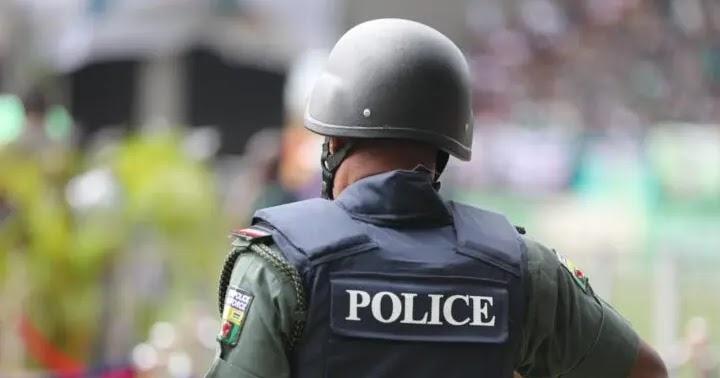
In a related development, the Ekiti State Police Command said it would be tough on vote buying and electoral malpractice during the poll.
Sunday Abutu, Police Public Relations Officer, Ekiti State Police Command, who spoke at the closing session of the dialogue, said the Command had deployed strategies to tackle offenders and safeguard the integrity of the election.
“We are going to be tough on vote buying and trading. Criminal elements will always try, but we will deploy our forces to prevent that menace,” Abutu said, adding that the police would collaborate with other stakeholders to maintain peace and order.
Bunmi Omoseyindemi, Resident Electoral Commissioner in the state, emphasised the importance of voter education and transparency, assuring that only accredited journalists would be allowed to cover the election.
He also pledged unfettered access to information and zero tolerance for harassment of media practitioners.