Starmer Vows To Confront UK Challenges As Labour Pressure Mounts After Local Election Losses
Excerpt: British Prime Minister Keir Starmer vows to confront Britain’s challenges amid mounting Labour Party pressure following heavy local election defeats Monday.
Excerpt: British Prime Minister Keir Starmer vows to confront Britain’s challenges amid mounting Labour Party pressure following heavy local election defeats Monday.
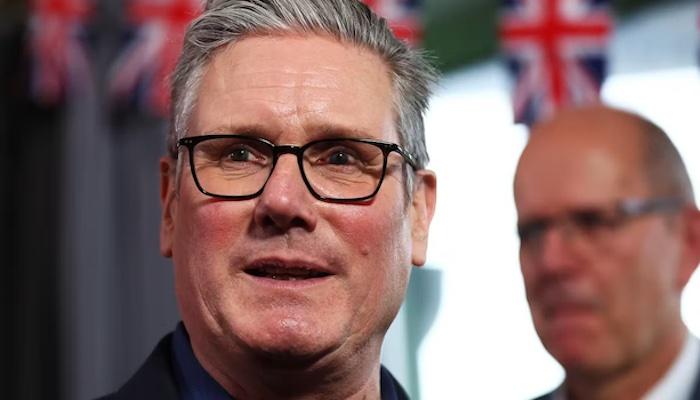
British Prime Minister Keir Starmer has pledged to “face up to the big challenges” confronting the United Kingdom, delivering a high-stakes speech on Monday as pressure mounts over his leadership following heavy local election losses.
In remarks aimed at steadying support within the ruling Labour Party, Starmer identified economic growth, national defence, relations with Europe and energy security as urgent priorities, insisting that only bold action would be sufficient.
“To meet the challenges that our country faces, incremental change won’t cut it,” he said, acknowledging internal discontent. He added that “some people are frustrated with me” and admitted he has “doubters.”
“I know I need to prove them wrong and I will,” he told supporters.
Setting out a more combative political tone, Starmer warned: “You will see hope, urgency and exactly whose side we are on,” adding that “people need hope. We will face up to the big challenges and we will make the big arguments.”
The speech comes days after Labour suffered significant setbacks in local elections, losses widely interpreted as a referendum on Starmer’s leadership. Although the results do not affect national governance, they have triggered renewed internal unrest, with lawmakers openly questioning whether he should remain Prime Minister.
As of Sunday evening, dozens of Labour MPs were reportedly calling for his resignation. Among them, Labour MP Catherine West said she would consider launching a leadership challenge if Starmer’s position failed to convince party members.
Starmer’s former deputy, Angela Rayner, also raised concerns, stating on X: “what we are doing isn’t working, and it needs to change. This may be the Labour Party’s last chance.”
Other possible contenders for leadership include Health Secretary Wes Streeting and Manchester Mayor Andy Burnham, though Burnham would need to return to Parliament as an MP to formally enter the race.
Despite growing speculation, Starmer insisted he will lead Labour into the next general election in 2029, while also using the speech to reinforce his foreign policy direction, particularly towards Europe.
Criticising Reform UK leader Nigel Farage and the Conservative Party, Starmer said rival parties were “defined by breaking our relationship with Europe.”
“This Labour Government will be defined by rebuilding our relationship and by putting Britain at the heart of Europe. So that we are stronger on the economy, on trade, on defense, you name it,” he said, signalling a push for closer ties with the European Union, especially on opportunities for young people to study, work and live across the continent.
The political turbulence has also spilled into financial markets, with investors closely watching the implications for UK fiscal stability. Government borrowing costs remain elevated, with 10-year gilt yields reacting modestly after the speech.
Economist Kallum Pickering of Peel Hunt said: “Let’s see what happens today,” adding that “markets are very good at looking through noise but if you do get a leadership challenge, I wouldn’t be surprised if you see bond yields go up somewhat.”
He noted that “the UK has the highest borrowing costs in the G7 group of industrialized nations,” citing persistent inflation pressures and weak growth. He added that geopolitical shocks, including the Iran conflict, have worsened the outlook.
“Even if we were to get rid of the political noise. Yes, bond yields would be elevated versus the start of the year, but they would probably be lower than they, let’s say [by] 10-15 basis points,” he said, suggesting that political uncertainty is still influencing market pricing.