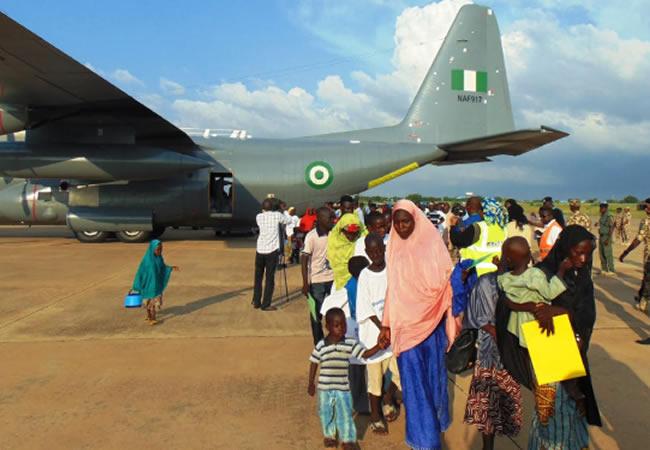
The number of newly arrived asylum-seekers into Nigeria rose by 322 persons, amounting to 21 per cent increase in the first quarter of 2026, Sunday PUNCH can report.
- +FG registers 3,613 refugees as asylum-seekers rise by 322
This was as the backlog of refugees awaiting formal registration dropped by 3,613 within the same period, according to the latest data from the United Nations High Commissioner for Refugees.
This was as the backlog of refugees awaiting formal registration dropped by 3,613 within the same period, according to the latest data from the United Nations High Commissioner for Refugees.
The figures are contained in successive monthly dashboards published by UNHCR Nigeria, which tracks the total population of refugees and asylum-seekers in the country from December 2025 through March 2026 and obtained by Sunday PUNCH.
The dashboards are produced jointly by UNHCR and the Federal Government through the National Commission for Refugees, Migrants and Internally Displaced Persons, drawing on registration records, biometric enrolment data and field assessments conducted across hosting states.
They include the population of refugees and asylum seekers hosted by Nigeria, including countries of origin, demographic profiles, geographic distribution and new arrival trends.
As of December 31, 2025, Nigeria hosted 1,528 asylum-seekers, and individuals whose claims had been lodged but not yet determined.
By February 1, 2026, the figure rose to 1,705, and by March, it stood at 1,850, showing a net addition of 322 persons over the quarter.
However, the total refugee and asylum-seeker population in the country shrank from 142,064 in December 2025 to 138,900 by March 2026, a reduction of 3,164 persons.
The drop came largely from a clearing of the backlog of persons awaiting registration.
The backlog which stood at 16,672 in December 2025, fell to 16,582 in February, and then dropped to 13,059 by March.
According to the report, the Anglophone crisis in Cameroon, the armed conflict between government forces and separatist groups that has displaced over 584,000 people internally, is the dominant driver of refugee flows into Nigeria.
Cameroonians accounted for 119,521 of Nigeria’s total refugee and asylum-seeker population in December 2025, rising slightly to 119,641 by March 2026.
Cameroonians represent 86 per cent of the total refugee population, the highest share recorded across the three dashboards.
An estimated 1.8 million of the four million people in the Anglophone region need humanitarian support, while about 250,000 children are still affected by school closures as a direct result of the conflict, which has now entered its ninth year.
Data by the International Crisis Group shows that in 2026 alone, an estimated 2.9 million people in Cameroon, including 1.5 million children, required humanitarian assistance, with the highest severity of need concentrated in the Far North, North-West and South-West regions, the zones from which most refugees flow into Nigeria.
Most of the refugee population, according to the data, remains overwhelmingly concentrated along the border with Cross River State hosting the largest share at 46,713 persons as of March 2026.
It is followed by Adamawa State at 44,682, Taraba at 15,555, Benue at 8,872 and Akwa Ibom at 1,907, with 95 per cent of Cameroonians confined to border states.
The second-largest refugee population originates from Niger Republic, though their numbers dropped sharply within the quarter, falling from 17,104 in December 2025 to 13,449 in March 2026, a drop of 3,655 persons.
The UNHCR says it has been carrying out voluntary return movements with the Federal Government and Niger Republic.
Other source countries include Syria (1,706 in March), Sudan (1,274), the Central African Republic (1,036) and others, with the countries of origin expanding from 45 in December to 47 by March.
The data showed that women accounted for 57 per cent and men for 43 per cent, while children under 17 constitute approximately 50 per cent of the total, and the elderly, those aged 60 and above, make up five per cent.
As of March 2026, 20,423 refugees lived in formal settlements, down from 20,586 in December 2025.
The majority of the refugee population live outside camps, dispersed across Cross River, Adamawa, Taraba, Benue and Akwa Ibom States, with urban populations also present in Lagos, Abuja and Kano.
The Federal Government’s refugee response is coordinated under a framework involving NCFRMI, UNHCR, international NGOs and civil society, with the FG granting Temporary Protection Status to 86,000 Cameroonian refugees through June 2027.
The measure that bypasses the lengthy individual Refugee Status Determination process during mass influx situations.
Speaking with our correspondent, a former Nigerian Ambassador to Singapore, Ogbole Amedu-Ode, warned that while the country must fulfil its international obligations, border control agencies must remain vigilant against infiltrators.
“Nigeria is a signatory to the appropriate international instruments, conventions and treaties that grant favour to asylum seekers, especially those under persecution.
“We’re aware of all the people from Cameroon, where there’s some kind of civil unrest. The same goes for Sudan, Syria and parts of Lebanon. Based on those international conventions, Nigeria is obliged to admit and grant them asylum.
“However, given the security situation we face in Nigeria, the relevant agencies should have their eyes peeled to watch out for people who might be used to infiltrate the Nigerian space for any negative objectives,” Amedu-Ode said.