Here’s what I’ve got for you today:
- +WASPA’s court win could be a setback for every Nigerian harassed by a loan app
Nigeria’s attempt to clean up its messy digital lending space has just run into trouble in court.
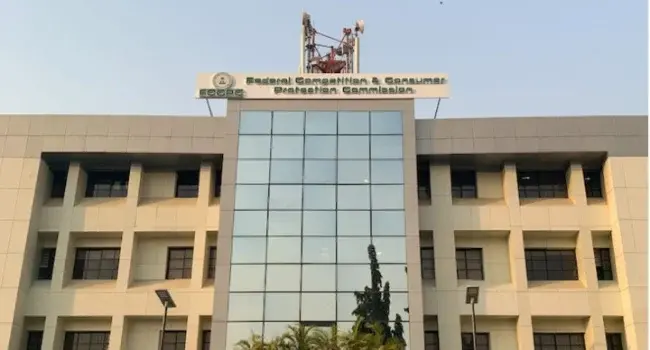
Nigeria’s attempt to clean up its messy digital lending space has just run into trouble in court. On April 14, 2026, the Wireless Application Service Providers Association of Nigeria (WASPA) filed an urgent case at the Federal High Court in Lagos, challenging the FCCPC’s new lending rules. A day later, Justice Ambrose Lewis-Allagoa stepped in with an interim injunction, effectively stopping the Federal Competition and Consumer Protection Commission from enforcing key parts of those regulations. In simple terms, the court has hit pause on enforcement — no penalties, no compliance actions, nothing — at least until the next hearing on April 27.
At the centre of this fight is a turf war. WASPA argues that the FCCPC has overstepped its authority by trying to regulate areas that fall under the Nigerian Communications Commission, especially anything tied to telecoms infrastructure. And this isn’t just about loan apps; the rules also affect airtime credit, data loans, and telecom-backed lending products. That’s big, especially when you consider how much money is flowing through services like MTN’s MoMo airtime lending. If the court sides with WASPA, a huge part of Nigeria’s digital credit system could end up stuck in regulatory limbo.
So, how does it concern you? For everyday Nigerians, this comes at a bad time. Digital lenders have been under fire for years. Think harassment, data abuse, and aggressive debt recovery tactics have been widely reported. The FCCPC says it received over 11,000 complaints between 2021 and 2023 alone. The new rules were supposed to fix that: clearer loan terms, limits on abusive practices, and heavy penalties for violations. But with enforcement now paused, those protections are basically on hold, leaving millions of borrowers exposed, at least for now.
But how did we get here? Digital lending exploded in Nigeria in the early 2020s, offering quick cash to people shut out of traditional banks, but it quickly turned chaotic. By 2022, regulators started cracking down, removing shady apps from app stores and introducing temporary rules. Hundreds of lenders registered, but enforcement remained inconsistent, and new apps kept popping up. So the FCCPC went further, developing a more comprehensive framework — the DEON Regulations — which officially took effect on July 21, 2025, with a compliance deadline set for January 5, 2026. By then, hundreds of lenders had signed up, dozens had been blacklisted, and the system was finally starting to take shape, until this lawsuit landed.
What’s really playing out here is a bigger question about who controls Nigeria’s fast-growing digital economy. The FCCPC says it’s protecting consumers. WASPA says telecom-related services should be regulated elsewhere. And in the middle are hundreds of lenders and millions of Nigerians who rely on them. The April 27 court hearing could decide whether these rules move forward or get tangled in a long legal battle. Either way, the outcome will shape not just loan apps but also the future of fintech regulation in Nigeria.
Meta has pulled the plug on a key outsourcing contract, and more than 1,100 workers in Nairobi are paying the price. On April 16, 2026, AI data firm Sama issued redundancy notices to 1,108 employees after losing a major contract tied to Meta. The company says it tried to keep the deal alive but couldn’t, leaving hundreds of workers at its Sameer Business Park office facing job losses almost overnight.
This isn’t just another round of layoffs, the scale tells a bigger story. The roles affected are largely data labelling jobs, the behind-the-scenes work that helps train AI systems. For years, workers spent long hours tagging images, reviewing videos, and teaching algorithms how to “see” and understand content. Now, as AI tools become more advanced, that same human input is being needed less, and the workers who powered it are being cut out.
If this feels familiar, it’s because it is. Nairobi has been here before. Back in 2023, Sama cut hundreds of content moderators working on Meta’s platforms after shutting down that line of work. Many of those workers had been exposed to disturbing content daily and later raised concerns about pay and working conditions. Some even took legal action, arguing they were unfairly dismissed after trying to organise.
The pattern raises uncomfortable questions. These jobs were always positioned as part of Africa’s entry into the global tech economy, but they’ve often come with low pay, high emotional strain, and little long-term security. Even now, some of the earlier court cases tied to those layoffs are still unresolved, while a fresh wave of job cuts is already unfolding.
Zoom out, and this is part of a wider shift in tech. Big companies are restructuring, cutting costs, and leaning more on automation. But what’s happening in Nairobi shows the uneven impact of that shift. The workers who helped build and train today’s AI systems are often the first to be left behind when the industry moves on, and this latest round of layoffs makes that reality hard to ignore.
Congo’s telecom regulator isn’t mincing words anymore. On April 8, 2026, the Agence de Régulation des Postes et des Communications Électroniques formally put MTN Congo and Airtel Congo on notice after a nationwide network quality audit, giving both operators six months to fix their service or face consequences. And this wasn’t a casual check. The regulator tested networks across 20 locations, measuring everything from call success rates to internet speed and signal stability. In short: they came with data, not vibes.
The findings were mixed at best. Down south, things are somewhat stable, especially on 3G, where MTN edges ahead. But 2G, still widely used in rural areas, is shaky across the board. On 4G, MTN is expanding into new areas, while Airtel is clearly behind, with gaps in broadband coverage. Head north, and the picture gets worse. Both operators struggle significantly, especially on 2G, while Airtel’s 3G performance in several areas falls below acceptable standards. Airtel says part of the problem is out of its hands, blaming outages on the national fibre backbone run by Congo Telecom.
Zoom out, and this isn’t just a Congo problem; it’s part of a broader shift across Africa. Regulators are starting to push back harder on telecom operators over poor service delivery. From fines in Chad and Cameroon to compensation orders in Zambia, the tone is changing. Congo’s six-month ultimatum fits right into that pattern, and this time, the penalties could bite, including fines tied to revenue or even licence risks if things don’t improve.