The coming deluge: Nigeria’s 14,000 high-risk communities and the politics of prevention
Nigeria has been warned, again, and in language too stark to be mistaken for routine bureaucracy.
Nigeria has been warned, again, and in language too stark to be mistaken for routine bureaucracy.
The Nigeria Hydrological Services Agency’s 2026 Annual Flood Outlook says 14,118 communities across 33 states and the Federal Capital Territory face high flood risk this year, while another 15,597 communities across 35 states face moderate risk. Flooding is expected to intensify between July and September, with major urban centres including Abuja, Lagos and Port Harcourt exposed to severe urban inundation, and coastal states such as Bayelsa, Delta, Rivers and Lagos vulnerable to river and tidal flooding.
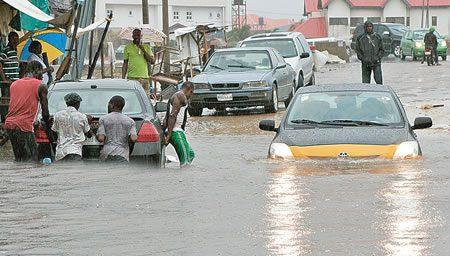
These are not abstract numbers. They describe streets that may vanish under brown water, farms that may dissolve into sludge, clinics cut off from patients, classrooms emptied by displacement, bridges turned from infrastructure into memory. They describe market women watching stock rot in submerged stalls, fishermen navigating currents made more violent by tidal surges, and families who will spend sleepless nights listening for the first hard drumming of rain on zinc roofs. A flood warning at this scale is not merely a weather advisory. It is a national stress test.
Nigeria already knows what flood catastrophe looks like. In 2022, the country suffered its worst floods in more than a decade: more than 600 people were killed, 1.4 million were displaced, and 440,000 hectares of farmland were destroyed. That trauma never fully ended; it simply receded from headlines. More recently, disaster officials said 241 lives were lost in 2025, down from over 1,000 in 2024, while the number of people affected fell from more than 5 million to under 500,000, and displacement dropped from over 1 million to roughly 58,000.
Those improvements matter. They suggest that early warning, public messaging and inter-agency coordination can save lives. But lower casualties do not mean lower risk. They mean that preparedness, however incomplete, can bend the curve.
The warning for 2026 is expansive and precise.
Nigerian authorities say high-risk exposure spans 226 to 266 local government areas, depending on the reporting source, a discrepancy that does not blunt the central truth: the threat is both geographically wide and operationally urgent. Cities expected to face flash or urban flooding include Abakaliki, Abeokuta, Abuja, Asaba, Benin City, Calabar, Ibadan, Kaduna, Kano, Lagos, Makurdi, Onitsha, Port Harcourt, Sokoto, Warri and Yola. Coastal and riverine flooding is expected in Bayelsa, Cross River, Delta, Lagos, Ogun, Rivers and Ondo, driven not only by rainfall and river overflow but also by rising sea levels and tidal surges.
To understand the scale of what is coming, it helps to place Nigeria in a wider frame. Flooding is now one of the world’s most pervasive and expensive climate hazards. In Pakistan’s devastating 2022 floods, roughly one-third of the country was submerged at peak inundation and about 33 million people were affected, a disaster so vast it redrew global understanding of climate vulnerability in populous developing states. In Libya in 2023, flooding after Storm Daniel destroyed dams and obliterated parts of Derna, showing how extreme rainfall becomes mass casualty disaster when infrastructure fails. Across Europe in 2021, Germany and Belgium suffered deadly floods that exposed even wealthy countries’ vulnerability when drainage, river management and warning systems are overwhelmed. Nigeria’s challenge sits at the crossroads of all three lessons: climate volatility, fragile or insufficient infrastructure, and dense human settlement in exposed areas.
Yet Nigeria’s flood problem is not simply “natural.” Rain falls from the sky, but disaster is manufactured on the ground. Floods become calamities when drains are clogged with plastic and silt, when wetlands are paved over, when homes are built across floodplains, when culverts are undersized, when urban growth outruns planning, when dams are poorly coordinated, when warnings are issued but not trusted, translated or acted upon. Climate change is loading the atmosphere with more volatility, but governance decides how much of that volatility becomes mourning.
That is why the 2026 warning should be read not as an inevitability but as an indictment of delay. The public sector has the first burden. Federal authorities must move beyond seasonal advisories into a standing doctrine of flood governance. This means publishing actionable, hyperlocal flood maps in formats communities can actually use; clearing drainage channels and desilting waterways before peak rains; prepositioning boats, relief materials and mobile water treatment systems in identified hotspots; conducting evacuation drills; and integrating NiHSA, NiMet, NEMA, state emergency agencies, local governments and security services into one operational command structure with clear triggers for action. The technology exists. NiHSA says it has upgraded its forecasting system to a hybrid AI-integrated modelling framework and converted its flood dashboard into a real-time geo-intelligence platform supported by a mobile app. That is promising. But a dashboard does not save a life until it changes a decision in a village or a ministry.
State governments must treat this as a budgetary event, not a press event. Flood resilience should be visible in emergency appropriations, urban planning approvals, school safety plans, primary healthcare contingency protocols and road maintenance schedules. Governors in high-risk states should issue public preparedness directives, identify temporary shelters in advance, and compel local councils to map vulnerable households.
The private sector has no excuse for standing back as if floods were a purely governmental matter. Banks should expand emergency liquidity and restructuring windows for small businesses in affected zones. Insurers should stop treating flood coverage as an exotic product for elites and begin building scalable micro-insurance offerings. Telecom companies should support cell-broadcast flood alerts in local languages. Logistics firms should map alternative supply corridors. Manufacturers and large retailers should audit facilities in exposed areas, protect warehouses, and support community response in the places from which they draw labour and profit. Agribusinesses should provide farmers with flood-resilient seeds, raised storage systems and advisory services tied to real-time forecasts.