Middle East war triggers fuel, food price surge as Nigerian traders warn of deeper crisis
Nigeria’s fragile economy came under renewed strain in March 2026 as a Middle East conflict sent global oil prices soaring, triggering sharp increases in fuel costs, transport fares and the prices of everyday goods, according to a new report by SBM Intelligence.
Nigeria’s fragile economy came under renewed strain in March 2026 as a Middle East conflict sent global oil prices soaring, triggering sharp increases in fuel costs, transport fares and the prices of everyday goods, according to a new report by SBM Intelligence.
The report, “Epic Fury, Naija’s Burden: How a Middle East War Broke Nigerian Pockets in March 2026,” paints a clear picture of how a distant geopolitical crisis rapidly translated into a cost-of-living shock across Africa’s largest economy.
Within weeks of the conflict between Iran, Israel and the United States, petrol prices nearly doubled, supply chains were disrupted, and a majority of traders reported worsening business conditions.
Global oil shock hits local markets The crisis, which began on February 28, pushed Brent crude prices from about $82 per barrel to over $110, as tensions escalated and shipping routes through the Strait of Hormuz came under threat.
For Nigeria, the impact was immediate. Petrol prices in Lagos jumped from N830 per litre to N1,325 within a month, while Abuja recorded prices as high as N1,367.
Diesel, the backbone of logistics and power generation, rose from about N1,100 to N1,550 per litre, significantly increasing the cost of transporting goods and running businesses.
“Within two weeks, Nigerian petrol prices nearly doubled, transport fares tripled in some corridors,” the report noted, highlighting the speed at which global shocks are transmitted into the domestic economy.
Transport fares surged accordingly. In Lagos and Abuja, short-distance fares rose by as much as 80 percent, while long-haul freight costs jumped sharply, pushing up prices of food and consumer goods nationwide.
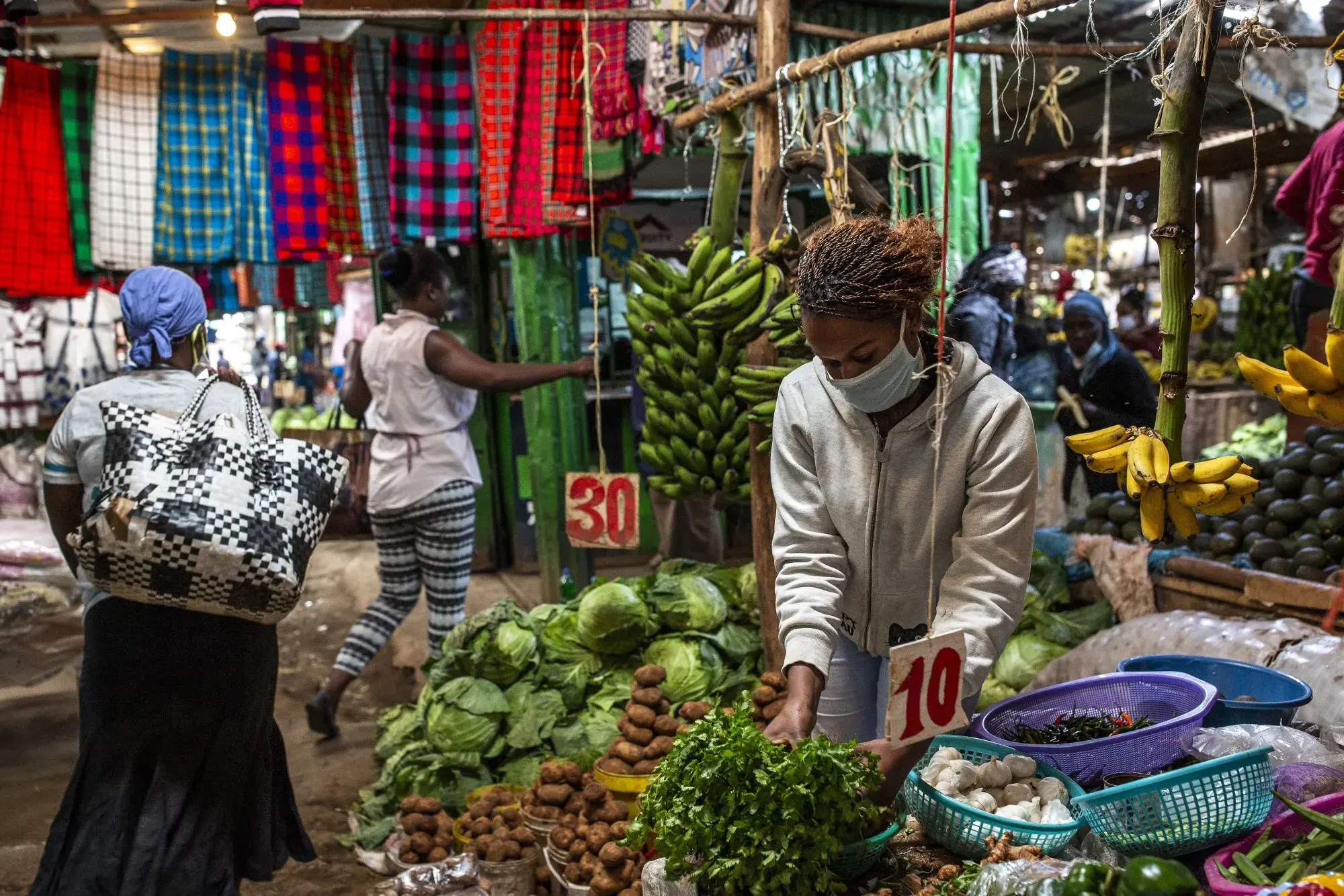
Traders and households under pressure The burden of the shock has fallen most heavily on traders and low-income households, with the informal sector absorbing much of the adjustment.
A survey of 220 traders across nine cities found that 82.7 percent reported price increases directly linked to the war, while 70 percent faced difficulties accessing fuel for generators and transport.
Many traders say the impact is pervasive and indiscriminate.
“Anything you can think of, even water,” a trader in Lagos said, describing the breadth of price increases.
Another trader in Awka noted that “No particular product” had been spared, adding that “everything has skyrocketed.”
For consumers, the effect has been a steady erosion of purchasing power. Rising transport costs and higher food prices have forced households to cut back on spending, with ripple effects across small businesses.
A cosmetics seller in Kano captured the shifting demand: “It will harm my business because customers will have less money to spend on beauty products when they are struggling to buy food.”
The report shows that 62.7 percent of traders expect the crisis to harm their businesses in the next three months, with the biggest concern being that goods will become too expensive for customers to afford.
Structural gaps and policy response in focus SBM says the crisis has once again exposed structural weaknesses in Nigeria’s economy, particularly its dependence on imported refined fuel and global pricing benchmarks.
Despite being a crude oil producer, Nigeria remains vulnerable to external shocks because it imports most of its refined petroleum products. Even domestic refining has offered limited insulation, as prices remain tied to international crude markets.
“Domestic refining does not mean domestic pricing,” the report stated, noting that local refinery output still reflects global price movements.
The government’s response has also come under scrutiny. SBM Intelligence pointed to the absence of targeted interventions such as fuel price stabilisation measures, transport subsidies or strategic fuel reserves.
“The authorities did not introduce targeted fuel subsidies, transport fare support, or a formalised price-stabilisation scheme,” the report said, adding that this has left households and small businesses to bear the full impact of the shock.
At the same time, Nigeria’s reliance on global shipping routes linked to the Strait of Hormuz has amplified the disruption, affecting not just fuel but also imports ranging from food to spare parts and electronics.
The report concludes that the Iran conflict is less an isolated event than a stress test of Nigeria’s economic resilience.
“The war in Iran is not merely the cause of Nigeria’s economic fragility. Rather, it is a magnifier,” it said, warning that without structural reforms, future global shocks could have even more severe consequences.