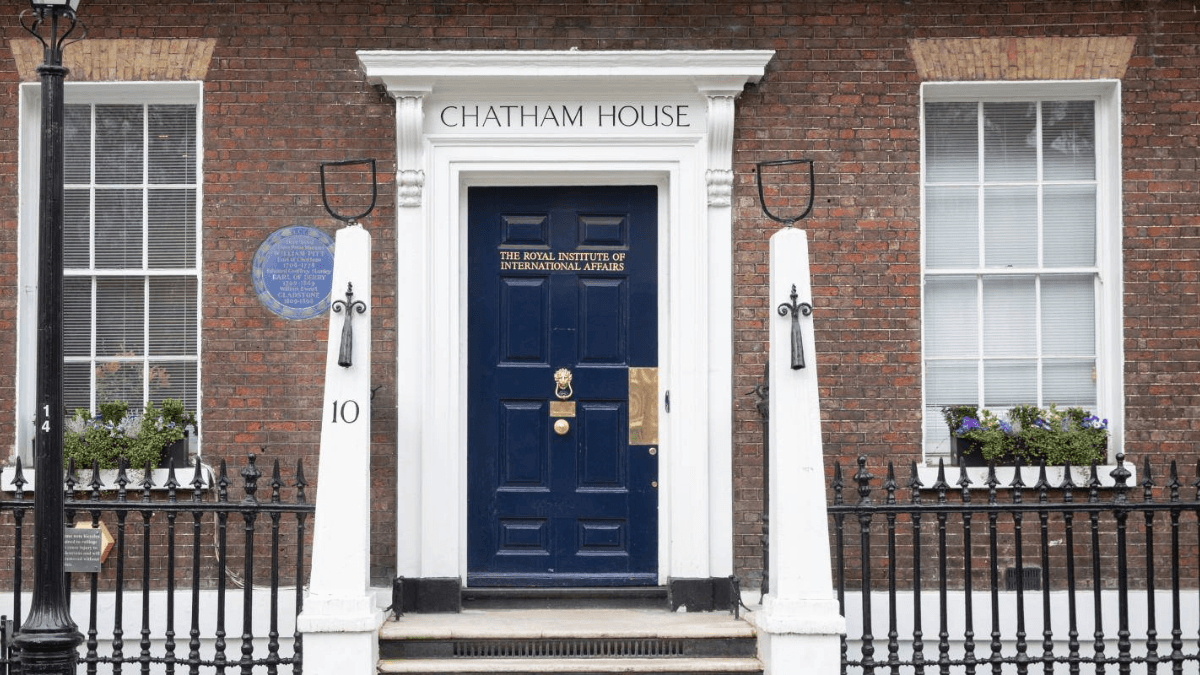
Nigeria’s voice entered one of the most prestigious policy rooms in London when Dipo Oladehinde, head of the energy desk at BusinessDay, joined a Chatham House roundtable, representing Nigeria’s perspective on how the current Gulf crisis could either finally accelerate the global shift away from fossil fuels or whether a short-term oil windfall would once again entrench more exploration.
- +BusinessDay’s journalist takes Nigeria’s solar movement to Chatham House
The global event convened energy strategists, economists, and transition experts from the UAE, Indonesia, and Europe to interrogate a topic titled ‘Beyond Chokepoints: A Pivotal Moment for Clean Energy.’
The global event convened energy strategists, economists, and transition experts from the UAE, Indonesia, and Europe to interrogate a topic titled ‘Beyond Chokepoints: A Pivotal Moment for Clean Energy.’
Oladehinde spoke third, following perspectives from the UAE and Indonesia, where he spoke about the ground-level texture of what Nigeria’s energy transition actually looks like when it happens without a policy blueprint behind it—something the assembled experts don’t always get from Nigeria.
He spoke about fuel subsidy removal and the social strain it has created. He talked about what the naira devaluation has done to the cost of energy imports. And he described the quiet, unglamorous solar boom spreading across Lagos and other commercial centres, not because of any government incentive scheme, but because businesses and households and small manufacturers have simply been priced out of diesel and have nowhere else to turn.
Nigeria’s solar story is moving, he noted. The financing, however, remains thin.
The conversation in the room, involving perspectives from Pakistan, South Africa, Indonesia, Japan, Europe, and the United States, returned repeatedly to a central tension: whether the current oil supply shock would jolt importing nations and vulnerable economies toward renewables, or whether the immediate scramble for energy security would pull investment back into fossil infrastructure.
The room included analysts from Equinor, Energy Intelligence, and Carbon Tracker; climate finance specialists from the Institute for Energy Economics and Financial Analysis; senior researchers from E3G; and officials linked to the UK Cabinet Office. Also present were academics from UCL, think-tankers from Japan’s Institute of Energy Economics, and a delegation from Chatham House’s own Environment and Society Centre.
For Nigeria, Africa’s top oil producer, yet a country where more than 80 million people still don’t have reliable access to grid electricity.
The country sits on reserves that the world is growing less willing to finance, even as it faces a domestic energy crisis that could, with the right capital, be substantially addressed by solar. The window to monetise those reserves is narrowing. The window to leapfrog into distributed renewables is open, but not indefinitely.
The roundtable was held under the Chatham House Rule, meaning no statements can be attributed to specific speakers. But the fact that Nigeria’s energy press corps had a seat at that table, among advisers shaping policy from London to Tokyo, was itself a signal of shifting gravity.