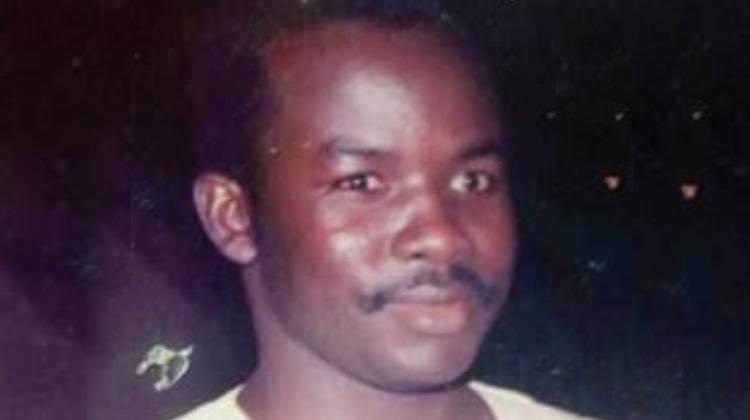
Kaduna State Governor, Uba Sani, has said journalist Bagauda Kaltho was killed by the military junta during Nigeria’s military era.
- +Military junta killed journalist Bagauda Kaltho – Kaduna gov
Kaltho, known for his investigative reporting, went missing between late 1996 and early 1997 under the regime of former Head of State, Sani Abacha.
Kaltho, known for his investigative reporting, went missing between late 1996 and early 1997 under the regime of former Head of State, Sani Abacha.
His disappearance has remained a subject of controversy, with calls over the years for a fresh investigation.
In 2024, a Federal High Court in Abuja ordered the Federal Government to investigate and prosecute the killers of journalists in Nigeria between 1986 and 2023, including Kaltho.
Further recognition came in 2025 when President Bola Tinubu conferred a posthumous national honour of Officer of the Order of the Niger on Kaltho, which his family described as a vindication of his legacy and a rebuttal of longstanding misinformation about his disappearance.
Speaking while receiving journalists on a tour of the North-West organised by the Presidency in Kaduna on Friday, Sani, while recounting events leading to Kaltho’s death, said the late journalist attended a meeting with pro-democracy activists in Kaduna before he was killed.
“We had a meeting, myself, Shehu Sani, and many other comrades, together with Bagauda Kaltho here in Kaduna.
“In the middle of the meeting, some of us left for another engagement. Kaltho went straight to his hotel, and about an hour later, we received a report that he was killed by the military junta at that time,” he said.
The governor noted that the killing reflected the risks faced by journalists and activists during the struggle against military rule, adding that several media professionals lost their lives in the process.
He cited Kaltho and Dele Giwa among journalists who died during the period.
The governor also used the occasion to warn against actions capable of undermining Nigeria’s democratic system, stressing that many of those who now speak about democracy did not participate in the struggle to actualise it.
He said pro-democracy activists, including himself, endured detention and persecution under the late Head of State, Sani Abacha, noting that he regained his freedom only after Abacha’s death.
Dismissing notions in some quarters that Tinubu is sidelining Northern Nigeria, he insisted that the region has benefited significantly from the current administration’s policies and projects.
“Let me make it clear to all of you, President Bola Tinubu has done to the North more than any leader in the history of Nigeria,” he said.
He cited major infrastructure projects approved for Kaduna State, including a proposed 50-kilometre light rail project estimated at about N1tn, as well as the Mandu–Birnin Gwari Road project, valued at N178bn.
Speaking, the Special Adviser to the President on Information and Strategy, Bayo Onanuga, commended Sani for what he described as visible development strides across Kaduna State, attributing the progress to reforms introduced by Tinubu.
He said the projects and achievements showcased during the visit reflected only “a tip of the iceberg” of what the Kaduna State Government had accomplished.
According to him, Sani has demonstrated that he is not an armchair critic but a leader capable of translating ideas into action.
“What we have seen today shows that he will walk the talk. He has done those things he had always advocated,” Onanuga said.
The presidential aide expressed surprise that some communities in the state lacked basic infrastructure for decades, noting that the current administration had changed the narrative by extending development to various parts of the state.
He cited areas such as Kafanchan as examples of previously underserved communities now witnessing government presence.
Onanuga also linked the progress in Kaduna to economic reforms introduced by the Tinubu administration, particularly the removal of fuel subsidy and foreign exchange adjustments.
He said the policies had freed up resources for states, enabling them to undertake developmental projects.
“The money being given to states is now being put to use. What we have seen in Kaduna is evidence of that,” he said.
He added that both the Federal Government and the Kaduna State Government were delivering on their mandates, noting that the tour was aimed at assessing the impact of policies and projects at both levels.