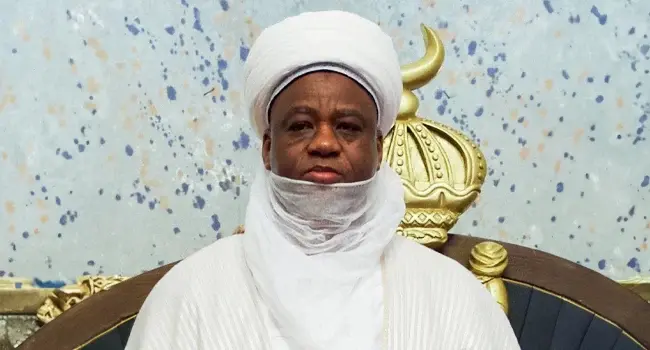
The Nigerian Supreme Council for Islamic Affairs has cautioned against linking criminal activities to any religion or ethnic group, warning that such narratives could deepen divisions and undermine efforts to tackle insecurity in the country.
- +June 12: NSCIA warns against linking crime to religion, ethnicity
The council made the call on Thursday in a Democracy Day message signed by its Public Affairs Officer, Abbas Jimoh, on behalf of the President-General of the NSCIA and Sultan of Sokoto, Muhammad Sa’ad Abubakar.
The council made the call on Thursday in a Democracy Day message signed by its Public Affairs Officer, Abbas Jimoh, on behalf of the President-General of the NSCIA and Sultan of Sokoto, Muhammad Sa’ad Abubakar.
The NSCIA said while insecurity remained a major challenge confronting the country, criminality should not be given ethnic or religious colouration.
The council noted with concern the persistent threats posed by banditry, kidnapping, terrorism and other forms of violent crimes, saying they continued to claim innocent lives, displace communities and hinder national development.
“Criminality should neither be given ethnic nor religious colouration, as such narratives deepen divisions and undermine collective efforts to address insecurity and achieve lasting peace,” the statement read.
The council condemned all forms of violence and criminality and urged those involved in such acts to abandon their activities.
“The Council unequivocally condemns all acts of violence and criminality and, for the umpteenth time, admonishes those involved to abandon and repudiate their destructive activities. Our thoughts and prayers remain with the victims and their families,” it stated.
The NSCIA also expressed concern over what it described as attempts by some individuals and groups to associate Nigerian Muslims with banditry, kidnapping and other violent crimes.
According to the council, such profiling is unfair and does not reflect the character of the majority of Muslims in the country.
“We wish to state unequivocally that such religious profiling is false, misleading, and grossly unfair to the overwhelming majority of peace-loving Nigerian Muslims who continue to live, work, and contribute positively to national development across all sectors of the society,” it said.
The council cited the recent controversy surrounding the kidnapping of students and teachers in Orire Local Government Area of Oyo State, saying subsequent developments had disproved attempts to link the incident to Islam, Muslims or Sharia.
“While some mischief-makers were hell-bent on criminalising the Muslims and the Shariah for the kidnapping of students and teachers in Orire Local Government Area of Oyo State, recent developments have vindicated the Muslims of the attempted false-criminalisation,” the statement added.
The NSCIA further argued that ethnic profiling was equally misleading, noting that suspects arrested in connection with the incident were not identified as Fulani, contrary to earlier reports.
“This should stop, and anyone who commits crimes should be labelled with the crimes committed and duly prosecuted according to the enabling laws of the land,” it stated.
The council urged media organisations, opinion leaders and other stakeholders to uphold professionalism, accuracy and fairness in their reports and public commentary.
It warned against narratives capable of inflaming tensions among Nigeria’s diverse communities and called for greater cooperation among government, security agencies and citizens in addressing insecurity.
The NSCIA also congratulated Nigerians on the occasion of the 2026 Democracy Day celebration, describing June 12 as a symbol of the country’s democratic struggle and a reminder of the importance of justice, accountability, inclusion and respect for human dignity.
The council commended the efforts of the Federal Government and security agencies in tackling insecurity and prayed for peace, stability and national development.
The NSCIA’s remarks come amid growing concerns over insecurity and public reactions to recent kidnapping incidents, including the abduction of students and teachers in Oyo State.
The council said the incident had sparked attempts to associate criminal activities with particular religious and ethnic groups, a trend it warned could fuel division and undermine efforts to combat insecurity.