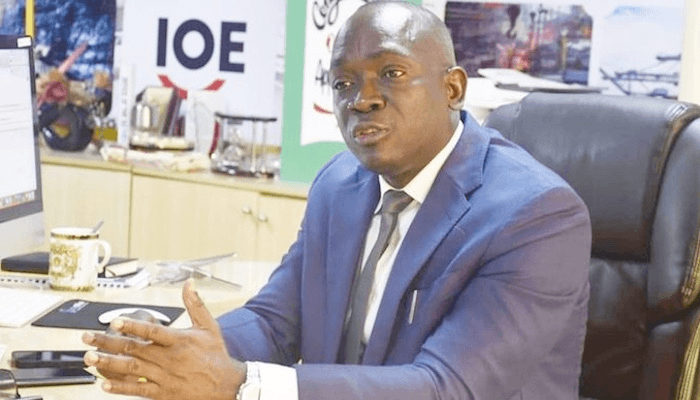
Adewale-Smatt Oyerinde, Director-General of the Nigeria Employers’ Consultative Association (NECA) and a leading voice within the Organised Private Sector (OPS), speaks in this exclusive interview with BusinessDay’s Joshua Bassey on key business and labour issues. He offers employers’ perspectives on the rising cost of doing business and the complex landscape of industrial relations in Nigeria. Excerpts.
- +Nigeria must tackle cost of living to make wage reforms effective – NECA DG
As workers mark May Day this week, how would you assess the state of labour-employer relations in Nigeria today, amid inflation, wage pressures and slowing business growth?
As workers mark May Day this week, how would you assess the state of labour-employer relations in Nigeria today, amid inflation, wage pressures and slowing business growth?
The state of labour employer relations today is under some strain, driven by a difficult economic environment and global uncertainties. Global analysis confirms that the business environment is not generally hospitable. While there are semblances of stability and progress in certain areas, there are contradictions in many others. The International Monetary Fund (IMF) recently revised Nigeria’s growth forecast for 2026 down to 4.1 percent, citing higher fuel and fertiliser prices and increased shipping costs, which weigh on non-oil activity. For employers, the cost of energy, logistics and regulatory issues remains a critical concern.
On the other side, workers are facing a sustained erosion of their purchasing power. While the N70,000 national minimum wage was implemented in some sectors, the Nigeria Union of Teachers (NUT) has publicly stated that several states are yet to fully implement it. Also, after a period of disinflation, prices are rising again. Inflation increased to 15.38 percent in March 2026, breaking an 11-month declining trend, and analysts project further increases for April. This combination of rising business costs and persistent wage pressures means the relationship will continue to experience fractures.
While we will continue to work and deepen our collaboration and partnership with organised labour, we hope that the social partners will take more interest in economic issues and join our advocacy in the same. The reality remains that if the business continues to struggle, it will impact its ability and capacity to meet the yearnings and expectations of the workforce. With social dialogue, we believe the strained areas will continue to be smoothened.
Employers have raised concerns over the rising cost of doing business. How can Nigeria balance workers’ demand for improved welfare with employers’ concerns about sustainability and competitiveness?
Balancing these legitimate but competing interests is the central challenge of our time. It requires pragmatism, not just demands. From the employer’s perspective, the most direct ways to create room for wage increases and improve welfare are to reduce the cost of production and increase productivity. Currently, energy costs are crippling, and interest rates are not smiling. With diesel at nearly N2,000 per litre, a significant portion of operating expenses goes to simply keeping the lights on and goods moving. Any discussion on wages must be accompanied by urgent government action to stabilise energy prices, reduce logistics costs and further improve the regulatory environment. We commend the Presidential Enabling Business Environment Council (PEBEC) for leading the charge on improving the ease of doing business in Nigeria.
Secondly, the government has a role to play in using fiscal policy to ease the burden. The new tax laws, which include provisions like the additional deduction for salary increases for low-income workers, are exactly the kind of targeted relief that can encourage employers to improve welfare without breaking their bottom line.
“With diesel at nearly N2,000 per litre, a significant portion of operating expenses goes to simply keeping the lights on and goods moving. Any discussion on wages must be accompanied by urgent government action to stabilise energy prices, reduce logistics costs and further improve the regulatory environment.”
Finally, we need to move towards productivity-linked pay models. It is not sustainable to demand wage increases without corresponding improvements in output and efficiency. A collaborative approach focused on reducing operating costs and improving productivity is one of the many paths to a sustainable balance.
Given NECA’s role in mediating industrial disputes, what lessons have recent engagements with the Nigeria Labour Congress and Trade Union Congress offered about preventing strikes before they escalate?
NECA’s role is to promote social dialogue and prevent disputes before they become crises. A key lesson from our recent engagements is that strengthening formal dispute resolution mechanisms is essential for prevention. This was a central theme at the 4th International Labour Adjudication and Arbitration Forum (I-LAAF), which NECA organised in Abuja on February 12, 2026.
At that forum, the minister of labour and employment, Mr Muhammad Dingyadi, gave the federal government’s full backing to NECA’s drive to strengthen the industrial courts and arbitration panels. He stated that accessible and efficient labour justice is critical for productivity, social stability, and confidence in the workplace and that strengthening these institutions would ensure fairness and promote industrial harmony across the country.
The lesson from this engagement is clear: When workers and employers believe there is a fast, fair, and professional system to resolve their grievances, they are far less likely to resort to strikes or lockouts. The forum also highlighted that the most effective labour justice system is one that prevents disputes before they escalate into litigation through clear human resource policies, sound collective bargaining processes, and sustained social dialogue. Delays and procedural bottlenecks in formal dispute resolution systems increase the cost of doing business and weaken confidence in institutions, which can lead to unrest. Therefore, our focus is on working with the government to ensure the National Industrial Court (NIC) and the Industrial Arbitration Panel (IAP) are well resourced and that alternative dispute resolution methods are embraced by all parties.
There is persistent debate over the adequacy of the N70,000 new minimum wage. From the employers’ perspective, what needs to happen to make wage reforms workable in both public and private sectors?