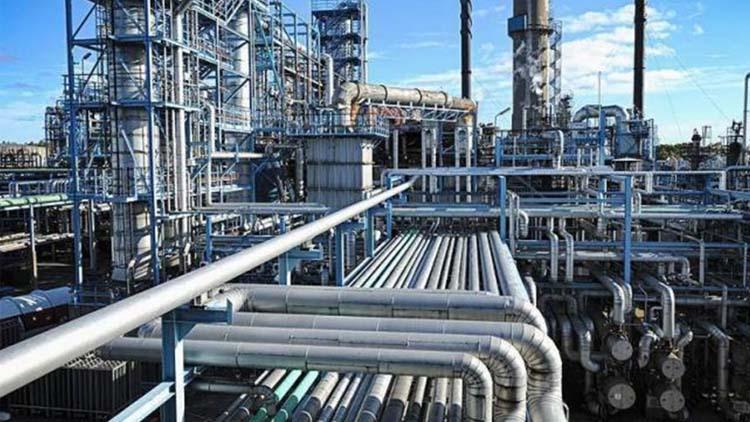
The global oil market is still very much a refinery game. With demand holding above 100 million barrels per day, data from the International Energy Agency (IEA) shows the real leverage in the oil value chain now sits downstream, where crude oil is processed into fuels that power transportation, industry, and broader economic activity.
- +Top 10 largest oil refineries in the world 2026
Globally, refining capacity is estimated to be just above 100 million barrels per day, closely tracking demand and leaving the market finely balanced, according to IEA oil market reports.
Globally, refining capacity is estimated to be just above 100 million barrels per day, closely tracking demand and leaving the market finely balanced, according to IEA oil market reports.
This tight supply and demand dynamic has made refining margins more sensitive to disruptions, while pushing countries to ramp up domestic processing capacity to cut fuel imports and protect foreign exchange reserves.
Industry data further indicates that large-scale refineries, particularly those processing upwards of 500,000 barrels per day, are increasingly central to global fuel supply chains, shaping trade flows and pricing benchmarks across regions.
The structure of the oil economy is also evolving. While upstream production remains critical, value capture is shifting toward refining, distribution, and petrochemical integration, as highlighted in multiple IEA assessments and global refinery datasets.
For many economies, refining is no longer just about fuel supply but a strategic lever for economic stability and growth.
As countries reposition for energy security amid shifting global dynamics, large refining hubs continue to play an outsized role in stabilising supply chains and supporting industrial expansion.
Here are the 10 biggest refineries in the world by processing capacity as of 2026.
For more than a century, ExxonMobil has remained a defining force in the global energy landscape, tracing its roots back over 140 years to the early days of the Spindletop oil boom in Texas. Today, the company operates across more than 50 countries, supported by a workforce of roughly 61,000 employees spanning scientists, engineers, and industry specialists focused on delivering energy and essential products worldwide.
One of its flagship operations sits in Beaumont, Texas, where ExxonMobil has built a sprawling petrochemical manufacturing hub that shows its scale and integration strategy.
The complex, which stretches across approximately 2,700 acres, combines refining, chemical production, polyethylene manufacturing, and lubricant blending into a single ecosystem. The site employs more than 2,000 workers, alongside thousands of contractors during peak activity periods.
Beyond refining, the Beaumont operation produces key petrochemicals such as ethylene and propylene, alongside speciality products including synthetic fluids, lubricant base stocks, and catalysts used across industrial applications.