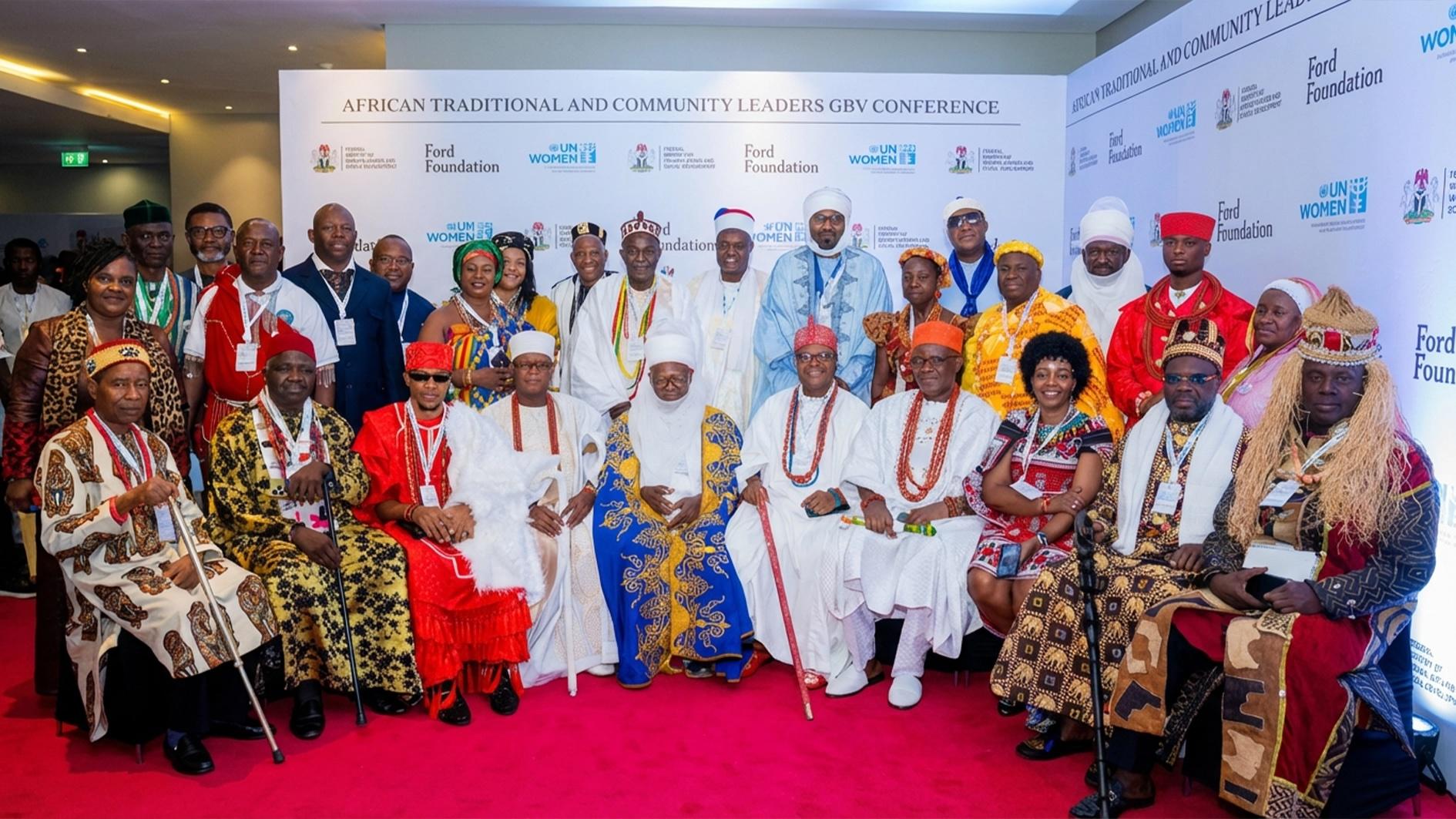
Nigeria Records Decline In Gender-Based Violence, Bets On Traditional Leaders To Sustain Gains
Nigeria recorded declines in gender-based violence, with stakeholders urging traditional and religious leaders to sustain progress through community action.
Nigeria recorded declines in gender-based violence, with stakeholders urging traditional and religious leaders to sustain progress through community action.
Nigeria is recording encouraging declines in gender-based violence (GBV) and harmful traditional practices, but the Federal Government, UN Women and development partners said on Monday that sustaining the momentum will depend on an unlikely but increasingly influential force—traditional, religious and community leaders.
The stakeholders made the assertion in Abuja at the close-out of the Leadership, Engagement, Advocacy and Prevention (LEAP) Project, a three-year initiative funded by the Ford Foundation, even as they unveiled a new regional programme to combat the growing menace of technology-facilitated violence against women and girls across West Africa.
Their optimism was against the backdrop of fresh national data showing measurable progress in reducing violence against women.
According to the 2024 Nigeria Demographic and Health Survey (NDHS), sexual violence against women declined from nine per cent in 2018 to five per cent in 2024, while physical violence experienced by women since the age of 15 dropped from 31 per cent to 19 per cent. Intimate partner violence also fell significantly from 36 per cent to 23 per cent during the same period, while the prevalence of female genital mutilation reduced from 20 per cent to 14 per cent.
Despite the improvements, stakeholders warned that violence against women remains a major public health and human rights challenge. Nigeria remains one of Africa’s most populous countries, with millions of women and girls still exposed to domestic violence, sexual abuse, child marriage and harmful cultural practices, while many survivors continue to face stigma and barriers to justice.
Speaking at the event, the Minister of Women Affairs, Hajiya Imaan Sulaiman-Ibrahim, said traditional, religious and community leaders occupy a unique position to reshape societal attitudes that fuel violence against women and girls.
She said laws and policies alone cannot eradicate GBV without community leaders challenging long-held beliefs and harmful practices that normalise abuse and discrimination.
The minister urged traditional institutions, faith leaders and men across communities to become champions of positive masculinity, gender equality and women’s rights, stressing that preventing violence begins with transforming the social norms that sustain it.
UN Women echoed the position, describing the LEAP Project as evidence that engaging custodians of culture can produce lasting behavioural change.
Delivering remarks on behalf of the UN Women Representative to Nigeria and ECOWAS, Ms. Beatrice Eyong, Acting Deputy Representative, Ms. Patience Ekeoba, said the project had demonstrated that preventing violence requires working with those who shape beliefs, influence behaviour and command the trust of communities. Over the past three years, the initiative helped traditional and religious leaders publicly reject harmful practices, strengthened partnerships between governments and traditional institutions, engaged more men and boys as allies, and established community accountability mechanisms that support women and girls.
She said the impact of the project had extended beyond Nigeria through collaboration with Liberia, Sierra Leone, Senegal, Niger and Ghana to develop a Regional Accountability Framework for Traditional Leaders on Gender-Based Violence Prevention, positioning traditional institutions at the forefront of efforts to end violence against women and girls across West Africa.
UN Women, however, cautioned that the latest survey also revealed a worrying decline in help-seeking by survivors of violence, indicating the need for stronger survivor-centred services, improved reporting systems, expanded psychosocial support and greater access to justice.
Building on the gains of the LEAP Project, the organisation announced that the Ford Foundation had approved funding for a new regional initiative, “Community-Led Advocacy and Digital Spaces for the Safety of Women and Girls in West Africa.”
The programme, to be implemented in Nigeria, Ghana and Senegal, will focus on tackling technology-facilitated gender-based violence, including online harassment, cyberstalking, image-based abuse and online exploitation, while deepening engagement with traditional and religious leaders and community institutions.
UN Women said the renewed investment reflected growing confidence that changing harmful social norms remains one of the most effective strategies for preventing violence against women and girls, adding that trusted community leaders must now extend their influence to promoting safe and inclusive digital spaces.
Stakeholders maintained that while the latest statistics offer hope, sustaining the downward trend would require continued investment in prevention, stronger community ownership and coordinated regional action to ensure every woman and girl can live free from violence both offline and online.