NATO faces mounting obstacles strengthening Arctic defences as growing security threats, infrastructure gaps and military competition test the alliance’s readiness.
- +NATO Faces Uphill Battle To Strengthen Arctic Defences
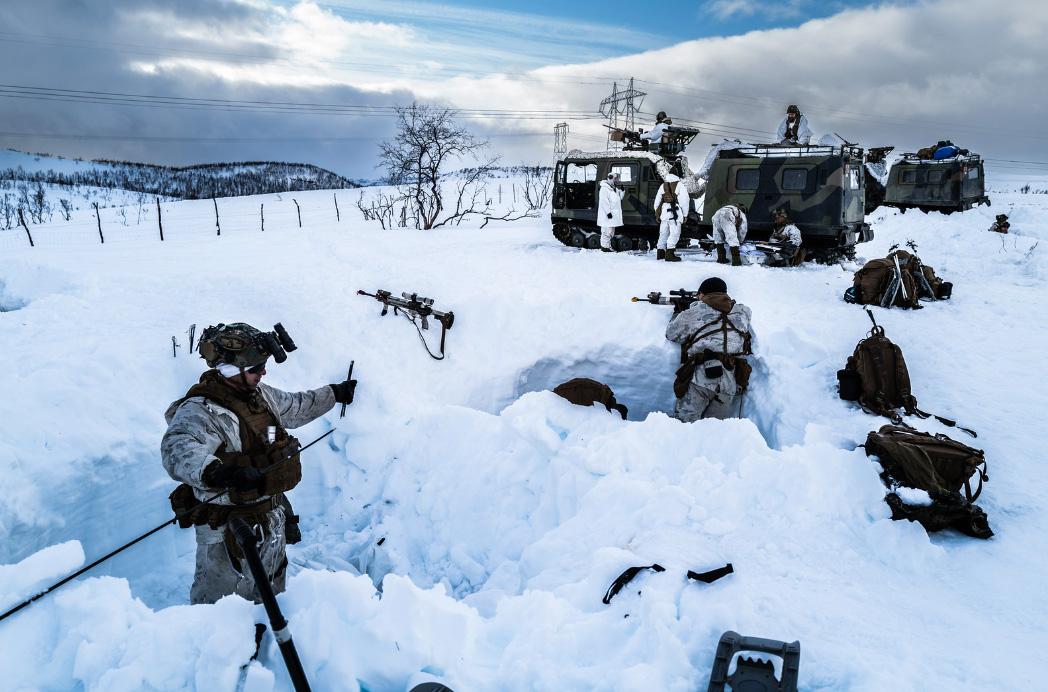
A large-scale military exercise in northern Norway brought together about 30,000 troops from NATO member states as they rehearsed a response to a simulated attack from an eastern adversary, widely understood to represent Russia.
A large-scale military exercise in northern Norway brought together about 30,000 troops from NATO member states as they rehearsed a response to a simulated attack from an eastern adversary, widely understood to represent Russia. The operation formed part of Arctic Sentry, a new initiative designed to reinforce the alliance’s northern defences.
The programme was announced earlier this year by NATO Secretary General Mark Rutte as part of efforts to assure US President Donald Trump that European allies and Canada were prepared to shoulder greater responsibility for Arctic security following his renewed interest in acquiring Greenland.
While the initiative helped ease political tensions with Washington, defence officials say transforming NATO’s Arctic capabilities will require years of sustained investment in specialised military equipment, including icebreakers, submarines, surveillance satellites, drones and advanced radar systems.
The Arctic has become an increasingly important geopolitical region as climate change opens new shipping lanes and exposes vast reserves of minerals and natural resources. Russia has significantly expanded its military footprint over the past decade, reopening Soviet-era bases, upgrading infrastructure and maintaining the world’s largest fleet of icebreakers.
Experts say Moscow’s military build-up gives it a considerable advantage in the High North, where the Kola Peninsula hosts much of Russia’s nuclear submarine fleet and strategic missile capabilities. The region provides one of the shortest routes for potential missile strikes toward North America, making surveillance and early warning systems critical for NATO.
Military analysts also warn that operating in the Arctic presents unique challenges. Extreme temperatures, harsh weather conditions and vast stretches of ocean require expensive specialised equipment capable of functioning in freezing conditions, where conventional military hardware often struggles.
Climate change is creating additional complications by altering ocean temperatures and salinity, making it increasingly difficult to detect submarines beneath Arctic waters. Defence experts believe NATO will need to invest heavily in new underwater sensors and monitoring technologies to maintain effective tracking capabilities.
Despite the obstacles, several NATO members have begun expanding their Arctic military presence. Finland and the United States are collaborating on new icebreaker construction, while Norway is investing in additional frigates and submarines. Nordic countries have also combined elements of their air forces to strengthen regional defence cooperation.
Canada has announced a multi-billion dollar Arctic defence strategy focused on improving military infrastructure, including new airfields and ice-capable vessels, while deepening cooperation with Nordic allies as concerns over regional security continue to grow.
The United Kingdom is also increasing its military commitment by doubling the number of Royal Marines permanently stationed in Norway, where troops undergo specialist cold-weather training. NATO has additionally activated a new multinational force based in northern Sweden and Finland to improve its readiness across the region.
Nevertheless, defence officials acknowledge that securing long-term funding for Arctic operations remains difficult while Russia’s war in Ukraine continues to dominate military priorities across Europe.
Although US military commanders have reaffirmed Washington’s commitment to defending every part of NATO territory, uncertainty surrounding future American troop deployments and President Trump’s repeated criticism of the alliance have fuelled concerns among European governments.
Norwegian leaders continue to argue that maintaining a strong US presence in the Arctic remains essential, stressing that Russia’s vast nuclear arsenal positioned near Norway represents a direct strategic concern not only for Europe but also for the United States.