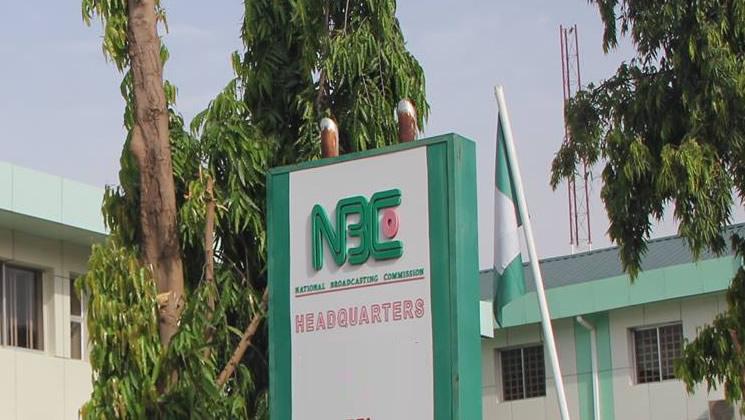
NBC: Nigeria’s Digital Switch-Over To Unlock N605.2bn Ad Market, Boost Creative Economy
NBC says Digital Switch-Over will unlock N605.2bn ad market, expand revenue, and transform Nigeria’s broadcasting landscape nationwide.
NBC says Digital Switch-Over will unlock N605.2bn ad market, expand revenue, and transform Nigeria’s broadcasting landscape nationwide.
The National Broadcasting Commission (NBC) has said Nigeria’s planned Digital Switch-Over (DSO) programme will unlock a N605.2 billion national advertising market for broadcasters and content creators, as the country moves to fully digital terrestrial television broadcasting.
The Director-General of the NBC, Charles Ebuebu, made this known at a press conference in Abuja attended by Nairametrics, where he also led a media tour of several facilities of the Nigerian Communications Satellite Limited (NIGCOMSAT).
He said the national rollout of the DSO is targeted for 17 June 2026, while the final analogue switch-off is scheduled for 31 December 2028.
According to him, the transition will fundamentally reshape broadcasting economics, infrastructure access, and content distribution across Nigeria.
“The DSO will enable Nigerian government institutions to deliver digital broadcasting to every household across a vast and uneven terrain within a commercially sustainable, technologically credible, and regulatorily defensible structure,” Ebuebu said.
He added that the reform would significantly expand revenue opportunities across the media and creative sectors.
“The DSO will unlock the N605.2 billion national advertising market through verifiable audience measurement, generating new revenue streams for broadcasters and content creators,” he added.
Ebuebu also pointed to the broader economic impact of the programme, particularly through spectrum reallocation and digital infrastructure development.
He explained that the release of the digital dividend spectrum (700/800 MHz), valued at over $1 billion in potential auction proceeds, would be reinvested into digital infrastructure and rural broadband expansion.
On the creative economy, he noted that the sector already contributes about N5 trillion to Nigeria’s GDP and supports more than 4.2 million jobs, adding that the DSO would further strengthen its growth and international reach.
“To ordinary Nigerians, the basic FreeTV service carries no monthly subscription. The dish required is minimal, while the decoder is an open-standard DVB-S2 device freely available on the open market for as little as N15,000–N25,000,” Ebuebu said.
He urged broadcasters under the Broadcasting Organisations of Nigeria (BON) and independent stations to migrate to the FreeTV platform, take advantage of the 18-month free carriage window, and actively participate in its governance structure.
However, he acknowledged that the set-top box framework is currently facing litigation involving local manufacturers, stressing that the legal challenge does not amount to a nationwide injunction capable of halting implementation.
On the satellite infrastructure component of the project, the Managing Director and Chief Executive Officer of NIGCOMSAT Limited, Jane Egerton-Idehen, said the agency is already working on long-term replacement capacity for national broadcasting resilience.
She disclosed that NIGCOMSAT 2A is expected to launch in 2028, while NIGCOMSAT 2B is scheduled for 2029, noting that both timelines are based on structured procurement and manufacturing processes.
“The Commission and NIGCOMSAT have already secured an interim commercial backup satellite at the same 42.5°E orbital slot to ensure seamless service during the transition,” she said.
Egerton-Idehen also addressed concerns around the cost and logistics of potentially repointing satellite dishes, stating that such a scenario would be avoided.
She added that NIGCOMSAT would not pursue any approach that requires mass repointing of dishes nationwide, describing such an exercise as unnecessarily disruptive.
According to her, a nationwide campaign covering about five million households would cost between N5 billion and N10 billion, adding that implementation would be carried out in phases.
“We will implement a phased, zone-by-zone migration to avoid national blackouts,” she said.
The DSO programme was previously reaffirmed in 2022 when the Federal Government announced that it had cleared all outstanding debts owed to service providers involved in the transition.
Then Minister of Information and Culture, Alhaji Lai Mohammed, disclosed this during the 26th edition of President Muhammadu Buhari’s Administration Scorecard Series in Abuja.
He said the Federal Government had resolved that the DSO process must be sustainable and driven largely by the private sector, following earlier delays in implementation.
Mohammed also stressed that the transition should be self-sustaining, with no further subsidies for set-top boxes or signal carriage.
The Digital Switch-Over, which represents the transition from analogue to digital broadcasting, has remained a key policy priority for the Federal Government.
The government has consistently argued that the project will expand local content creation, create jobs, reduce content monopolies, and improve on-demand television services for millions of Nigerian households.