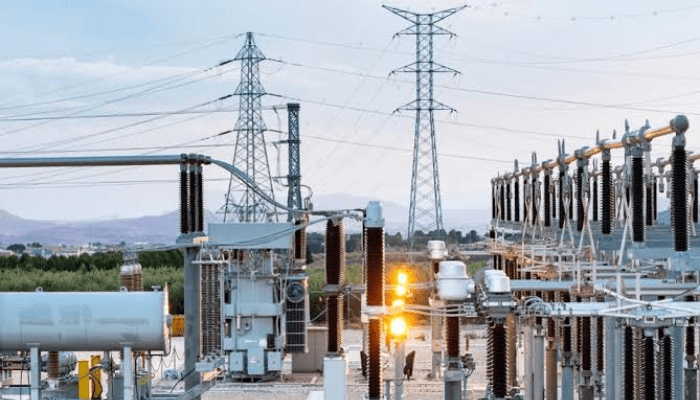
Investors eyeing Nigeria’s long-troubled power sector are increasingly bypassing broad national grid exposure in favour of state-led electricity deals with identifiable demand, contracted off-takers and clearer governance, a quiet but consequential shift in how Africa’s most populous country finances its energy future.
- +Investors bet on state-led power deals over national grid
The pivot, documented in a PwC report published this month following the firm’s Annual Power and Utilities Roundtable, reflects the early commercial consequences of the Electricity Act 2023, which devolved significant regulatory authority from federal institutions to Nigeria’s 36 states.
The pivot, documented in a PwC report published this month following the firm’s Annual Power and Utilities Roundtable, reflects the early commercial consequences of the Electricity Act 2023, which devolved significant regulatory authority from federal institutions to Nigeria’s 36 states.
Two years into implementation, that law is beginning to reshape not just who regulates power, but who gets funded.
“Investors are assessing projects on a case-by-case basis, with bankability driven by regulatory clarity, tariff credibility and cash-flow visibility,” the PwC report noted, summarising discussions with senior financiers.
“States are approaching financiers with integrated propositions that link generation, distribution and demand within defined geographic areas,” the report titled ‘Priority actions for the successful evolution of Nigeria’s multi-tier electricity market’ said.
That marks a decisive break from the pre-2023 era, where any power investment ultimately depended on the solvency of the national grid and the collection woes of the legacy distribution companies, or DisCos.
For years, Nigeria’s power sector attracted hesitant capital at best, deterred by a national market plagued by opaque subsidy structures, unreliable offtake arrangements and distribution companies nursing balance sheets ravaged by legacy acquisition debt.
The country’s installed generation capacity stands at roughly 14 gigawatts, yet available capacity typically hovers between 4,000 and 5,000 megawatts, a stubborn gap driven by gas supply constraints, network limitations and system inefficiencies that predate the current reform cycle.
“Access to capital is not the main constraint facing the sector,” Peter Olowononi, director of client relations for Anglophone West Africa at the African Export-Import Bank, told the roundtable. “The primary challenge lies in structuring projects with clear risk allocation, predictable revenue and credible regulatory oversight.”
States are approaching lenders with integrated proposals that link generation, distribution and demand within specific geographic boundaries, something financiers rarely encounter when dealing with the national grid.
Where those packages include public infrastructure as anchor demand, hospitals, water treatment facilities, government buildings, financing conversations are advancing faster, according to participants at the roundtable.
“Projects which link generation, distribution and offtake within defined geographic areas offer clearer revenue visibility,” Olowononi said. “Where demand is anchored by public infrastructure, industrial users or structured offtake arrangements, financing discussions tend to progress more quickly.”
The shift carries the fingerprints of the Electricity Act itself. By enabling states to license, regulate and set tariffs for intra-state electricity activity, the law has fragmented what was once a single, unwieldy national market into smaller units that investors can underwrite on their own terms.
Still, capital remains conditional. Regulatory credibility at the state level is uneven, a point the report does not shy away from.
More than 15 states have begun activating electricity markets under the Act, but their institutional readiness varies sharply.
Some have passed enabling laws, established regulatory commissions and transferred oversight from the federal Nigerian Electricity Regulatory Commission.
Others remain in earlier phases of setup, with limited technical capacity, sparse demand data and untested enforcement frameworks.
“Legal authority alone does not translate into effective regulation,” the PwC’s report said, pointing to Lagos State as a practical example of phased implementation, one that prioritises service continuity and investor confidence over immediate enforcement.
No state is moving faster than Lagos, Nigeria’s commercial capital. Biodun Ogunleye, the state’s Commissioner for Energy and Mineral Resources, described a “phased, non-punitive transition” designed to preserve service continuity while building regulatory credibility.
Crucially, Lagos is embedding electricity planning into broader development priorities rather than treating it as a standalone technical problem. That sends a signal to financiers: tariffs will be credible, enforcement will be predictable, and state backing is real.
The PwC report notes that “investor engagement is increasingly shaped by the clarity and structure of sub-national electricity strategies, rather than national market conditions alone.”
This is not a full retreat from federal oversight. The national grid is not going away. The Federal Government, through Minister of Power Adebayo Adelabu, is concentrating on transmission reliability, grid stability, large-scale metering and subsidy management. More than 15 states have now activated electricity markets at varying stages of readiness.
Rekhiat Momoh, CEO of Eko Electricity Distribution Company, disclosed that outstanding receivables at her DisCo alone exceed N183 billion, including N66 billion owed by government ministries and agencies. That kind of liquidity trap is precisely what state-led, ring-fenced deals aim to avoid.
Sector revenues climbed from roughly N1 trillion in 2023 to approximately N1.7 trillion in 2024, with projections of N2.3 trillion by end-2025, according to figures presented by Adebayo Adelabu, minister of power.
Grid collapse incidents have fallen sharply, and a historic generation peak of 5,801 megawatts was recorded in 2025. Federal metering programmes, the Presidential Metering Initiative and the World Bank-backed Distribution Sector Recovery Programme, target deployment of more than 13 million meters over the medium term.
The metering gap remains a critical vulnerability. The Presidential Metering Initiative and the World Bank-backed Distribution Sector Recovery Programme are targeting more than 13 million meters over the medium term.
At Eko DisCo alone, about 145,000 customers were previously billed on estimated consumption, though over 119,000 meters are now expected to be deployed.