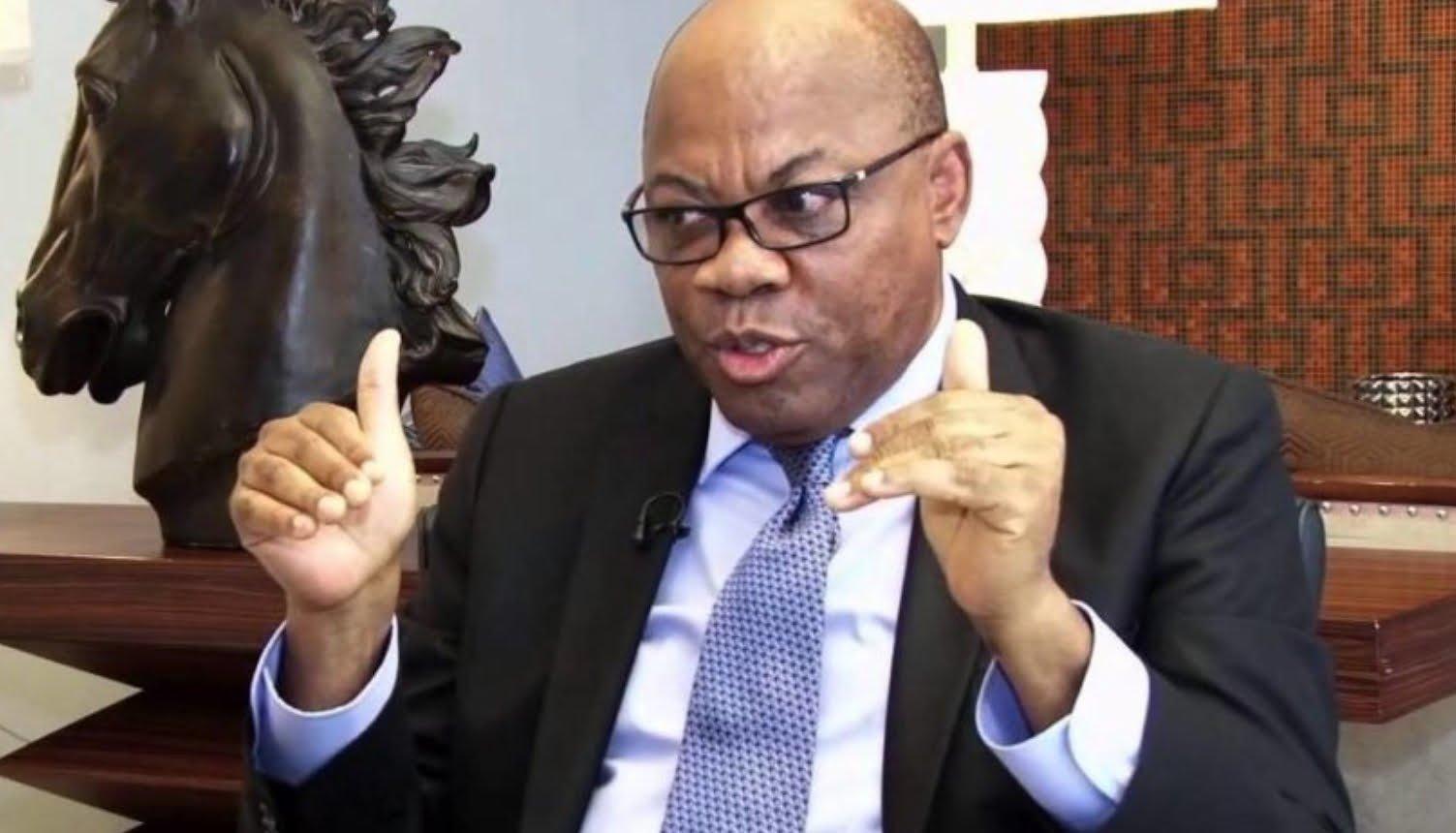
Agbakoba Warns State Police Could Become ‘Tools Of Oppression’ Without Constitutional Safeguards
Agbakoba urges constitutional safeguards for state police, warning governors could weaponise forces without institutional independence protections.
Agbakoba urges constitutional safeguards for state police, warning governors could weaponise forces without institutional independence protections.
Senior Advocate of Nigeria, Olisa Agbakoba, has warned that proposed state police structures could become instruments of political oppression unless Nigeria undertakes wider constitutional reforms to insulate critical institutions from executive interference.
In a letter addressed to the Secretary to the Government of the Federation, George Akume, Agbakoba welcomed President Bola Tinubu’s decision to transmit an executive bill to the National Assembly seeking an amendment to Section 214 of the 1999 Constitution to pave the way for state police.
He described the move as “a welcome development” capable of improving security and bringing policing closer to local communities.
“I commend the President for transmitting to the National Assembly an executive Bill proposing the amendment of Section 214 of the 1999 Constitution to introduce the long-awaited state police. This is a welcome development that will, if properly implemented, enhance public security and bring law enforcement closer to the communities it serves,” he wrote.
The former president of the Nigerian Bar Association, however, argued that the debate on state police should trigger broader discussions on devolution of powers to states and local governments.
According to him, functions such as drivers’ licences, prisons, marriage registration, arbitration, trade regulation and business name registration could be more effectively managed at subnational levels.
Agbakoba expressed concerns that state police could suffer the same fate as State Independent Electoral Commissions and local governments, which he said had largely fallen under the control of state governors.
“Devolution without institutional protection is reform in name only, and history has shown that where institutions lack genuine constitutional protection, they inevitably become instruments of executive power rather than servants of the people and the Constitution,” he stated.
Drawing comparisons with South Africa, Agbakoba pointed to Chapter 9 of the South African Constitution, which establishes and protects institutions supporting constitutional democracy from executive interference.
He noted that institutions such as the Public Protector, Human Rights Commission, Electoral Commission and Auditor General derive their independence directly from the constitution, enjoy security of tenure and are accountable to parliament rather than the executive.
“The result is that in South Africa, neither the President nor any provincial governor can dictate to or manipulate these critical institutions,” he said.
Agbakoba proposed that key Nigerian institutions including the Independent National Electoral Commission, the Economic and Financial Crimes Commission, the Independent Corrupt Practices and Other Related Offences Commission, the Central Bank of Nigeria and the National Judicial Council should be transformed into constitutionally protected institutions insulated from executive control.
He further advocated guaranteed funding through direct charges on the Consolidated Revenue Fund and oversight by the National Assembly or State Houses of Assembly rather than the executive arm of government.
Citing constitutional scholar Ben Nwabueze, Agbakoba said the reforms aligned with the principle of limited government.
“This process has been described by Professor Ben Nwabueze as the concept of limited government, which is the principle that executive power is not at large but is constrained by independent institutions guaranteed by the Constitution,” he stated.
He warned that failure to embed state police within an independent constitutional framework would worsen existing governance challenges.
“If not, if state police are simply handed to governors without these protections, they will inevitably become tools of oppression, and Nigeria will have traded one problem for a far worse one.”
Agbakoba proposed a tripartite appointment and removal process for heads of state police formations involving the Police Service Commission, governors and State Houses of Assembly to prevent political interference.
“The same tripartite structure should govern removal, so that no single arm of government can unilaterally install or dislodge the head of the police,” he said.
He urged the Federal Government to give serious consideration to the proposed constitutional reforms as discussions around state policing gather momentum in the country.