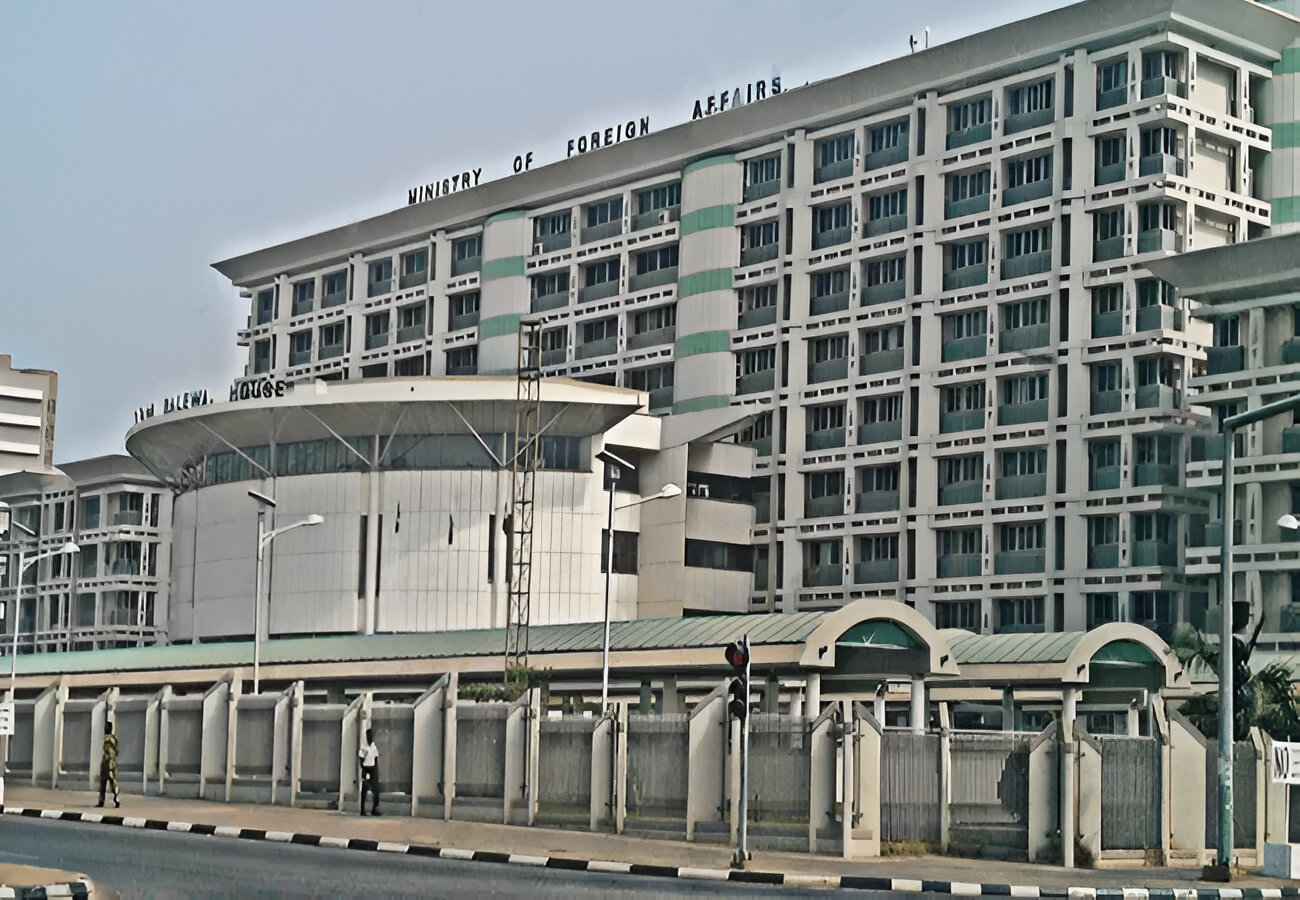
Nigeria has been at the receiving end of travel advisories from major Western nations for many years. In theory, the primary audience of these advisories is their nationals living here and those yet to step out of their shores. Embassies routinely send dispatches to their home governments. Such reports contain assessments of the political, economic and security situations of their host countries. These contribute to policy formulation and business decisions.
- +EDITORIAL: Foreign Travel Advisories: Nigeria should invoke reciprocity
The US Department of State issued a statement on 8 April warning its nationals in Nigeria to avoid travelling to 23 of Nigeria’s 36 states due to widespread insecurity: insurgency, kidnapping for ransom, communal violence and banditry.
The US Department of State issued a statement on 8 April warning its nationals in Nigeria to avoid travelling to 23 of Nigeria’s 36 states due to widespread insecurity: insurgency, kidnapping for ransom, communal violence and banditry. The recent warning from the US to its nationals is troubling. The grounds of the advisory are wide-ranging and contentious in their hyper-generalisation.
Admittedly, terrorists have been carrying out attacks, including those on military bases, which have led to the loss of weapons and the death of soldiers and their commanders. The latest high-profile victim was Brigadier-General Oseni Braimah, who was killed in the Benisheikh attack. He was buried with some soldiers last Wednesday in Maiduguri.
A recent video of 416 people, comprising mainly women and children abducted in Ngoshe, Gwoza in Borno State, is also indicative of the level of insecurity in the country. The kidnapped victims are shown begging to be released. In Plateau, Benue, Zamfara and Kaduna states, bloodbath is alarmingly common. In particular, the last Easter period remains one of the bloodiest in recent times.
This appears to be the backdrop of the updated travel advisory issued by the US. The listed states that American citizens are warned to stay clear of include Zamfara, Kano, Sokoto, Katsina, Niger, Kaduna, Borno, Adamawa, Yobe, Gombe, Jigawa and Bauchi – all in the North-west and North-east. Others are Plateau, Benue, Kogi and Kwara states in the North-central. Also, Anambra, Abia, Imo, Enugu in the South-east and Rivers, Delta and Bayelsa states in the South-south.
A travel advisory in relation to the gory images from places like Plateau, Benue, Borno, Zamfara, Niger, Kwara and Kaduna states is understandable. However, it is disappointing that the US went as far as flagging 23 states. Those states have been spotlighted as “Do not visit” or “Reconsider visit” places. In addition, the US Department of State has authorised the departure of all non-essential staff and their family members from the US Embassy in Abuja.
A similar travel advisory has been issued by the UK Foreign, Commonwealth and Development Office (FCDO) to UK citizens in Nigeria. Quite often, the UK also maintains high-risk alerts for its nationals in the Middle-East, targeted at Lebanon, Yemen, Syria, Afghanistan and Somalia, among others, due to conflict.
The Minister of Information and National Orientation, Mohammed Idris, has challenged the basis for these sweeping travel advisories. He said, “While we acknowledge isolated security challenges in some areas, there is no general breakdown of law and order, and the vast majority of the country remains stable.”
Mr Idris has a point regarding the absence of a general breakdown of law and order. Nonetheless, Nigeria needs to do much more. Sadly, the Nigerian government is not playing a similar role for its nationals who are overseas and even those within Nigeria.
No country is crime-free or insulated from security challenges. For instance, mass shootings in the US, which happen with frenetic frequency, continue to claim the lives of many children in schools, other citizens in shopping malls, churches, mosques and synagogues. Security personnel are sometimes killed or injured in such incidents and other targeted attacks on law enforcement. These constitute serious security breaches in the US.
An independent survey on crimes in the US by Spartacus Law Firm, released in mid-2025, listed the 10 most dangerous US cities for tourists. Houston, Texas with an 88.2 score, was ranked first. Detroit, Denver. Washington, Philadelphia, Dallas and Los Angeles fall in this felony loop. The epidemic of gun violence in the US is evident in the 689 mass shootings in 2021; and 559 cases in 2023, according to data from Gun Violence Archive.
It is worth emphasising that the excessively broad and over-generalised US travel advisory was issued at a time of its military collaboration with Nigeria in its counter-terrorism fight. This is quite telling. It raises questions about the effectiveness of the ongoing surveillance, intelligence and training that the US provides to Nigeria, and for which it deployed 200 troops in early February.
Are Nigerian citizens in the US and at home guided by any travel advisory for their safety when visiting the US and other countries with major issues relating to street criminality and organised violence? No. Nigeria needs to wake up from its slumber and invoke the age-long reciprocity principle in foreign relations for its own good.
Nigerians deserve to know the geographic spaces where acts of criminal and organised violence by non-state and extra-state actors are endemic. Regularly updated travel advisories would be of great service to our diasporic populations and citizens at home, who are contemplating a visit abroad.
It is embarrassing that our foreign missions have been arguably dysfunctional since October 2023, when President Bola Tinubu recalled 109 High Commissioners/Ambassadors for unjustifiable reasons. For two-and-a-half years, they have been in Nigeria.
On 6 March, 65 nominees were appointed for these vacant diplomatic positions, leaving 45 positions still pending. The nominees remain in Nigeria, as they wait for their letters of agreement to be accepted by host countries.
Finally, the authorities in Abuja should begin to treat foreign travel advisories with extreme seriousness. While they are not issued in a social vacuum, the language tends to be pejorative, grossly exaggerated and indirectly self-congratulatory.
To be clear, these advisories influence perceptions of Nigeria in the eyes of other countries. They hurt businesses and scare away foreign investors — rightly or wrongly. Above all, the underlying factors – significant security challenges and metastasised economic headwinds – should be fixed by Nigerian leaders.