Senate condemns abduction of 15 passengers on Calabar–Oron waterways, orders rescue operation
- +…Begins probe on COVID resurgence
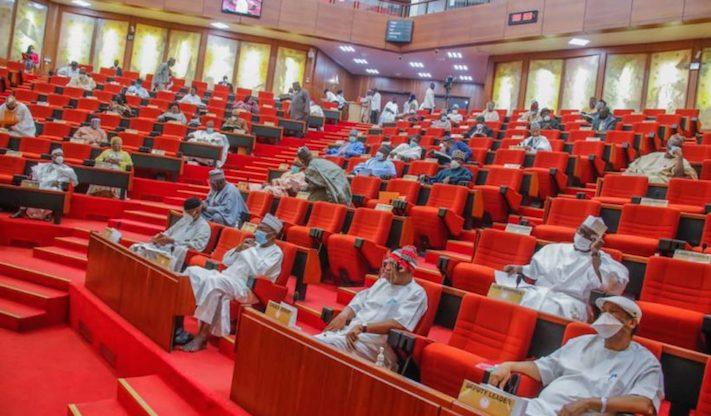
The Senate on Thursday strongly condemned the hijack of a commercial ferry and the abduction of 15 passengers, reportedly including 2026 JAMB candidates by suspected sea pirates along the Calabar–Oron waterways.
The Senate on Thursday strongly condemned the hijack of a commercial ferry and the abduction of 15 passengers, reportedly including 2026 JAMB candidates by suspected sea pirates along the Calabar–Oron waterways.
Lawmakers called for immediate action from security agencies, urging coordinated rescue operations to ensure the safe return of the victims.
The Upper Chamber specifically urged the Chief of Naval Staff, Vice Admiral Idi Abbas, Tunji Disu, the Inspector General of Police, and other relevant agencies to act without delay.
The Senate said, “to immediately deploy coordinated search-and-rescue operations to secure the safe and unconditional release of all the abducted victims of this heart-rending incident.”
It also called on the Nigerian Navy, Marine Police, and the Nigerian Maritime Administration and Safety Agency (NIMASA) to intensify surveillance, patrol, and intelligence gathering along the waterways.
Lawmakers further mandated the Committees on Navy, Marine Transport, and National Security and Intelligence to investigate the rising insecurity on the Calabar–Oron axis and recommend lasting solutions.
The Senate also directed the Joint Admissions and Matriculation Board (JAMB) to explore safer examination arrangements for students, to reduce interstate travel risks for young candidates.
Resolutions followed a motion of urgent national importance titled, “The heart-rending hijack of a boat and abduction of no fewer than 15 passengers, including some reported 2026 JAMB candidates by sea pirates along the Calabar–Oron waterways,” sponsored by Sampson Ekong (APC, Akwa Ibom South).
In his presentation, Ekong said, “the Senate: Notes with grave concern that no fewer than fifteen (15) Nigerians travelling in a commercial ferry from Calabar heading to Oron via the Calabar–Oron waterways were, on Friday, violently abducted by suspected sea pirates.”
He further noted, “that among the abducted passengers were young people reported to be prospective candidates for the 2026 Unified Tertiary Matriculation Examination (UTME), whose aspirations for higher education now hang in the balance due to this tragic incident.”
Ekong added, “that eyewitness accounts and local fishermen reports indicate that the heavily armed pirates ambushed the ferry mid-sea, forcefully commandeered the vessel, and whisked away the passengers at gunpoint to unknown destinations.”
He warned that the incident had deepened fear across coastal communities.
“This heinous act has thrown families into anguish, leaving parents and loved ones in deep distress, while heightening fear and insecurity across coastal communities in Akwa Ibom and Cross River States,” he said.
He further cautioned that the waterways had become increasingly unsafe.
“Disturbed that the Calabar–Oron waterways… have increasingly become a hotspot for criminal activities including piracy, kidnapping, smuggling, and armed robbery,” Ekong said.
He added that repeated interventions had not yielded lasting results.
“Despite previous assurances and interventions by relevant security agencies, incidents of maritime insecurity persist, thereby undermining public confidence in the safety of inland waterways.”
Ekong also warned of wider national consequences, stating that “the continued vulnerability of passengers along these waterways poses a threat not only to human lives but also to commerce, inter-state connectivity, and national security.”
He concluded that failure to act decisively would worsen insecurity.
“Worried that failure to decisively address this menace may embolden criminal elements, discourage legitimate economic activities, and deepen insecurity in the coastal regions of the country”.
Similarly, the Senate directed its Committee on Health to investigate reports of a suspected outbreak of COVID in Nigeria, more than five years after the country’s last major encounter with the virus.
The resolution followed concerns triggered by a confirmed case in Cross River State, raising fresh questions about surveillance, preparedness, and response mechanisms within the nation’s health system.
Godswill Akpabio, the Senate President, who issued the directive during plenary, mandated the Committee, chaired by Ipalibo Banigo to ascertain the veracity of the development and report back to the Chamber.
He urged the panel to act swiftly, noting the need to prevent any potential spread and reassure Nigerians amid growing anxiety.
The move by the upper chamber comes after the Cross River State Ministry of Health confirmed a COVID-19 case earlier in the week.
The patient, identified as a Chinese national, had tested positive for the virus and was subsequently admitted for treatment.
Health authorities in the State have since commenced contact tracing and profiling of individuals who may have been exposed to the patient, as part of containment efforts.
Nigeria first recorded COVID-19 in February 2020, when an Italian national tested positive in Ogun, marking the index case of the virus in the country.
The outbreak later escalated into a nationwide public health crisis, prompting lockdowns, travel restrictions, and the activation of emergency response structures coordinated by the Nigeria Centre for Disease Control.
At the height of the pandemic, thousands of infections were recorded across the country, with significant strain on healthcare infrastructure and the economy. Vaccination campaigns and public health interventions eventually led to a decline in cases, allowing for a gradual return to normalcy.
However, public health experts have consistently warned of the risk of resurgence, particularly with the emergence of new variants globally and the relaxation of preventive measures.
Findings from the committee’s investigation are expected to guide further legislative and policy actions aimed at safeguarding public health and preventing another large-scale outbreak.