April 30 was supposed to be the day we said goodbye to Showmax, the streaming app of African pay-TV giant MultiChoice. I’ve been refreshing the Google Play Store all day. I wrote this opening lede on Thursday night, standing guard, watching for the exact moment Canal+ sunsets the app. When you read this in the morning, give me your own update, soldier: is Showmax still up?
- +👨🏿🚀TechCabal Daily – Home Affairs’ AI problem
- +The ecosystem is gathering to define what’s next—will you be there?
- +🎟️ Save 15%: Grab your Early Bird tickets here before prices increase!
That said, South Africans, if you are reading this, how are you feeling about saying goodbye to Showmax?
That said, South Africans, if you are reading this, how are you feeling about saying goodbye to Showmax? Will you be migrating to DStv Stream at the discounted price? Send us a reply, write to us.
Before I send you on your way, important announcement: Moonshot 2026 is back! A new venue, bolder conversations. 🚀
Africa’s flagship tech conference is back! On October 28–29, Moonshot by TechCabal returns to Lagos, moving to the iconic National Theatre. Join over 7,000 founders, investors, and policymakers for two days of deal-making, masterclasses on profitability, and deep dives into AI, fintech, and climate-tech.
The ecosystem is gathering to define what’s next—will you be there?
🎟️ Save 15%: Grab your Early Bird tickets here before prices increase!
Michael Emeeka is the Business and Customer Operations Lead and Country Lead for Blockchain.com in Nigeria, where he oversees user operations, market growth, and customer-centric strategies for one of the world’s leading crypto platforms. Before he entered crypto, Emeeka had a tenured career in traditional finance, where he worked as a Customer Service Executive at Nigerian lender, Zenith Bank.
You know how you can send a message on a phone? I help people send money like that, making sure none of it gets lost.
I spend most of my day fixing problems, talking with my team, and trying to make things easier for people using our app. I’m also focused on growth, finding ways to get crypto to more people who actually need it. Some days are calm, and everything runs smoothly. Other days, it feels like everything is on fire and we’re just trying to fix things as fast as possible.
Fincra connects your business to Africa’s payment rails without building market by market. For collection, payout, FX, and settlement through a single integration. See what this means for your business.
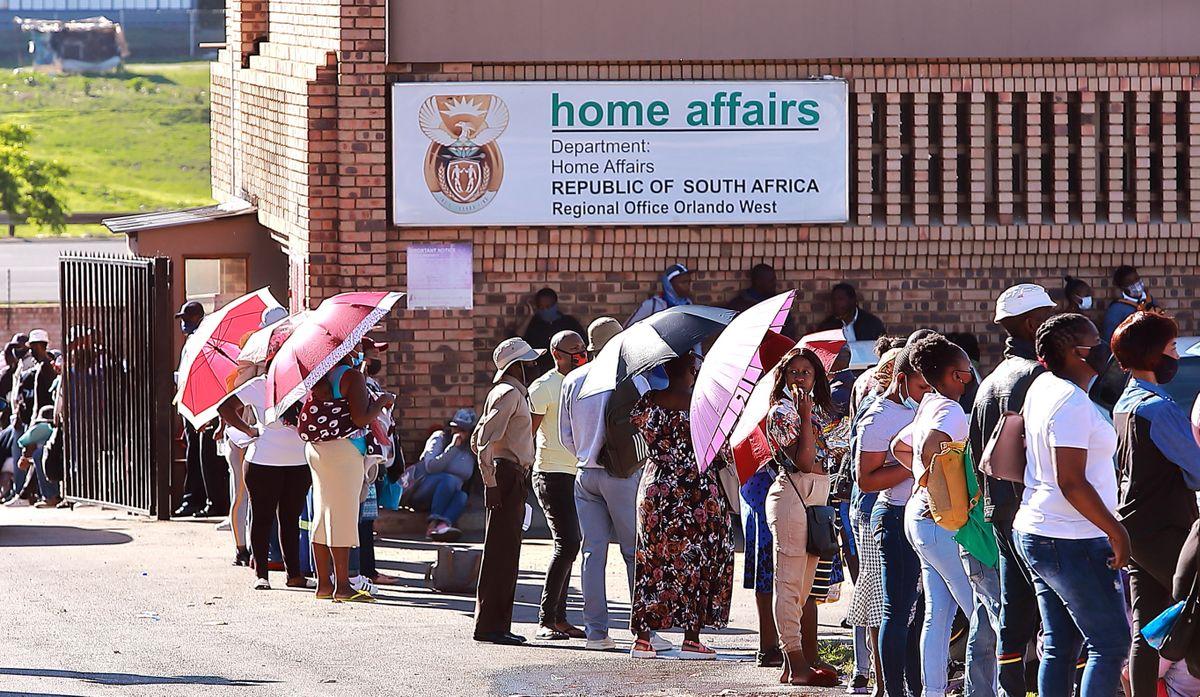
The South African government documents are probably having an identity crisis right now. If they could think, it’ll probably be something along the lines of: “Am I… AI-generated?”
On Thursday, South Africa’s Department of Home Affairs (DHA) precautionarily suspended a chief director and the director involved in the drafting of the Cabinet-approved Revised White Paper on Citizenship, Immigration and Refugee Protection. In a statement, the DHA spokesperson to the minister Leon Schreiber said the suspensions were due to “hallucinations” found in the white paper, which had already crossed cabinet on March 26.
The spokesperson, Carli van Wyk, said the hallucinated references were not used in the draft’s body, making it glaring that it was made up. This compounds the pressure on South Africa’s public departments, including the communications and digital technologies parastatal, which has already come under fire for pushing out a confirmed AI policy that also hallucinated references.
The political tension: Like fellow minister Solly Malatsi, Schreiber is a member of the Democratic Alliance (DA) party, making them easy targets for the parliament members at the African National Congress (ANC), South Africa’s ruling party leading the government coalition. On Wednesday, the ANC pushed for Malatsi to appear before a jury. The difference here is that Schreiber took swift action (suspended alleged culprits or at least those culpable), and we’re, in fact, not tempted to say the minister took a hint from what happened in the unfortunate AI policy fiasco.
The department is now on ChatGPT-watch: Following the suspension of senior staff involved, the DHA has now withdrawn the entire reference list and brought in two independent law firms to manage the disciplinary process and audit every policy document produced since November 30, 2022 (the day ChatGPT went public).
Is AI cool now to write or be used to write critical public-facing documents? Well, nobody in South Africa is laughing about it. It is one thing when your chatbot hallucinates; it is another when your government does. The situation has a certain irony to it: policies meant to guide national decisions are now dealing with fictional footnotes, possibly undermining the confidence people place in public drafts. If regulators didn’t notice fake citations, what else was not properly checked? Combined, the DHA and tech ministry scandals are giving “I did my own research” a whole new, terrifying meaning.
If you think using 4G Internet is a bare minimum, imagine being stuck on 2G in 2026, a year when astronauts are travelling further in space and breaking new records. Yet, there are communities in Burundi living this reality; the country’s third-largest telecom operator just remembered them and wants to put an end to their nightmare.
Onatel, the state-owned telco, has signed a$5.9 million contract with the Project Support to Digital Economy Foundations (PAFEN) programme, a government initiative aiming to increase digital adoption in the country, to deploy 4G mobile Internet across 92 rural communities, reaching an estimated 370,000 people within eighteen months.
Why it matters: It is the second major infrastructure agreement under PAFEN, following Lumitel’s $5.2 million deal in March, which the World Bank topped up to round to $10 million. Both deals target 178 communities and nearly 786,000 residents.
Between the lines: In 2025,Burundi’s Internet penetration stood at 12.5%, with only 32% of its population on 4G. As of 2020,the World Bank estimated that 66% of mobile subscribers still relied on 2G, a figure that has likely worsened since then due to the country’s declining urban population. Burundi is one of thepoorest countries in the world, with73.2% of its adult population living in rural areas.
The Burundian government, with support from the World Bank, is trying to incentivise telecom infrastructure investment in the deepest stretches of the country, even allowing operators to co-own and share resources.
Zoom out: A 2026 GSMA Mobile Economy report estimates that about 21% of Africa’s population, roughly 386 million people, will be on 5G networks by 2030, while globally, legacy 2G and 3G networks will fall to just 1% and 5% of connections, respectively. About 370,000 Burundians might just count themselves lucky not to be a part of that metric—if Onatel keeps to its word and hastens deployment before 2030.
In March 2013, TechCabal published its first article. Thousands of stories later, the work continues, and today, it goes deeper.
TechCabal has always been free. That’s not changing.