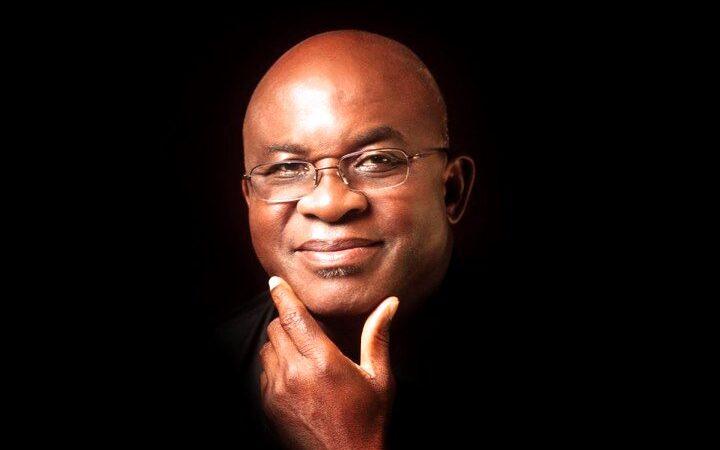
The Supreme Court, on Thursday, ruled in favour of former Senate President David Mark in a legal battle for the control of the African Democratic Congress (ADC).
- +UPDATED: Supreme Court rules in favour of David Mark in ADC leadership battle
- +Mr Garba said, “Ordering the status quo ante bellum was unnecessary.”
But the decision is not the final one on the matter as the Supreme Court ordered that the Federal High Court in Abuja, where the suit originated, should see the stalled proceedings to the end.
But the decision is not the final one on the matter as the Supreme Court ordered that the Federal High Court in Abuja, where the suit originated, should see the stalled proceedings to the end.
Delivering judgement, a five-member panel of the Supreme Court led by Lawal Garba unanimously upheld Mr Mark’s appeal, setting aside an order of the Court of Appeal which asked all parties to the dispute to maintain the status quo antebellum.
The disputed Court of Appeal judgement had prompted a recent decision of the Independent National Electoral Commission (INEC) to de-recognise the warring national leadership factions of the party.
In the lead judgment delivered by Mr Garba, the Court of Appeal held that the Court of Appeal’s directive to parties to maintain the status quo ante bellum was no longer relevant after proceedings before the trial court had been concluded.
Mr Garba said, “Ordering the status quo ante bellum was unnecessary.”
He held that the order of status quo was a preservative order aimed at preventing parties from taking steps capable of foisting a fait accompli on the court while proceedings were ongoing.
However, he said that such powers must be exercised only in relation to live proceedings.
He said once proceedings had been “fully, faithfully, conclusively and finally concluded,” there would be “nothing left for that court to preserve.”
The Supreme Court, therefore, set aside the order and directed that pending processes before the lower court be determined in accordance with the law.
The Federal High Court in Abuja recently adjourned the hearing indefinitely to await the decision of the Supreme Court.
Thursday’s judgment of the Supreme Court now paves the way for the Federal High Court to deliver its judgement.
The ADC appeal was filed by the interim national chairman of a faction of the party, Mr Mark.
The respondents are Nafiu Bala Gombe, who is laying claim to being the legitimate national chairman of the party; Rauf Aregbesola, who is the interim national secretary of the Mark-led faction of the party; the Independent National Electoral Commission (INEC); and Ralph Nwosu, a former national chairman of the party.
Mr Mark’s appeal challenged the jurisdiction of the Federal High Court to intervene in the internal affairs of the ADC. The appeal arose from the suit filed by Mr Gombe at the Federal High Court in Abuja to challenge Mr Mark’s leadership of the party.
On 22 April, Mr Mark’s lawyer, Jibrin Okutepa, a Senior Advocate of Nigeria (SAN), urged the court to grant his client’s appeal. If the appeal is granted, it will end Mr Bala’s suit at the Federal High Court and restore the control of the party to Mr Mark and his group.
However, Robert Emukpero, also a SAN, representing Mr Gombe, asked the court to dismiss the appeal. Similarly, he asked the court to uphold the Court of Appeal’s judgment on the matter.
The journey to the Supreme Court followed ADC’s leadership crisis, which ensued last year in the wake of the influx of top politicians into the party.
The political bigwigs who joined the ADC in droves included Mr Mark, Mr Aregbesola, former Vice-President Atiku Abubakar, former Kaduna State Governor Ahmed El-Rufai, and former Minister of Transport Rotimi Amaechi.
The politicians, who defected mainly from the All Progressives Congress (APC) and the PDP, had adopted the ADC as a coalition platform to challenge President Bola Tinubu in the 2027 election.
The leadership crisis in the party began after the resignation of the party’s former executives led by Mr Nwosu and the emergence of a new National Working Committee led by Mr Mark on 29 July 2025.
The development triggered a legal challenge when Mr Bala, a former vice-national chairperson of the party, filed a suit at the Federal High Court in Abuja seeking recognition as the party’s rightful leader under its constitution.
INEC was joined as the fourth defendant in the suit.
While the case was pending, the Federal High Court ordered all parties to maintain the status quo pending the determination of the substantive suit.
The Court of Appeal later dismissed an interlocutory appeal filed by the Mark-led faction and ordered all parties, including INEC, to maintain the status quo earlier ordered by the Federal High Court, pending further determination of the matter.
The Court of Appeal’s decision would mark a major shift in the dispute over the party’s leadership structure.
Following the ruling, INEC received letters from both factions on 16 March.
The Mark-led faction asked the commission not to recognise Mr Bala and to maintain its position pending resolution of the dispute, while the Bala faction asked INEC to give effect to the Court of Appeal judgment of 12 March in its favour.
INEC later removed the names of Mr Mark as national chairman and Rauf Aregbesola as national secretary from its website on 1 April, saying it would not recognise any faction pending the resolution of the legal disputes.
The dispute later escalated into a protest in Abuja, where party members accused INEC of bias and warned that the handling of the crisis threatened internal democracy within the party.
While the substantive hearing at the Federal High Court in Abuja unfolded, Mr Mark and his group proceeded to the Supreme Court to challenge the Court of Appeal’s ruling.
On 14 April, the judge hearing the case, Emeka Nwite, adjourned the hearing indefinitely to await the decision of the Supreme Court.