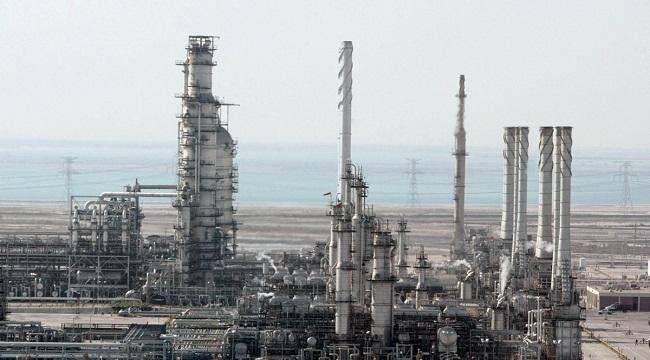
Saudi Arabia’s economy has shown resilience in the face of headwinds triggered by the Middle East war thanks in part to energy and logistics infrastructure that bypasses the Strait of Hormuz, the IMF said Wednesday.
- +Saudi Economy 'Resilient' Despite Mideast War, Says IMF
The Gulf has borne much of the brunt of the war since it began with a wave of US-Israeli attacks on Iran on February 28.
The Gulf has borne much of the brunt of the war since it began with a wave of US-Israeli attacks on Iran on February 28.
Iran responded by choking off traffic in the Strait of Hormuz, which is vital to the region’s energy exports, while also launching waves of reprisal attacks across the region, including on oil and gas facilities.
“The Saudi economy is proving resilient in the face of the war in the Middle East thanks to strong fundamentals and diversified logistical and oil infrastructure,” the International Monetary Fund said in a report.
“The war has nonetheless disrupted its momentum, curtailing oil exports and weighing on non-oil activity and confidence.”
The Saudi economy has been buoyed by its ability to re-route oil via its massive East-West pipeline, which allows for millions of barrels of crude to be delivered daily to export terminals on its Red Sea coastline.
“A prompt rerouting of oil through the East-West pipeline and Red Sea ports, combined with Aramco’s overseas inventories, has helped limit the drop in oil deliveries,” the IMF said.
Last month, oil giant Saudi Aramco — the crown jewel of the kingdom’s economy — reported that its net profit rose by 25.5 percent compared to the same period last year thanks to the soaring price of crude.
The kingdom, which aims to become a regional logistics hub, has also doubled down on new trade corridors connecting road and rail links to help improve the transportation of goods across the Gulf, especially for countries affected by the maritime blockade.
According to the IMF, the Saudi economy entered this year with favorable momentum after “GDP expanded by 4.5 percent in 2025, supported by the unwinding of OPEC+ production cuts and robust non-oil activity”.
The institution also noted that the kingdom has substantial buffers against external shocks, including “low government debt, ample reserves, and a large sovereign wealth fund”.