The bad news: it’s not TGIF.The good news: the week is running out of opportunities to surprise us.
- +👨🏿🚀TechCabal Daily – GoLemon shuts down
Unfortunately, the startup ecosystem had one more unpleasant surprise in store yesterday: another African startup shut down, adding to a growing list of ventures that have struggled to survive a tougher funding environment.
Unfortunately, the startup ecosystem had one more unpleasant surprise in store yesterday: another African startup shut down, adding to a growing list of ventures that have struggled to survive a tougher funding environment.
Become smarter about tech and commerce in Francophone Africa, and the policies shaping them. Read our newsletter here first or subscribe below.
If you were around in 2021 and 2022, startup funding announcements felt like birthdays in August, because there was always another one. That hasn’t stopped, but a closer look reveals that the money is flowing to fewer companies.
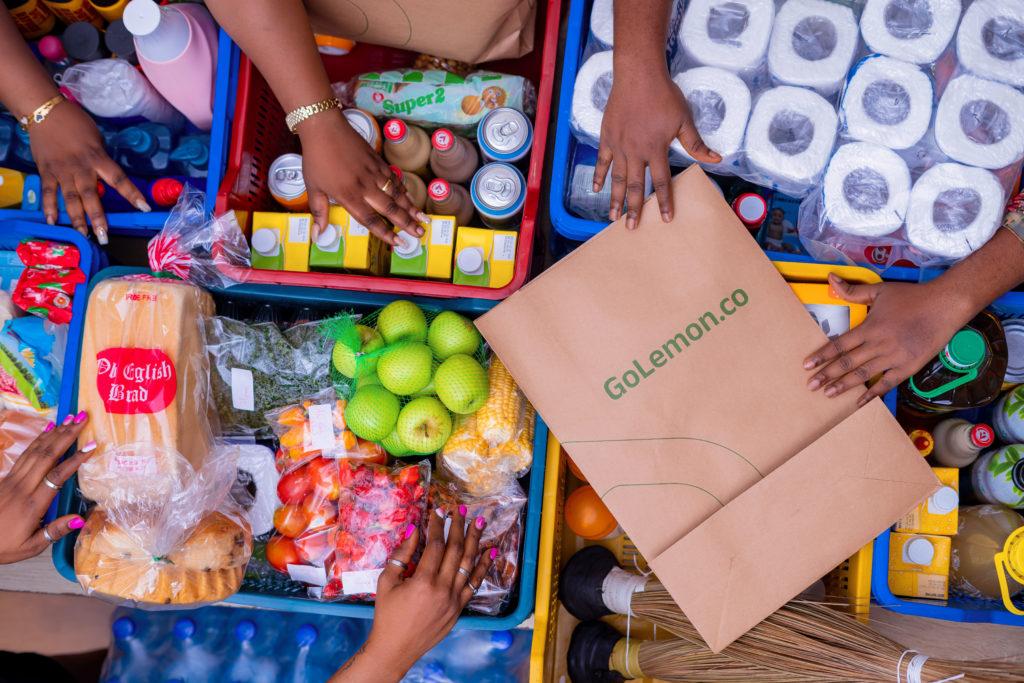
What happened: GoLemon, the Lagos-based grocery delivery startup founded by former Paystack employees, is shutting down after failing to raise fresh capital. The company says its grocery orders actually made money, but the problem was other expenses, including warehouses, staff, electricity, and all the fixed costs that come with running its business. Without another funding round to bridge the gap to scale, it ran out of runway.
The irony: GoLemon entered the market knowing the odds weren’t great. Jumia Food shut down its food delivery business across Africa in late 2023 as part of its restructuring, while Bolt Food exited Nigeria in December 2023 after struggling with profitability.
The founders believed there was still a smarter way to crack the market because it bought directly from farmers and manufacturers and stored inventory in its own warehouses. Turns out investors weren’t convinced.
Explain like I’m new here: In the first half of 2026, startups raised $1.44 billion, slightly higher than the $1.42 billion raised over the same period in 2025, but the number of deals went from 252 to 146.
This shows that investors are concentrating their money into fewer bets. It’s the same reason why Nigerian fintechs Chimoney and Gigbanc wound down their operations in May and June, respectively.
Is quick commerce hard to pull off? Jumia Food exited. Bolt Food exited. FoodCourt recently paused operations. Now GoLemon is shutting down, which shows that it’s a tough business to scale. Margins are thin, inflation keeps pushing procurement costs higher, and customers expect low prices. GoLemon said each order was profitable; yet, it never reached the order density needed to pay for the business costs of servicing those orders.
Fincra now issues dedicated GHS virtual accounts to enable businesses to collect payments. See how Fincra GHS virtual accounts work.
You know that little label on X attached to AI-generated videos and images that says “Made with AI”? Or how ChatGPT reminds you it’s an AI assistant before you take its medical advice too seriously? Kenya wants more of that.
What’s going on? The country’s Ministry of Information, Communications and the Digital Economy has published a draft AI policy that mandates companies to inform customers when they are interacting with AI agents instead of a human. If AI makes or influences a decision that affects a user’s access to services, or if content has been generated by AI, businesses would have to disclose it.
Explain like I’m five: AI has become really good at pretending to be human. It answers customer service chats, screens job applications, recommends whether you should get a loan, and writes articles and social media posts.
You might not even know it’s there. The European Union (EU) already requires disclosures for many AI systems and AI-generated content, while in the United States, California has introduced similar rules for AI-generated political ads. Kenya is following the same playbook.
It’s more than an AI label: The draft policy also proposes creating a National AI Council to oversee AI regulation, a Kenya AI Safety Institute to test and evaluate AI systems, and a National AI Office to coordinate implementation across government.
It also states that AI systems that make important decisions, such as whether you get a loan, shouldn’t operate without human oversight. The policy also proposes a public register listing the AI systems used by government agencies, except those whose disclosure could pose a national security risk.
How does this affect you? The policy is still a draft, but if it’s adopted, you should spend less time guessing whether you’re talking to a bot. South Africa’s recent backlash over using AI to draft its AI policy showed how gaps in usage transparency and lack of accountability led to a controversy.
Kenya is trying to get ahead of that by making disclosure a priority for businesses that build for its market, and for consumers who use those AI products.
Transaction Guard lets you set single, daily, or monthly transaction limits. Whenever a transaction exceeds your chosen limit, facial verification is required before it can be completed, helping to prevent unauthorised transfers. With PalmPay, you stay in control. Learn more.
Banks are engineered to be profit machines; it’s their DNA. That’s why a few of their decisions, such as choosing to lend more to corporations instead of consumers, will make sense to bankers chasing safer margins but won’t make sense to entrepreneurs and small businesses who need working capital to keep operating.
Absa Bank Kenya, a mid-tier subsidiary of the South African lender, is choosing to spin that philosophy on its head. It wants to lend to more households and businesses after Kenya’s interest rates eased from 12.75% to 8.75% between August 2024 and June 2026.
What’s happening? Previously, the lender prioritised government debt; now, the private sector is looking a lot more attractive after its profits declined. Absa Bank Kenya’s net profit in H1 2026 fell 13.8% to KES 5.3 billion ($40.97 million) in Q1 2026, partly because the bank had loaded up on Treasury bills just as yields were collapsing.
Its portfolio of government securities held to maturity surged from KES 96.7 billion ($748 million) in 2024 to KES 115.1 billion ($890 million) in 2025, right before rates tanked. Meanwhile, the bank actually cut its loan book by KES 4.5 billion ($34.78 million) to KES 3.8 billion ($29.38 million), missing out as private sector lending growth accelerated from single digits to nearly 10%.
What else? The pivot isn’t just about loans. Absa plans to launch a standalone digital-only banking platform before the end of the year—going beyond its Timiza lending app to offer savings, investments and insurance in one place. The goal is to boost non-interest income, which also fell in the first quarter, down from KES 233.9 million ($1.81 million) to KES 4.2 billion ($32.46 million).