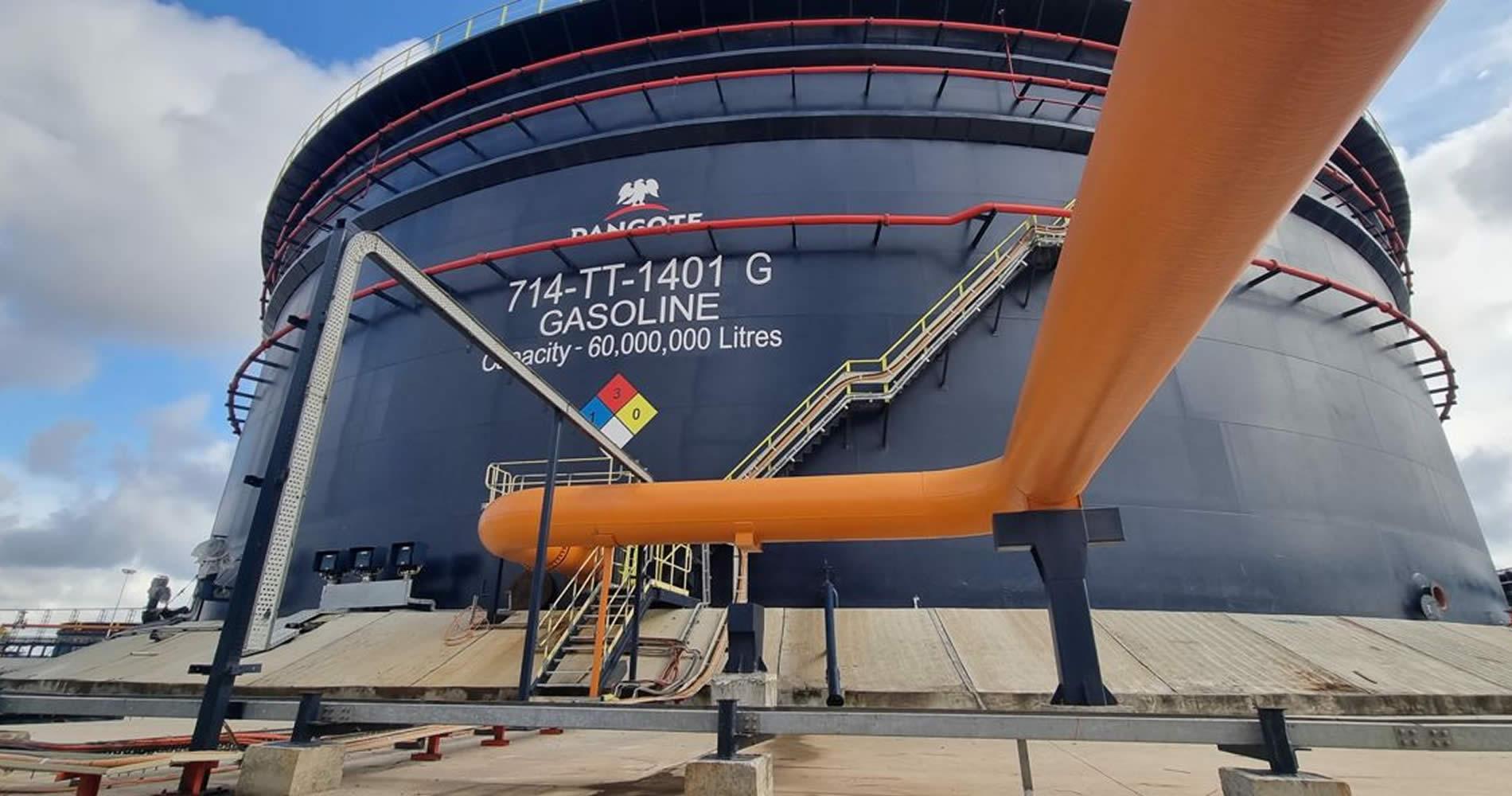
Dangote Petroleum Refinery & Petrochemicals, one of the continent’s largest oil producer exported 44,000 barrels per day of gasoline in March 2026, crossing a historic threshold in the global energy market. This milestone positions the refinery as a net exporter of gasoline for the first time with a surplus of approximately 3,000 b/d during the month.
- +Dangote Refinery ramps up oil exports in March
The landmark performance marks a decisive turnaround for Africa’s largest oil-producing nation, which for decades relied heavily on imported refined petroleum products.
The landmark performance marks a decisive turnaround for Africa’s largest oil-producing nation, which for decades relied heavily on imported refined petroleum products. Industry experts say the surge in exports, driven by rising output from the Dangote Refinery, is expected to deliver substantial foreign exchange inflows, easing pressure on Nigeria’s forex market while supporting overall macroeconomic stability.
The March export figures underscores Nigeria’s accelerating progress toward self-sufficiency in refined petroleum products and strengthens its ambition to become a competitive supplier in the global downstream energy market.
With domestic imports plummeting to a record low of 41,000 barrels per day during the same period, Nigeria recorded a symbolic surplus of 3,000 barrels per day. The milestone marks the end of a decades-long, multibillion-dollar dependence on foreign refined fuels that has historically drained the nation’s foreign exchange reserves.
The 650,000-barrel-per-day facility is already making its presence felt in regional markets previously dominated by the Middle East. Dangote delivered its first gasoline cargo to East Africa last month, shipping 317,000 barrels to Mozambique, with a second shipment slated for April delivery to Beira. This shift signals a direct challenge to Middle Eastern suppliers and adds fresh pressure to European refiners who are already contending with an oversupplied market in the Atlantic Basin.
The refinery’s operational momentum is reflected in its rising crude intake, which reached approximately 565,000 barrels per day in March. This represents the second-highest processing rate since the facility began operations in late 2023, signaling that the complex is nearing the high-yield thresholds required to dominate regional supply. The simultaneous collapse in imports suggests the “Dangote Effect” is systematically displacing the offshore traders that once treated Nigeria as their most reliable captive market.
For the Nigerian economy, the transition offers a critical buffer for the naira. By generating fresh foreign exchange through exports and eliminating the need for massive dollar outflows to fund imports, the refinery has become a cornerstone of President Bola Ahmed Tinubu’s economic stabilization strategy. Aliko Dangote, President of Dangote Industries, credited the administration’s energy sector reforms for creating the policy environment necessary to reach this scale. As the refinery continues to ramp up toward full capacity, its ability to act as a swing supplier will likely intensify competition across global fuel markets and cement Nigeria’s newfound role as an influential exporter.