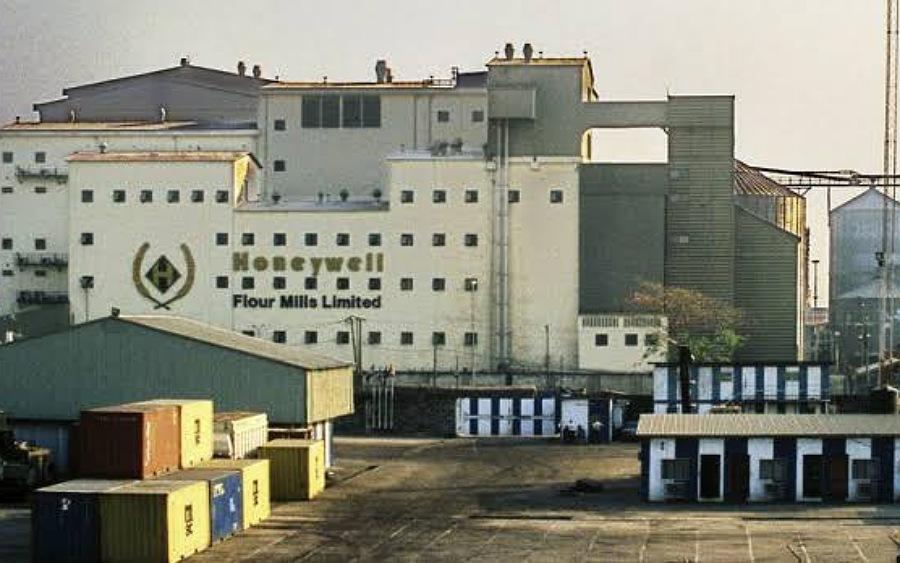
Honeywell Flour Mills Plc has reported a profit before tax of N21.896 billion for the full year ended 31 March 2026, according to its recently filed financial statements on the Nigerian Exchange.
- +Honeywell Flour’s FY 2026 profit hits N21.9 billion, declares 20 kobo dividend
This reflects a 3.29% year-on-year increase from N21.199 billion in FY 2025, driven largely by lower cost of sales and net finance income.
This reflects a 3.29% year-on-year increase from N21.199 billion in FY 2025, driven largely by lower cost of sales and net finance income. This is despite the drop in revenue and weaker operating profit.
Revenue declined by 3.39% YoY to N360.849 billion, while finance cost fell to N3.905 billion from N5.429 billion recorded in FY 2025.
The directors recommended a dividend of N1.59 billion, representing N0.20 per ordinary share of 50 kobo each for the reporting period ended 31 March 2026, compared with no dividend in 2025.
• Revenue: N360.849 billion, down 3.39% YoY • Cost of sales: N324.419 billion, down 4.94% YoY • Gross profit: N36.430 billion, up 12.98% YoY • Operating expenses: N23.256 billion, up 21.88% YoY • Operating profit: N16.577 billion, down 8.34% YoY • Finance costs: N3.905 billion, down from N5.429 billion • Post-tax profit: N16.487 billion, up 13.01% YoY • Total assets: N216.709 billion, up 29.42% YoY • Shareholders’ funds: N53.932 billion, up 44.03% YoY
Honeywell’s full-year performance was shaped by a weaker top line, but a stronger bottom line attributed to the decline in cost of sales and net finance income.
Revenue declined to N360.85 billion from N373.51 billion, mainly due to the sharp fall in pasta revenue.
On a segment basis, Tincan generated N325.20 billion in revenue, representing about 90.12% of group revenue, while Sagamu contributed N35.65 billion, or about 9.88%.
On the direct cost, the cost of sales, just like revenue declined. The main driver of group cost of sales was raw and packaging materials consumed, which stood at N291.22 billion, accounting for almost 90% of total cost of sales.
Overall, the cost of sales declined to N324.42 billion from N341.26 billion, supporting the improvement in gross profit despite the revenue decline.
However, operating profit fell to N16.58 billion from N18.08 billion as selling and distribution expenses increased sharply to N11.38 billion from N4.58 billion.
Finance income rose to N9.22 billion from N8.54 billion, helping to offset the decline in operating profit and lift pre-tax profit for the year.
Finance cost also declined to N3.90 billion from N5.43 billion, further supporting earnings. The biggest component was interest expense on subsidized loans at N2.22 billion, although this was lower than N3.87 billion in the prior year.
Overall, Honeywell recorded net finance income of N5.32 billion, compared with N3.11 billion in FY 2025.
This net finance income helped reverse the pressure from operating profit, which declined to N16.58 billion from N18.08 billion, allowing pre-tax profit to rise to N21.90 billion from N21.20 billion.
On the balance sheet, total assets increased to N216.71 billion, supported by higher property, plant and equipment, and the creation of short-term loan receivables of N40.56 billion.
Current liabilities still exceeded current assets, but the company disclosed that Golden Penny Foods Limited issued a letter of support to help the group meet obligations as they fall due.
Honeywell Flour Mill began the year at N21.90 per share and closed May at N18.20, representing a year-to-date loss of 16.9%. Month-to-month, the stock gained 1.11%.