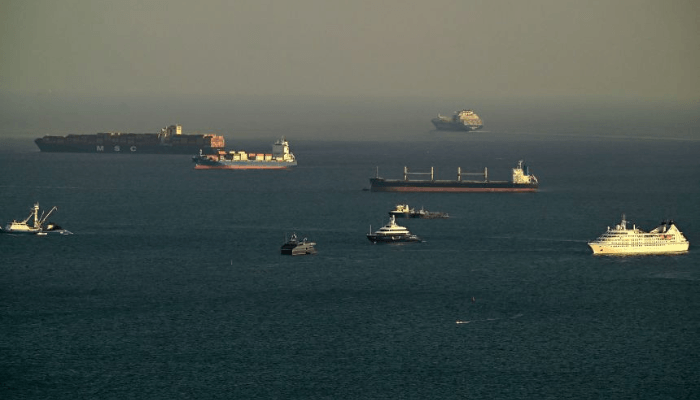
The Strait of Hormuz is not only strategic to the shipping of 20 percent of more of global oil and gas, 25 percent to 35 percent of global fertilizer shipment also go through this vital shipping chokepoint. The six Persian Gulf states of Saudi Arabia, Iraq, UAE, Kuwait, Qatar and Bahrain plus Iran not only produce 30 percent of global oil supply and 17 percent to 18 percent of global gas supply, they also produce a sizeable chunk of global fertilizer supply and related agricultural chemicals. Many countries in the Persian Gulf and Iran also import a great proportion of their food needs. These therefore make the ongoing Iran War and the closure or near closure of the Strait of Hormuz a double tragedy – in terms of the global energy shock and the equally impactful food supply crisis it has generated.
- +The Strait of Hormuz Blockade:: Implications for global food security
About 20 percent of global seaborne fertilizer supplies originate from Persian Gulf countries and a higher proper of nitrogen-based fertilizers as well with the Gulf States producing 36 percent to 46 percent of the global urea trade.
About 20 percent of global seaborne fertilizer supplies originate from Persian Gulf countries and a higher proper of nitrogen-based fertilizers as well with the Gulf States producing 36 percent to 46 percent of the global urea trade. On the whole, 33-34 percent of seaborne global fertilizer trade, with much of it destined for Africa, pass through the Persian Gulf and the Strait of Hormuz, making the region very strategic to global food security. Roughly 20 percent–30 percent of global ammonia exports and 30percent–35 percent of global urea exports are handled by the region and through the region, making the blockade of the vital Strait such a global disaster as there is no viable alternative.
The United Nations Conference on Trade and Development (UNCTAD) based in Geneva, Switzerland states that the blockade disproportionately affects developing countries including African countries that depend on the route. Based on 2023-2026 data, the six Gulf States and Iran supplied 36 percent to 46 percent of global urea export, 29 percent to 30 percent of global ammonia exports and roughly 49 percent to 50 percent of globally traded sulfur, crucial for manufacturing phosphate fertilizers. On the whole, experts estimate that between 20 percent to 30 percent of globally traded fertilizers are sourced from or go through the Persian Gulf/Strait of Hormuz, with Iran, Qatar and Saudi Arabia being the topmost producers in that order. About 16 million tonnes of fertilizers and about 220,000 tonnes of nitrogen fertilizers passed through the Strait of Hormuz before the beginning of hostilities on February 28. 2026.
• The impact of the blockade has been globally pervasive and extremely disruptive to both energy security and food security and has suddenly brought to the fore the strategic importance of the Persian Gulf and the Strait of Hormuz to global trade. Global shipment through the Strait has been brought to a standstill, leading to supply chain disruptions. It has seriously disrupted and constrained fertilizer supply globally with far-reaching implication for availability and application of the vital input for the new planting season with serious implications for crop harvest and food supply everywhere. Farmers now face reduced margins due to higher fertilizer and energy costs, which might lead to reduction in cropped acreage or hectreage. High energy costs, as a result of the energy crisis, is also seriously impacting cost of food production and eventually food prices and quantity of food produced. Grain supply is expected to be seriously impacted because of the inadequate supply of nitrogen; and the restriction on the movement of variety of inputs for food production will put a strain on food security globally, with potential to trigger humanitarian crisis through severe shortages in vital agricultural inputs.
The global food production and supply constraints triggered by the closure of the Strait of Hormuz are expected to exacerbate the food crisis in Africa. Before the onset of the Iran War about 20 African countries were identified as having at least 10 percent of their population facing acute food shortages and therefore being at the verge of a food crisis. Nigeria which has been consistently identified as one of the top hunger hotspots in Africa was among the 20 African countries. With the closure of the Strait of Hormuz that number has increased to 30 with East and Southern African countries being the most severely hit. Gulf countries are also at risk as they import 70 to 90 percent of their staple food supply. In the Middle East, Lebanon and Yemen are experiencing high levels of food insecurity; and Iran, which depends on wheat and maize imports, is also severely impacted.
Against the foregoing background, what should be the response of Africa as a region? First, Africans must thank God for Dangote Petroleum Refinery and Petrochemicals cushioning the impact of the Iran War on energy and food security in Nigeria, in particular, and other African countries that have become the beneficiaries of the supply of fuel and fertilizer from the company. The salutary effect has been on energy and food security, not on prices. With the peace negotiation between the United States and Iran not going the way it should and with the looping danger of resumption of hostilities, fuel prices have gone up through the roof. Food prices have equally spiked.
There is a need for an African response both to energy insecurity and food insecurity. There is a need for the African Union Commission (AUC) to work collaboratively with the United Nations Food and Agricultural Commission (FAO) to set up a parallel Pan-African agricultural organisation to work collaboratively with apex international agricultural organisations like the FAO and the International Fund for Agricultural Development (IFAD) to reposition agriculture in Africa, as agriculture remains the quickest way to economic development and poverty reduction in Africa. In addition, the AUC should work out a plan with industrial firms like Dangote industries and others like it in Africa to establish a number of fertilizer plants and other agricultural input industries in Africa that will be enough to satisfy Africa’s regional needs for fertilizers and related agro-chemical requirements for an agricultural renaissance in Africa. It is heartwarming that Dangote industries is already proactively thinking in this direction with its plan to produce enough fertilizers that could meet the needs of African farmers, with plants in Nigeria and other African countries. Other urea and non-urea/phosphate fertilizer producers in Africa, including the huge phosphate fertilizer production in Morocco, will be part of this game plan. The same with goes the large scale expansion plan for local fuel refining by Dangote Refinery and Petrochemicals, both in Nigeria and Tanzania.