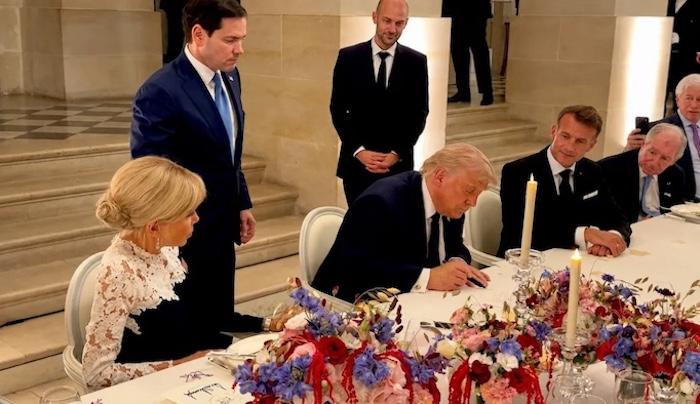
The United States and Iran have signed an initial peace agreement aimed at ending months of conflict between the two countries, with both sides committing to further negotiations on unresolved issues, including Iran’s nuclear programme.
- +US, Iran sign initial peace deal, launch 60-day nuclear talks
The memorandum of understanding was signed by U.S.
The memorandum of understanding was signed by U.S. President Donald Trump and Iranian President Masoud Pezeshkian, marking the first formal step toward a broader peace settlement.
Under the agreement, the Strait of Hormuz will be reopened to international shipping, while the United States will move to terminate sanctions on Iran.
The deal also outlines a proposed $300 billion reconstruction programme for Iran as part of post-war recovery efforts.
The document states that Iran has reaffirmed its commitment not to acquire or develop nuclear weapons, a key condition repeatedly emphasized by the United States.
Speaking after signing the agreement during the G7 Summit in France, President Trump said the deal would help avert a major economic crisis and restore stability to global markets.
However, he warned that the United States would respond forcefully if negotiations fail to produce a final agreement.
Iranian officials welcomed the accord but signalled continued caution in their dealings with Washington.
Iran’s parliamentary speaker and chief negotiator, Mohammad Bagher Ghalibaf, said distrust of the United States remained high despite the agreement.
The conflict began on February 28, when the United States and Israel launched military operations against Iran.
The escalation triggered significant disruptions to global energy markets and heightened inflation concerns worldwide.
Iran’s effective closure of the Strait of Hormuz during the conflict contributed to rising oil prices and increased economic uncertainty across several regions.
The preliminary agreement was signed during a state dinner hosted by French President Emmanuel Macron at the Palace of Versailles on the sidelines of the G7 Summit
Financial markets reacted positively to news of the agreement, with oil prices declining after the announcement as investors anticipated reduced risks to global energy supplies.
Market participants had closely monitored developments in the war because of its impact on the Strait of Hormuz, a critical maritime route through which roughly one-fifth of global oil and liquefied natural gas shipments typically pass.
The conflict had ripple effects across Nigeria, contributing to higher fuel prices and renewed inflationary pressures after signs of easing inflation emerged in the latter part of 2025.
Should a final agreement be reached within the stipulated negotiation period, the deal could provide a significant boost to global economic confidence and support a broader recovery in international trade and investment.