In my latest book, Uplifting Leadership, I emphasise the importance of forging a visionary consensus to generate performance momentum in the transformation of organisations into enduring institutions. The book draws insightful references to the trio of Christopher Kolade, Felix Ohiwerei, and Ifueko Omoigui-Okauru, highlighting the manifestation of infinite stake leadership in their stewardship. It further illustrates how securing a broad-based consensus among staff, through exemplary process leadership, significantly enhanced their effectiveness and impact.
- +Ogun West 2027: Solomon Adeola Yayi and the strategy of consensus
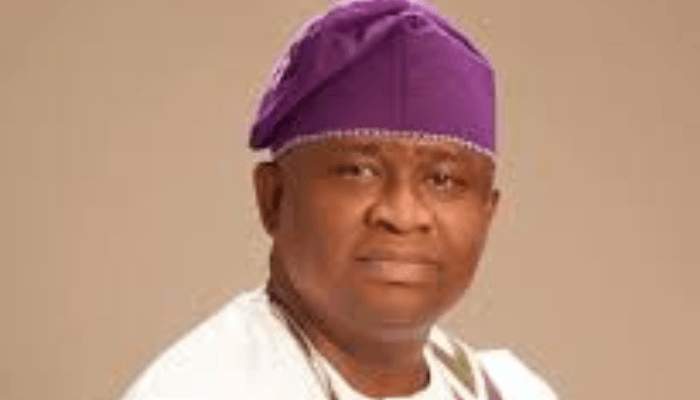
The emergence of Olamilekan Adeola (Yayi) as the All-Progressives Congress (APC) consensus gubernatorial candidate for Ogun State in the 2027 election cycle is more than a political development; it is a strategic inflexion point.
The emergence of Olamilekan Adeola (Yayi) as the All-Progressives Congress (APC) consensus gubernatorial candidate for Ogun State in the 2027 election cycle is more than a political development; it is a strategic inflexion point. For a state long shaped by the discourse of equity, especially the legitimate aspirations of Ogun West, this moment reflects a convergence of justice, pragmatism, and intelligent political design.
In my earlier reflections on Ogun West equity and leadership, I argued that sustainable political progress emerges when fairness aligns with competence. The consensus around Yayi appears to embody this duality. It signals a transition from fragmented contestation to coordinated intent, a move that, when viewed through the lens of game theory, represents a shift from a zero-sum paradigm to a cooperative equilibrium.
Game theory teaches us that when rational actors repeatedly engage within a system, cooperation often yields superior long-term outcomes compared to isolated competition. Ogun APC stakeholders, by aligning behind a consensus candidate, have effectively reduced internal friction, minimised resource wastage, and increased the probability of electoral success.
This is akin to a “coordination game”, where multiple players benefit from choosing the same strategy. The payoff here is not just electoral victory but also the possibility of unified governance post-election. Consensus, therefore, is not weakness; it is an optimised strategy.
However, such an equilibrium is only stable if the chosen candidate delivers value to all stakeholders. This is where the burden of not focusing on pleasing gladiators but on performance shifts squarely to Yayi.
Yayi’s candidacy carries distinct merits. His legislative experience, fiscal exposure, and political maturity position him as a candidate with both technical competence and grassroots connectivity. More importantly, his long-standing political association with Bola Ahmed Tinubu provides him with a unique apprenticeship in transformational governance.
Tinubu’s governance legacy in Lagos State is widely regarded as a case study in subnational economic reinvention, anchored on institutional strengthening, internally generated revenue expansion, and strategic urban planning. As one of his close protégés, Yayi is not merely inheriting political goodwill; he is expected to translate learned governance principles into tangible outcomes.
“Yayi’s candidacy carries distinct merits. His legislative experience, fiscal exposure, and political maturity position him as a candidate with both technical competence and grassroots connectivity.”
The oft-repeated aspiration to “turn Ogun into Lagos” must be interrogated beyond rhetoric. Lagos did not become Lagos by accident; it was the result of deliberate systems thinking, policy continuity, and leadership courage.
For Yayi, this implies three non-negotiable performance expectations:
Institutionalisation over personalisation: Ogun’s progress must be driven by strong institutions, not individual charisma. Revenue systems, land administration, and public service delivery frameworks must be re-engineered for efficiency and transparency.
Economic Architecture and IGR Expansion: Lagos’ transformation was powered by aggressive internally generated revenue (IGR) strategies. Ogun, with its industrial clusters and proximity advantages, has even greater latent potential. Unlocking this requires disciplined fiscal policy, investor confidence, and infrastructure alignment.
Urban and Regional Integration: Ogun’s development must move from isolated projects to integrated ecosystems, linking Abeokuta, Ijebu, Remo, and Yewa into a cohesive economic corridor. This is where strategic planning, not ad hoc execution, will define success.
Consensus can produce a candidate, but only leadership can produce a legacy. Yayi’s greatest test will not be winning the election; it will be governing in a way that justifies the trust embedded in that consensus.
From an uplifting leadership perspective, this moment demands values-driven execution anchored on vision, stewardship, inclusiveness, accountability, resilience, and legacy thinking. These are not abstract ideals; they are operational imperatives.
If Ogun’s political class has effectively “cooperated” to produce a candidate, then Yayi must now develop a model that focuses on people, not the gladiators of the consensus. This includes managing developmental expectations across regions, maintaining equity beyond Ogun West, and ensuring that governance outcomes are felt across all demographics.
It is important to note that consensus arrangements are inherently fragile. They rely on continued trust and perceived fairness. Any early signals of exclusion, underperformance, or unilateralism could destabilise the coalition that produced the candidate.
Ogun stands at a strategic crossroads. With the right leadership, it can transition from a state of potential to a state of performance. The consensus around Yayi offers a rare alignment of political will, an opportunity that must not be squandered.
Ultimately, the success of this moment will not be judged by the elegance of the political arrangement but by the impact of governance on the lives of ordinary citizens.
If Yayi internalises the lessons of Lagos, adapts them intelligently to Ogun’s unique context, and leads with an uplifting mindset, then this consensus will not just win an election; it will redefine a state.
And in that lies the true power of leadership: turning alignment into action and action into an enduring legacy.