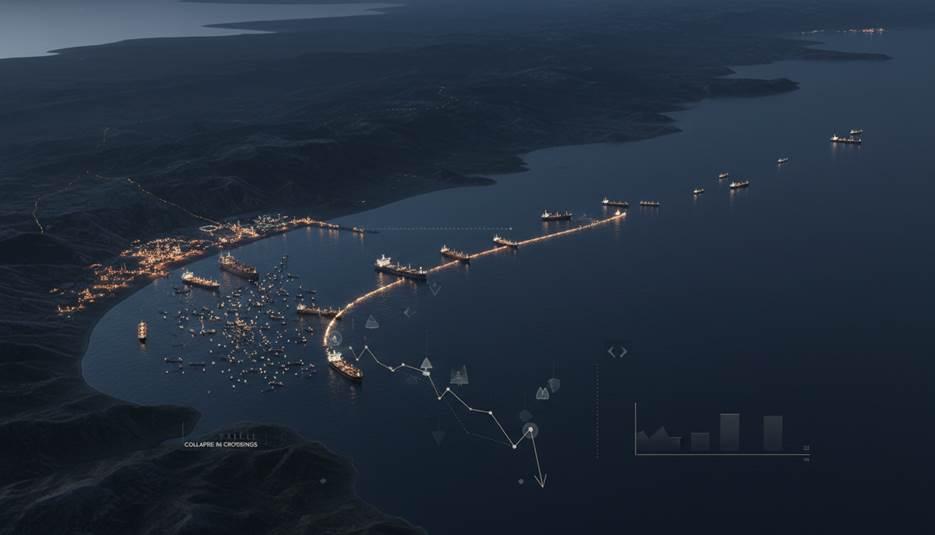
Iran seized two vessels in the Strait of Hormuz on Wednesday, the first such action since the war began late February, raising fresh doubts about whether a fragile ceasefire between Tehran and Washington can hold.
- +Iran seizes ships as ceasefire hangs by a thread
The Revolutionary Guards confirmed they had boarded and escorted the ships to Iranian shores for what they called maritime violations.
The Revolutionary Guards confirmed they had boarded and escorted the ships to Iranian shores for what they called maritime violations. They also drew a sharp line in the water, warning that any threat to “order and safety” in the strait would be treated as a red line.
The move came hours after Donald Trump, the US president, announced he had agreed to pause planned strikes on Iran at the request of Pakistani mediators, buying time for diplomacy. But Trump set no deadline, and a source familiar with the situation confirmed Wednesday that no timeline had been attached to the extension.
Mohammad Baqer Qalibaf Iran’s parliament speaker and chief negotiator, made clear that peace would not come cheap. A full ceasefire, he said, only made sense if the United States lifted its naval blockade of Iranian trade.
“You did not achieve your goals through military aggression and you will not achieve them by bullying either,” Qalibaf wrote on X. “The only way is recognising the Iranian people’s rights.”The gap between the two sides remains vast.
Washington wants Iran to surrender its stockpiles of highly enriched uranium and abandon further enrichment altogether. Tehran wants the war ended, sanctions lifted, war damages paid and its control over the strait formally recognised.
On Tuesday evening, as Trump was announcing the pause, Iran staged a ballistic missile parade through the streets of Tehran. State television broadcast images of large crowds waving Iranian flags beneath a banner showing a fist choking off the strait. Captions read: “Indefinitely under Iran’s Control” and “Trump could not do a damn thing.”, according to Reuters.
The closure of the Strait of Hormuz, through which a significant share of the world’s oil passes, has already triggered a global energy crisis.
The situation showed further signs of fraying beyond Iran’s borders. An Israeli strike killed two people in southern Lebanon on Wednesday, according to Lebanon’s state news agency. Hezbollah, the Iran-backed armed group, said it responded by launching a drone attack at Israeli forces in the south. A ceasefire between Israel and Hezbollah had been one of the conditions Iran set before it would agree to any talks with the United States.
For now, no talks are scheduled, no deadline is in place and both sides are sending signals designed more for their domestic audiences than for the negotiating table. The ceasefire is holding, but only just.