Iroye Samuel: Tinubu Has Delivered Tangible Reforms, Deserves Over 60% Performance Rating
- +“The truth is that this government is all about action and not noise-making.”
- +“But we need to be patient. Rome was not built in a day.”
- +“Sorry, sorry. Thank you for that correction. I meant to say 13,000 megawatts.”
- +“Anybody, particularly from the opposition, can come up with any percentage.”
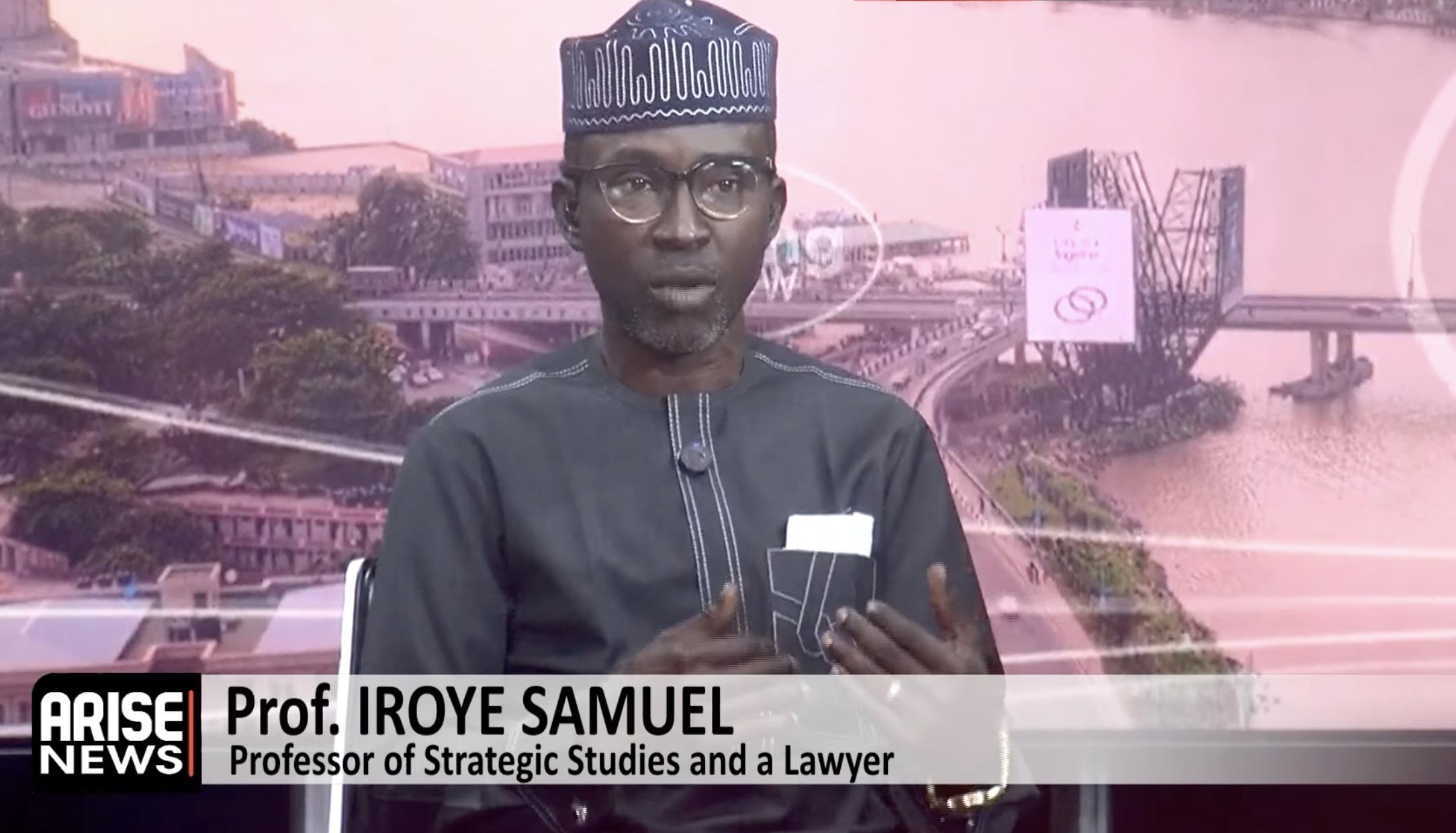
Professor of Strategic Studies and lawyer, Iroye Samuel, says Tinubu’s reforms are yielding results, urging Nigerians to judge the government by tangible achievements.
Professor of Strategic Studies and lawyer, Iroye Samuel, says Tinubu’s reforms are yielding results, urging Nigerians to judge the government by tangible achievements.
A Professor of Strategic Studies and lawyer, Prof. Iroye Samuel, has defended the performance of President Bola Tinubu’s administration, arguing that the government has delivered tangible reforms and deserves a performance rating of over 60 per cent despite criticism from the opposition and growing economic hardship.
Speaking during an interview with ARISE NEWS on Friday, Samuel dismissed claims that the administration had failed to fulfil its campaign promises, insisting that the government’s achievements should be measured by practical results rather than political criticism.
“Assessing the impact and performance of the Tinubu administration should be based on what we can realistically put on the table. These are things we can all see; they are not things that can be denied,” he said.
“Talking about the opposition saying they have not seen any feasible impact is a normal thing. That is the work of the opposition. The opposition is expected to present its own information from its own angle.”
“But I am going to make it clear that, so far, the administration of Bola Ahmed Tinubu has done well by the people.”
The professor said governments should be judged by their achievements rather than rhetoric.
“I will go by the saying of political reformer Thomas Babington Macaulay. He said the merit of a government can only be assessed by its fruits and not by appearances. That implies that the assessment of Bola Ahmed Tinubu can only be proved by what is on the ground, what we can see, what the people are enjoying, and not just noise-making.”
“The truth is that this government is all about action and not noise-making.”
Using a biblical analogy, Samuel added: “The Bible tells us that Jesus Christ was hungry and saw a fig tree that looked promising. When He got there, He found no fruit and declared that no one would eat from it again. That is what I see the critics of the Tinubu administration doing. They are not looking at the fruits; they are looking at the noise in the market.”
He argued that Tinubu’s administration should be evaluated by comparing its campaign promises with what has been achieved since assuming office.
“Assessing the impact of Bola Ahmed Tinubu is possible by calculating the indices of his election promises from the manifesto to the reality of what is on the ground.”
Samuel also cited another political figure in support of his argument.
“Taking a cue from the assertion of Pratibha Patil, the 12th President of India, she said you can only assess the performance of a government by the extent to which its intentions have been transformed into practical reality.”
“President Bola Ahmed Tinubu and his administration have transformed their intentions from mere promises into practical reality.”
Highlighting specific reforms, he defended the removal of fuel subsidy, describing it as a necessary but difficult decision.
“Immediately the government came in, it went straight for what it wanted to do. First and foremost, fuel subsidy had to be removed.”
“It was difficult for the people. I am a Nigerian also. It was difficult for me. But the reality is that the impact of removing fuel subsidy is what all of us are beginning to enjoy.”
“The government is no longer spending trillions of naira on subsidy. Some of that money has been diverted into other aspects of the economy, such as salary increases and improving government revenue. Our Internally Generated Revenue has increased tremendously. That is under the economy, and it is consistent with the manifesto of President Bola Ahmed Tinubu before he came to power.”
Responding to questions on electricity, industrialisation, job creation and other campaign promises, Samuel appealed for patience, saying reforms require time before yielding results.
“Let me first clear the ground that there are basic realities on the ground that we can all see.”
“Our story in Nigeria is like that of the Israelites who wanted to enter Canaan without going through the process. There is no way you can enjoy the dividends of democracy or the promises in a manifesto without going through the process.”
“That is why, as a nation and as Nigerians, we must be patient enough to go through the process.”
“Fuel subsidy removal is already producing results. Look around. The President has expanded regional development initiatives, and there are many government programmes already on the ground, particularly in the healthcare sector.”
“These are things that are coming as a result of the promises contained in the election manifesto of Asiwaju Bola Ahmed Tinubu. Some of these promises are now becoming reality.”
“But we need to be patient. Rome was not built in a day.”
He criticised calls for Tinubu’s resignation over the country’s economic challenges.
“When I hear some people calling for the President’s resignation, I laugh. It is like asking a woman who is seven months pregnant to terminate the pregnancy because of the discomfort. Development is a process. It comes one step after another.”
On electricity reforms, Samuel maintained that progress had been recorded.
“Everybody knows that the Tinubu administration is associated with electricity reforms. For the first time in the country, power generation has increased to about 5,500 megawatts, while Nigeria has an installed generation capacity of about 13,000 megawatts.”
“If we go through the process, we will eventually get to where the President is taking the country.”
After being corrected by the programme’s anchor for mistakenly referring to “13 megawatts” instead of “13,000 megawatts”, Samuel acknowledged the error.
“Sorry, sorry. Thank you for that correction. I meant to say 13,000 megawatts.”
Responding to a claim by the interviewer that an advocacy group had rated Tinubu’s fulfilment of campaign promises at only 20.8 per cent, Samuel dismissed the assessment.
“The assertion you are making is from a particular group. That is not a general assessment.”
“Anybody, particularly from the opposition, can come up with any percentage.”
“As far as I am concerned, as a Nigerian and as someone who is conversant with practical realities, if I want to rate this administration, I will rate it above 60 per cent because I can give you indices, one after another, of what President Tinubu has done that has translated into practical reality for the people.”
He acknowledged the country’s economic difficulties but insisted they should not overshadow government achievements.
“Yes, there is hunger in the land. Yes, people are complaining. But it is not because there is no performance. It is because people have very high expectations, and that is normal in every society.”