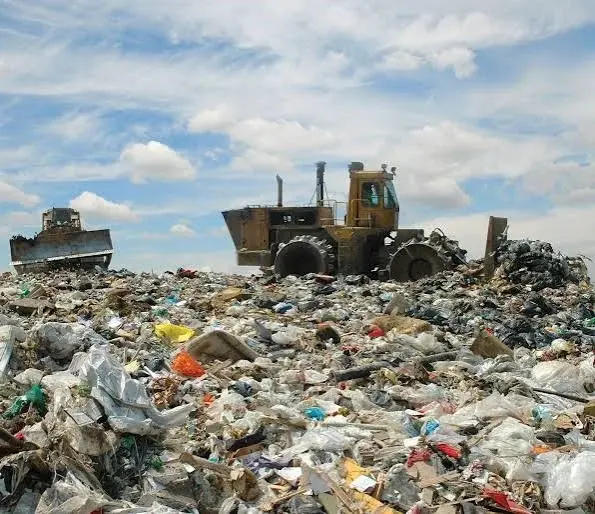
The Lagos Waste Management Authority has stated that the realities of rapid urbanisation, population growth, changing consumption patterns, and expanding economic activities have naturally placed increasing demands on environmental infrastructure and sanitation systems in the state.
- +Rapid urbanisation strains Lagos waste management system
In a recent statement obtained by The PUNCH, the Managing Director/Chief Executive Officer of LAWMA, Dr.
In a recent statement obtained by The PUNCH, the Managing Director/Chief Executive Officer of LAWMA, Dr. Muyiwa Gbadegesin, noted that waste management in Lagos has always been a dynamic and evolving task.
He added that over the years, successive administrations have introduced reforms aimed at improving environmental management and strengthening waste collection across communities.
“Waste management in Lagos has never been a static undertaking. As one of Africa’s fastest-growing megacities, Lagos continues to experience rapid urbanisation, population growth, changing consumption patterns, and expanding economic activities. These realities naturally place increasing demands on environmental infrastructure and sanitation systems,” he said.
Gbadegesin highlighted that the introduction of the Private Sector Participation framework under President Bola Tinubu during his tenure as governor of Lagos State marked a significant turning point in decentralising waste collection and expanding private sector participation in the sector.
He emphasised that subsequent administrations built on these foundations through policy reforms, infrastructure investments, and operational improvements.
The LAWMA boss explained that waste management in Lagos extends far beyond the traditional task of refuse evacuation, adding that across the world, leading cities such as Singapore, London, New York, Amsterdam, and Seoul have progressively transitioned from simple waste collection systems to integrated resource management models that prioritise recycling, resource recovery, energy generation, environmental compliance, and circular economy principles. Lagos is pursuing the same transformation.
Gbadegesin maintained that the future of waste management lies not merely in collecting and disposing of waste but in recovering value from materials that were once regarded as refuse.
He added that the state has partnered with a firm to ensure the recovery of value from materials once regarded as refuse.
“This shift is driving a new generation of investments, partnerships, innovations, and environmental programmes across the state. One of the most significant developments in this regard is the partnership between Lagos State and Zoomlion Nigeria Limited for the establishment of modern waste management infrastructure, including Transfer Loading Stations and Material Recovery Facilities that will enhance waste sorting, recovery, processing, and logistics operations,” he stated.
Gbadegesin added that similar collaborations are being pursued to strengthen waste processing capacity and improve operational efficiency across the waste value chain.
He pointed out that LAWMA has also entered into a strategic partnership with Lafarge Africa Plc to promote the co-processing of non-recyclable combustible waste as an alternative fuel for industrial operations, “reducing dependence on traditional disposal methods while supporting environmental sustainability”.
Gbadegesin added that continued discussions around waste-to-energy and biogas projects reflect Lagos State’s determination to adopt innovative solutions that can convert waste into valuable economic assets.
Gbadegesin stated that beyond expanding infrastructure, the agency remains committed to promoting circular economy initiatives aimed at fostering waste reduction, recycling, and resource recovery within local communities.
The LAWMA boss reiterated that to support source separation and recycling, 18 wire-mesh recycling banks have been deployed to strategic public locations, including schools, shopping malls, markets, and residential estates across the state.
“Furthermore, 2,000 blue recycling bins donated by Governor Babajide Sanwo-Olu have been distributed to public schools through the Adopt-A-Bin initiative, helping to instil responsible waste management habits and environmental consciousness among young Lagosians,” he added.
These interventions, Gbadegesin said, reflect a deliberate effort to shift waste management away from a purely disposal-driven model towards one that promotes waste minimisation, recycling, and resource recovery.
“Equally important is the authority’s investment in environmental education and human capital development through the LAWMA Academy,” he stressed.
He mentioned that since November 2023, the academy has conducted environmental sensitisation programmes in 308 schools across Lagos State, directly engaging 56,031 pupils on waste management, environmental sanitation, recycling, and sustainability.
“The programme reached nine schools and 1,715 pupils in 2023; 101 schools and 13,921 pupils in 2024; 149 schools and 31,999 pupils in 2025; and 49 schools with 8,396 pupils in the first part of 2026 alone. Beyond advocacy, the academy has also trained 130 interns since 2024 through structured internship programmes designed to expose young Nigerians to practical aspects of waste management, environmental policy, circular economy systems, and sustainability practices,” he added.
Gbadegesin said that these initiatives are helping to nurture a new generation of environmentally conscious citizens and professionals who will contribute meaningfully to building a cleaner and more sustainable Lagos.
“At the same time, LAWMA continues to strengthen environmental compliance and enforcement. Working with relevant agencies and the judicial system, the agency has intensified action against indiscriminate waste disposal, illegal waste transportation, non-patronage of approved PSP operators, environmental nuisance, and other sanitation-related offences,” he said.
“Environmental offenders have been prosecuted across various courts within the state, resulting in fines, community service orders, custodial sentences, and other sanctions in accordance with extant laws,” he said.
He stressed that, as part of efforts to promote environmental responsibility and improve adherence to waste management regulations, compliance monitoring, environmental sensitisation exercises, issuance of compliance notices, and inspections of residential, commercial, institutional, and public facilities have also been strengthened.
Gbadegesin said that these initiatives underscore a fundamental reality that effective waste management requires more than operational efficiency: “it requires infrastructure, innovation, partnerships, behavioural change, enforcement, environmental education, and sustained investment.”
He, however, admitted that the challenges remain and that no major city in the world has eliminated waste management pressures.