Repeated attack on Republic of Niger’s main airport raises fresh security concerns across Sahel
Niger’s main international gateway, the Diori Hamani International Airport in Niamey, came under attack again on Thursday, raising fresh concerns over the worsening security situation in the Sahel region and the growing operational capacity of terrorist groups despite increased military presence.
Niger’s main international gateway, the Diori Hamani International Airport in Niamey, came under attack again on Thursday, raising fresh concerns over the worsening security situation in the Sahel region and the growing operational capacity of terrorist groups despite increased military presence.
Heavy gunfire erupted around the airport at dawn on June 18, with local reports indicating that armed militants breached the facility’s perimeter and gained access to parts of the airport before security forces responded.
The latest assault marks the second attack on the strategically important airport in less than two months, underscoring persistent vulnerabilities in one of Niger’s most heavily secured locations.
Although authorities were yet to provide official casualty figure as of press time, security analysts described the incident as another significant challenge to the military-led government in Niamey, which has repeatedly pledged to improve security following a series of terrorist attacks across the country.
The airport, which serves as Niger’s principal international aviation hub, occupies a highly strategic position. It is located adjacent to a major military installation and serves as the operational base for foreign military personnel supporting counter-terrorism efforts in the country.
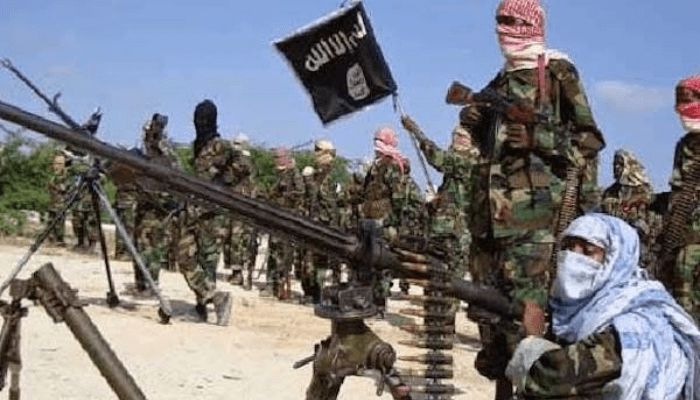
Thursday’s attack came months after the same airport and a nearby military base were targeted in a large-scale assault reportedly carried out by fighters linked to the Islamic State Sahel Province (ISSP), one of the most active extremist groups operating in the region.
The recurrence of attacks on such a critical facility has raised questions about the effectiveness of existing security measures and the ability of militant groups to penetrate heavily guarded locations.
Military observers note that the airport is situated beside Air Base 101, a key military facility used by Nigerien forces and foreign partners involved in regional counter-insurgency operations. Approximately 350 Italian troops are stationed in Niger, with many operating from the airport complex as part of international efforts aimed at combating terrorism, monitoring migration routes and enhancing regional stability.
Despite the significant military presence, attackers have repeatedly demonstrated the ability to strike strategic targets, highlighting the increasingly sophisticated tactics being adopted by extremist organisations across the Sahel.
The latest incident comes amid a broader deterioration in security across West Africa’s Sahel belt, stretching from Mali and Burkina Faso to Niger. Terrorist groups affiliated with both the Islamic State and Al-Qaeda have intensified attacks on military formations, government facilities and civilian communities, resulting in thousands of deaths and the displacement of millions of people.
Security experts warn that the region has become the global epicentre of terrorism, with extremist organisations exploiting weak governance structures, porous borders and local grievances to expand their influence.
The attack in Niamey also resonates strongly with developments in neighbouring Nigeria, where security agencies continue to battle multiple threats, including terrorism, banditry, kidnapping and violent criminal gangs.
In recent months, several states in northern Nigeria have witnessed renewed attacks by terrorists and armed bandits despite sustained military operations. Communities in Zamfara, Katsina, Sokoto, Kaduna and parts of the North-East have recorded deadly assaults on villages, security formations and critical infrastructure.
Analysts say the growing collaboration between terrorist organisations and criminal networks operating across the Nigeria-Niger border has complicated efforts to contain insecurity. The vast and largely ungoverned frontier areas provide opportunities for the movement of fighters, weapons and logistics across national boundaries.
The repeated targeting of Niger’s international airport is therefore being viewed not merely as a domestic security challenge but as part of a wider regional threat with implications for neighbouring countries, including Nigeria.
As investigations continue into Thursday’s attack, security stakeholders are expected to intensify calls for stronger intelligence-sharing, enhanced border security and closer regional cooperation to confront the expanding threat posed by terrorist and bandit groups across the Sahel.
For many observers, the latest breach of one of Niger’s most important and heavily protected facilities serves as a stark reminder that, despite years of military campaigns and international support, extremist groups remain capable of mounting audacious attacks against high-value targets in the region.