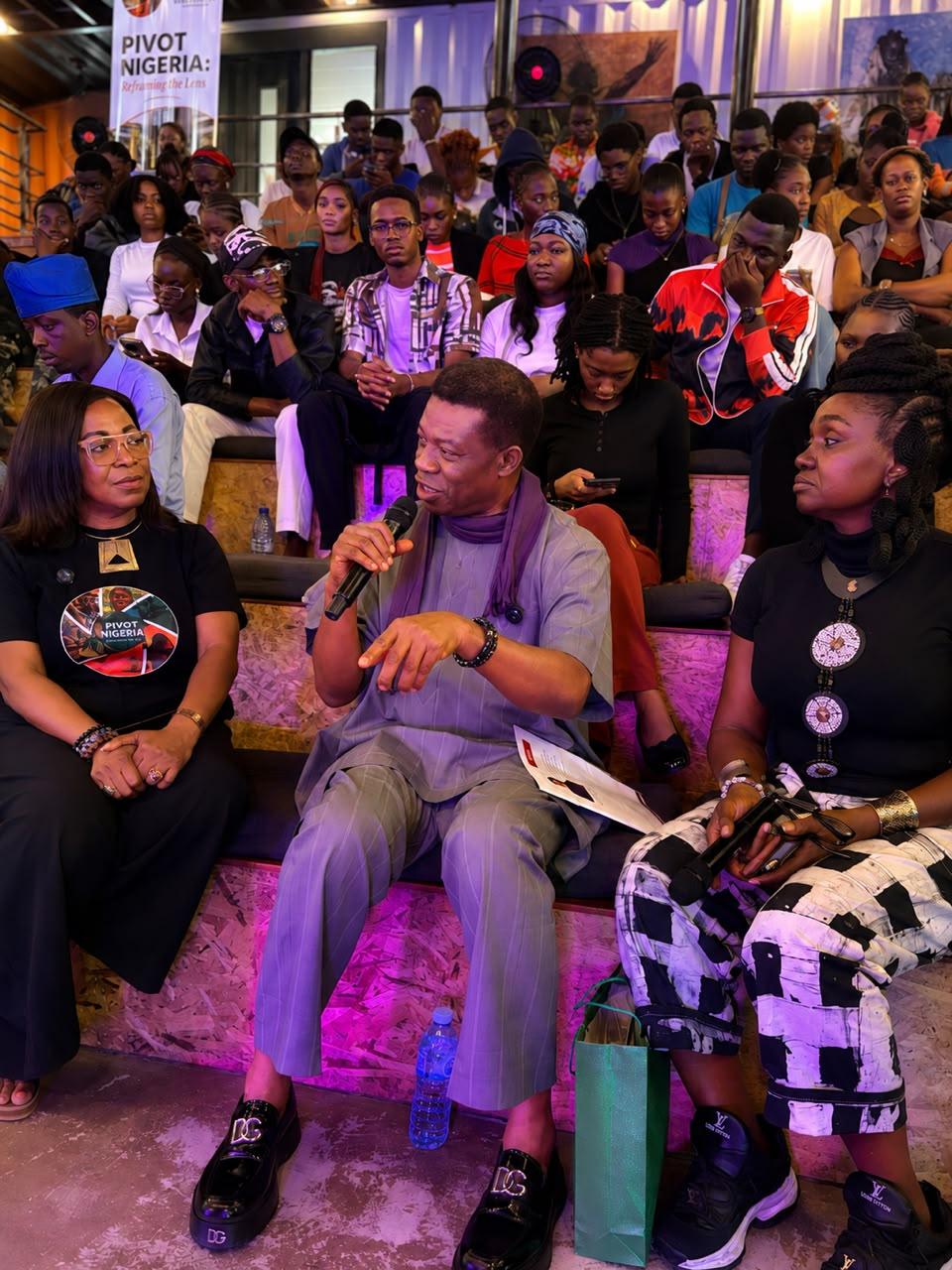
A new national campaign aimed at changing how Nigerians tell their country’s story has shifted its focus to university campuses, as organisers seek to mobilise young people to challenge what they describe as deficit narratives that have long shaped Nigeria’s image at home and abroad.
- +Pivot Nigeria launches youth campaign against deficit narratives
The campaign, Pivot Nigeria: Reframing the Lens – Campus Series, debuted at the University of Lagos (UNILAG), marking the first phase of a nationwide university engagement programme designed to transform students from passive observers into active ambassadors of a more balanced Nigerian narrative.
The campaign, Pivot Nigeria: Reframing the Lens – Campus Series, debuted at the University of Lagos (UNILAG), marking the first phase of a nationwide university engagement programme designed to transform students from passive observers into active ambassadors of a more balanced Nigerian narrative.
The initiative comes at a time when Nigeria continues to grapple with international perceptions dominated by insecurity, corruption and economic hardship, issues that experts say have affected investor confidence, tourism, youth optimism and global partnerships.
Rather than ignoring these realities, the organisers say the campaign seeks to ensure they no longer define the country’s entire identity.
“Our goal is not to pretend Nigeria has no problems. It is to encourage a more balanced conversation that recognises both the country’s challenges and its resilience, innovation and opportunities,” the organisers said.
Launched in 2025 by HighStakes PR Professionals Limited, Pivot Nigeria has evolved from an annual conference into a year-round national thought leadership movement focused on inspiring belief in Nigeria through authentic storytelling, constructive dialogue and collaborative action.
The campus edition represents the next phase of that vision by taking the conversation directly to universities, where future leaders, entrepreneurs, journalists and policymakers are being shaped.
The organisers believe young Nigerians have become some of the country’s most influential storytellers through digital platforms, making campuses strategic locations for changing national conversations.
Students participating in the programme are expected to become responsible leaders, ethical communicators, solution-driven innovators and ambassadors of authentic storytelling who actively contribute to national development.
At the heart of the campaign is the newly launched Pivot Nigeria Campus Collective, a youth-led network that will continue activities after each campus event. Members will be encouraged to lead conversations around ethical leadership, responsible digital engagement and positive storytelling while mobilising their peers to promote a stronger Nigerian narrative across universities.
To ensure the movement extends beyond conferences, organisers also introduced a 30-Day Challenge, asking students to translate ideas into action by sharing inspiring Nigerian stories on social media, highlighting people making positive impacts in their communities, volunteering for community projects and recruiting other students into the movement.
The initiative reflects a growing recognition that a country’s reputation increasingly influences its economic prospects.
According to the organisers, persistent negative narratives about Nigeria affect investment confidence, tourism, national pride, international partnerships, youth aspiration and economic opportunity. They argue that improving the country’s global perception is not solely the responsibility of government but requires citizens to become intentional contributors to Nigeria’s image.
The movement’s philosophy is built on the idea that reputation opens doors before credentials do, and that nation branding begins with individual behaviour and collective culture. It says every Nigerian contributes to how the country is perceived globally through everyday actions and conversations.
Speaking on the vision behind the movement, Convener Victoria Uwadoka said Pivot Nigeria is founded on the belief that “how we see ourselves influences what we become.”
She noted that while Nigeria’s challenges are genuine, they do not tell the country’s complete story, adding that, “The Campus Series empowers young Nigerians to become active authors of a stronger national story.”
Uwadoka affirmed that Nigeria’s challenges are real but they are not the whole story, while asserting that, “Every day, millions of Nigerians are building businesses, advancing science, preserving culture, creating globally celebrated art, mentoring young people and solving real problems. Pivot Nigeria exists because we believe the world deserves to see the truth about who we are. The Campus Collective is built on a simple idea: every student is a storyteller with a strong voice within his or her community, whether through their words, their work or the way they live.
“We want to empower young people to become intentional ambassadors for Nigeria by sharing stories that are truthful, balanced and inspiring. Perception influences opportunity, and when we consistently tell the true story of Nigeria, we help shape how our country is understood at home and around the world.”
Unlike many university programmes that focus largely on career development, Pivot Nigeria seeks to connect professional success with citizenship and nation-building.
Participants are expected to develop leadership perspectives, strengthen civic responsibility, understand ethical influence, explore nation branding and build professional networks that can help sustain positive engagement long after graduation.
The University of Lagos edition marks the beginning of what organisers describe as a nationwide university engagement programme that will establish campus ambassadors and long-term partnerships with tertiary institutions across Nigeria.
For Nigeria, where social media increasingly shapes international perception as much as traditional media, the success of the initiative may ultimately depend on whether young people can replace one-dimensional narratives with stories that acknowledge the country’s problems while also projecting its innovation, resilience and potential. If successful, the campaign could evolve from a university movement into a broader effort to influence how Nigeria is perceived by investors, partners and the global community.