The long-standing, costly practice of domestic airlines exporting foreign currency to Europe and the United Kingdom for mandatory aircraft maintenance type training has taken a major back seat.
- +Boeing localises 737NG training in Lagos, easing airlines’ FX strain
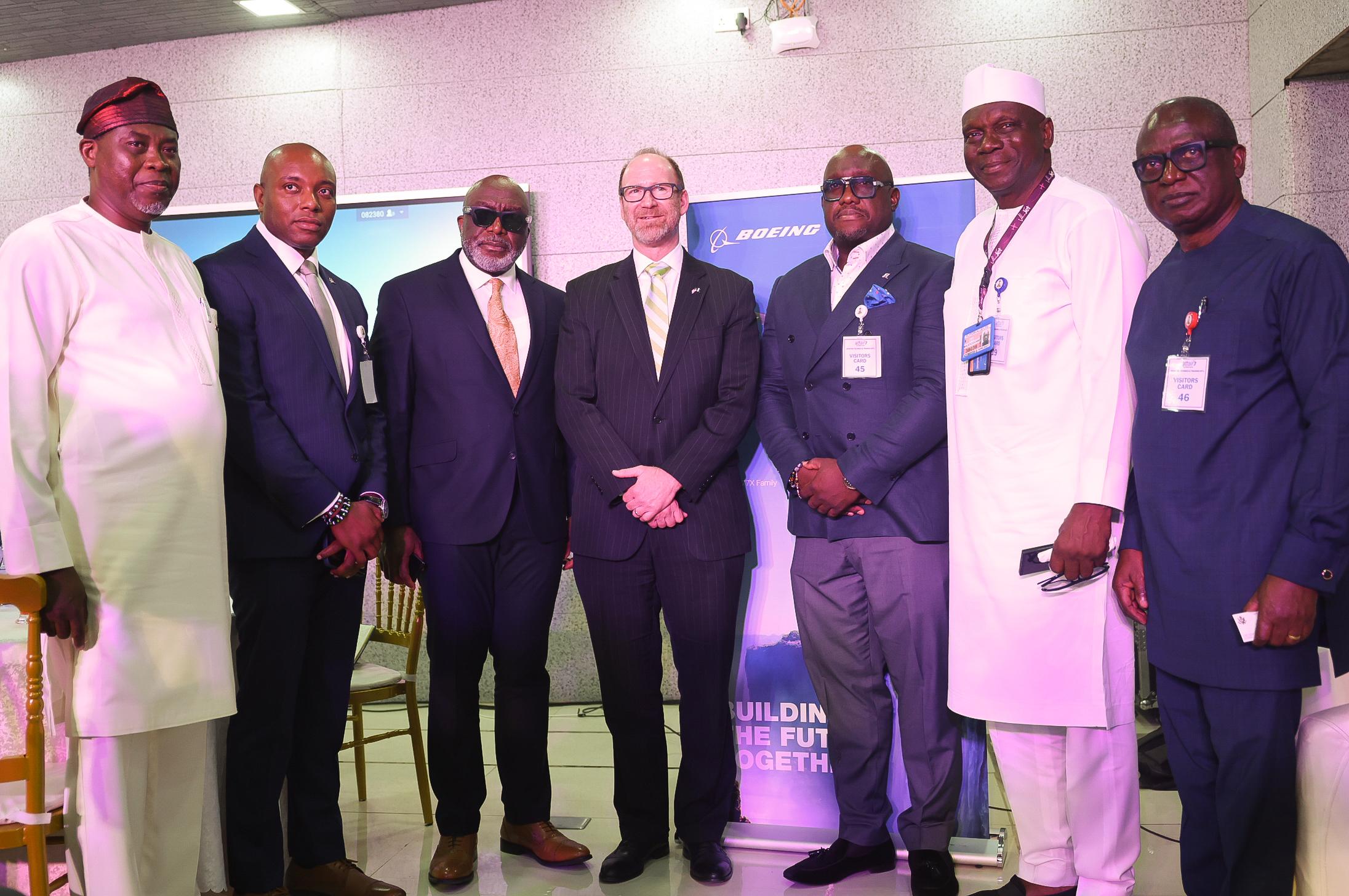
At the Aviation Techniks and Training Academy (ATT Academy) in Lagos on Tuesday, aerospace leader The Boeing Company officially commenced the first tranche of its structured engineering development program on Nigerian soil.
At the Aviation Techniks and Training Academy (ATT Academy) in Lagos on Tuesday, aerospace leader The Boeing Company officially commenced the first tranche of its structured engineering development program on Nigerian soil.
The advanced, intensive course runs until July 29, specifically training a joint cohort of 16 aircraft maintenance engineers drawn from United Nigeria Airlines and ValueJet.
The program targets the Boeing 737 Next Generation (737NG) aircraft platform, providing local technicians with rigorous instruction across avionics, airframe structures, powerplant systems, and electrical configurations.
It also aligns directly with European Union Aviation Safety Agency (EASA) certification standards, offering a critical step up for local engineers without requiring them to step outside the country.
For the frontline engineers tasked with returning passenger aircraft safely to service, this localized pipeline represents an immediate upgrade in execution and diagnostic capability.
Speaking during the opening ceremony, at the ATT Academy in Lagos, Moore Ibekwe, Executive Sales Director, Africa Region, Commercial Airplanes at Boeing, noted that the global aerospace giant is actively exploring pathways to assist domestic operators.
“Boosting the capacity of aviation insurance in Nigeria is essential to ensuring stability and safety through the financial soundness of operators,” Ibekwe stated, adding that Nigeria’s improved standing on the Cape Town Convention compliance index has significantly eased lessor anxieties regarding fund tracking.
Reinforcing the importance of these international frameworks, Rick Swart, the Consul General at the U.S. Consulate General in Lagos, emphasised that robust legal protections and transparent corporate governance are vital catalysts for foreign direct investment.
Swart reiterated the U.S. Mission’s commitment to facilitating stronger commercial ties and helping Nigerian businesses connect with buoyant global financiers and technical partners.
An aircraft maintenance engineer from United Nigeria Airlines described how the training bridges deep technical manuals with real-world troubleshooting:
A second engineer in the joint cohort highlighted the collective milestone for the wider industry: “It is great exposure for the Nigerian aviation sector because we have Boeing coming all the way down to Nigeria to conduct this training for Nigerian engineers here. Currently, it is United and ValueJet participating together, and it is a good thing because it shows a level of growth and improvement in the aviation industry. It gives us the opportunity to gain the experience firsthand, right here in the country.”
The launch of the training program is timed perfectly with the fleet expansion roadmaps of both airlines, ensuring that as new hardware hits the tarmac, the domestic technical capacity is already on-ground to back it up.
United Nigeria Airlines recently welcomed its first two Boeing 737-800 aircraft to Lagos. According to project insiders, this forms part of a phased blueprint to integrate six Boeing jets into active rotation by the close of the year.
“The company has planned for that,” the engineering team revealed. “They’ve already gotten two Boeing aircraft recently but they are planning to get four more aircraft. We hope that by year end, all things being equal, the remaining four will arrive.”
For the leadership of the participating airlines, the presence of Boeing’s field service team represents a fundamentally manufacturing relationship.
Mazi Osita Okonkwo, Managing Director of United Nigeria Airline, emphasised the deep financial relief of localizing the EASA curriculum.
“A special arrangement again by Boeing to bring it home. I don’t know that all the resources would have gone to England and to the UK.
“But it’s now domesticated in Nigeria. Boeing brought in all the experts, the launch team, and the training facilities here. The water we are drinking is from Nigeria. The food we eat is from Nigeria. This again is a huge contribution to the economy of Nigeria.”
Omololu Majekodunmi, Managing Director and CEO of ValueJet, himself a veteran pilot who has flown legacy Boeing types like the 707 and 727—recalled the immense structural scale of Boeing’s global operations, emphasizing that local airlines must scale their skills if they hope to efficiently manage advanced modern fleets like the 737NG or upcoming Max variations.
“We all pushed it and found ourselves where we are,” Majekodunmi said, underscoring the necessity of collaborative training for local operators trying to make the sector sustainably profitable.
The benefits of the ATT Academy program extend beyond individual hangars to address the systemic “four-hour maintenance gap” that defines West African aviation.
Weighing in on the industry’s evolving regulatory landscape, Odutola Joshua Olawale, CEO of Aviation Techniks and Trainings International Limited, emphasised that infrastructure development must go hand-in-hand with human capital.
“Technical compliance isn’t just about passing audits; it’s about sustaining a rigorous safety culture on the ground,” Olawale stated. “For Nigeria to truly maximize its aviation potential, we must continuously deepen local expertise in aircraft maintenance and technical training to keep pace with international standards.”
Currently, the closest full-scale commercial MRO hubs are hours away by flight. When an aircraft experiences a complex technical fault, domestic operators are often forced to fly in overseas specialists or ferry the aircraft out, accumulating massive lease costs and loss of passenger revenue.
Backed by U.S. bilateral commercial support and proactive regulatory adjustments from the Ministry of Aviation, the active presence of Boeing personnel in Lagos establishes a new precedent.
It proves that Nigeria’s aviation market is transitioning from merely buying foreign assets to systematically building the human capital required to fly, maintain, and sustain them safely.