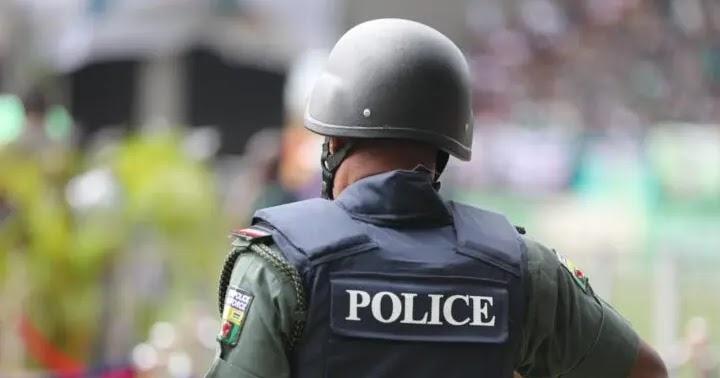
The proposed establishment of state police has emerged as one of Nigeria’s most ambitious constitutional reforms in decades, promising to decentralise policing and strengthen grassroots security.
- +State-by-State: How ready is Northern Nigeria for state police?
An investigation by BusinessDay across Northern Nigeria, however, shows that while many states welcome the proposal as a potential game changer, its implementation will depend largely on how effectively they overcome funding constraints, political interference, ethnic and religious divisions, weak institutions and the challenge of coordinating with federal security agencies.
An investigation by BusinessDay across Northern Nigeria, however, shows that while many states welcome the proposal as a potential game changer, its implementation will depend largely on how effectively they overcome funding constraints, political interference, ethnic and religious divisions, weak institutions and the challenge of coordinating with federal security agencies.
From Kano to Plateau, Kogi, Kaduna, Kwara, Niger, Katsina, Benue, Bauchi, Borno and Adamawa, stakeholders agree that locally controlled policing could improve intelligence gathering, response time and community engagement. Yet, they also caution that without constitutional safeguards and independent oversight, state police could become vulnerable to political manipulation and deepen existing social fault lines.
Security analysts argue that Northern Nigeria represents the biggest test for decentralised policing because the region faces varying security threats, including insurgency, terrorism, banditry, kidnapping, communal violence and farmer-herder conflicts.
Among Northern states, Kano appears institutionally better positioned to establish state police.
Abdulsalam Yusuf, a legal practitioner, said the state’s Neighbourhood Security Watch already provides an operational framework that could easily be transformed into a statutory state police organisation through legislation.
According to him, the existing outfit has trained personnel, community networks and an administrative structure capable of reducing the transition period.
He, however, identified political interference as Kano’s biggest challenge, warning that governors could misuse state police without independent oversight and constitutional checks.
Muhammad Wakili, a retired Commissioner of Police, echoed similar concerns, saying recreating a decentralised police system without learning from the excesses of the defunct Native Authority Police would amount to repeating history.
Plateau has emerged as one of the strongest advocates of state police.
Naanlong Daniel, Speaker of the Plateau State House of Assembly, said lawmakers were prepared to support the constitutional amendment whenever it reaches the state legislature.
He believes decentralised policing would improve intelligence gathering and facilitate quicker responses to recurring attacks on rural communities.
The state’s Advisory Committee on State Police, chaired by retired Deputy Inspector General of Police Habila Joshak, has also commenced consultations with lawmakers and security stakeholders.
Despite the political will, analysts say Plateau’s long history of ethno-religious conflicts means recruitment, deployment and promotions must reflect the state’s diversity.
Chris Kwaja, a professor at Adamawa State University, argued that accountability, sustainable funding and collaboration among government institutions, traditional rulers and civil society would determine the success of state policing.
Kogi has spent years strengthening its local security architecture.
Kingsley Femi Fanwo, Commissioner for Information, said the state’s investments have positioned it to integrate seamlessly into a decentralised policing framework.
Government officials believe state police would improve grassroots intelligence and complement federal security agencies.
However, Joseph Odunayo warned that Kogi’s ethnic diversity could create distrust if recruitment appears to favour one of the state’s major ethnic groups.
Similarly, Idris Miliki Abdul stressed that adequate funding, political commitment, civic education and respect for the rule of law would determine the effectiveness of the proposed policing system.
Years of banditry, kidnappings and communal violence have strengthened calls for state police in Kaduna.
Supporters argue that officers recruited from local communities would possess better knowledge of difficult terrain, local languages and criminal networks than personnel posted from outside the state.
However, analysts caution that Kaduna’s religious and ethnic diversity requires strong institutional safeguards to ensure professionalism and prevent sectional policing.
Unlike states battling insurgency, Kwara has focused on preventive security through collaboration among security agencies, traditional rulers, religious leaders and local communities.
Governor AbdulRahman AbdulRazaq has consistently strengthened community policing initiatives, creating what observers describe as a solid foundation for state policing.
In neighbouring Niger State, Mohammed Umaru Bago has invested significantly in surveillance technology, patrol vehicles and logistics while strengthening collaboration with hunters, vigilantes and traditional institutions.
According to security expert Isah Lapai, maintaining effective coordination with federal security agencies will remain critical because of persistent banditry and cross-border criminal activities.
Security experts believe Katsina’s prolonged battle against armed banditry demonstrates the urgent need for community-based policing.
They argue that officers recruited from local communities would possess better knowledge of forests, border settlements and indigenous languages, thereby strengthening intelligence gathering.
However, stakeholders insist that tackling heavily armed criminal groups will still require federal support, sophisticated equipment and specialised counter-terrorism capabilities.
Borno presents perhaps the strongest argument for state police because of its prolonged fight against Boko Haram insurgents.
For years, Babagana Zulum, the governor, has invested billions of naira in operational vehicles, communication equipment and logistics for security agencies despite lacking constitutional control over policing.
Stakeholders argue that these investments demonstrate the state’s readiness to manage its own police structure.
Abubakar Mohammed Kareto, a public affairs analyst, said over a decade of relying almost entirely on a centralised federal security approach has failed to produce the desired results.
According to him, state policing would institutionalise community-based recruitment by drawing personnel familiar with local geography, languages and cultural dynamics.
He noted that the Civilian Joint Task Force already provides an operational foundation upon which a professional state police service could be developed.
Kareto added that state policing would improve accountability, accelerate responses to attacks and strengthen public confidence across Borno, Yobe and the wider North-East.
Stakeholders in Adamawa support the proposal but insist that implementation must be carefully designed.