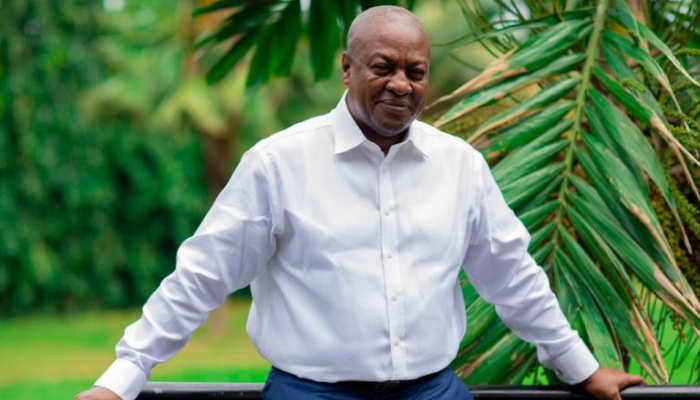
On the 25th of March 2026, at the plenary session of the United Nations General Assembly, Ghana’s President John Mahama moved a well-intended motion declaring that slave trade was ‘the gravest crime against humanity’
- +President Mahama, Slavery, and the Pity-Party
- +The question has been asked – what happened to the black people of Argentina?
- +What have Africans, at home and in diaspora, done with ‘independence’?
25th March is the annual International Day of Remembrance of the Victims of Slavery and the Transatlantic Slave Trade, established through a UN resolution in 2007 to commemorate the anniversary of the abolition of slave trade by the United Kingdom on 25th March 1807.
25th March is the annual International Day of Remembrance of the Victims of Slavery and the Transatlantic Slave Trade, established through a UN resolution in 2007 to commemorate the anniversary of the abolition of slave trade by the United Kingdom on 25th March 1807.
Resolution A/80/L.48 was passed by a majority of 123 members. Three countries voted against it – Israel, Argentina, and the United States. 52 nations abstained.
That the resolution is not going anywhere very soon can be discerned from the voting pattern. Clearly, not all the world think African enslavement carried out for four hundred years in the trans-Atlantic slave trade, and continuing in pockets even now, is a bad thing. Not every ‘beneficiary’ feels remorseful.
Some people believe black people are ‘inferior’ and getting enslaved is their just deserts. Some argue that being taken to ‘The New World’ was a form of promotion, giving the black race a new beginning for which they should be grateful.
Argentina was one of the countries that voted against Mahama’s resolution. Argentina has, over the ages, been associated with some of the most extreme right-wing, racist attitudes known to human society. It was no coincidence that the country was the go-to place for German Nazis trying to escape prosecution for war crimes after the Second World War. For Argentines, ‘Black’ people do not exist, period. Like neighbouring countries in South America, Argentina received thousands of black slaves who worked on their farms and plantations. In Peru, Columbia and Brazil, racial and cultural admixture over the post-slavery centuries are visible in the population. Not so in Argentina.
The question has been asked – what happened to the black people of Argentina?
The answer is simple, and brutal. They were killed off intentionally, systematically over the years.
Many Nigerians would remember the shocking insight they got about Argentina during the heady days when the nation revelled in the achievements of its 1996 Atlanta Olympics football team, led by the likes of Kanu Nwankwo and Emmanuel Amunike. When the Nigerian team shocked pundits by defeating Brazil in the semi-finals, the headline in major Argentine papers was ‘The Monkeys Beat Brazil’. They gleefully predicted how their team would skin the ‘monkeys’ alive in the finals.
In the finals, before all the world, Argentina squared off against ‘Papilo’ and the Nigerian boys. At stake was not just an Olympic gold medal but an unmistakable racial animus.
In the event, the Argentines received the beating of their lives.
No football victory in living memory ever tasted so sweet. When Kanu and the team paraded their medals through the streets of Lagos, some ordinary Nigerians shed tears of joy.
Another country that voted against Resolution A/80/L.48 was the state of Israel. A highly accomplished race, with more Nobel prizes between them per person than any other race. In the Torah, there is an unapologetic racial separation between ‘The Chosen People’ and the ‘Goyim’. There has, over the years, been a fraught relationship between Jews and African Americans in the USA. The state of Israel supported Apartheid and helped in building the nuclear bomb that the Afrikaners thought, wrongly, would keep them safe from the black hordes. On the other hand, many Jews were active in the African Liberation Struggle. Israel has ‘fraternal’ relations with many African countries, including Nigeria.
Their claim to the number one spot in Victimology is unassailable. When Alex Hailey’s ROOTS held American television audiences spell-bound and virtually paralysed with historical guilt as the story of Kunta Kinte unfolded, there was a swift counterpunch. Overnight a series called SCHINDLER’S LIST – about Jewish suffering and heroism during the Holocaust, emerged to claim the headlines and re-dominate the ‘pity-party’.
The third vote against Resolution A/80/L.48 was the USA. The ‘No’ vote was in sync with Marco Rubio’s recent Munich expatiation on the Trump world view, rejecting ‘Woke’, normalising historical genocide and racism in Empire-building, and rallying the white world, like Rudyard Kipling, to a fresh drive to seize the nest eggs of weak or subject peoples of other races.
The United Kingdom was one of the 52 countries that abstained on Resolution A/80/L.48. The most esteemed politician in the United Kingdom currently is – yes, Kemi Badenoch, an ethnic Nigerian who has averred that since Britain took the initiative of ending the Slave Trade, it owes nobody apology, or reparation.
It is difficult to find a last word on this complicated morally troubling issue, without causing offence to pan-Africanists or their opponents. The first black nation to win independence – Haiti, lies in abject poverty, prostrate under the boot of a thug named ‘Barbeque’ and his fellow gang members.
What have Africans, at home and in diaspora, done with ‘independence’?
In a bizarre twist of fate, there is a higher chance of Haiti being rescued from the clutches of ‘Barbeque’, giving Haitian people a chance at true independence at last, by the much-reviled Afro-phobic Donald Trump than all the ‘saner’, friendlier American leaders before him.
Africa will need to pull itself up by the bootstraps to ‘possess its possessions’ and not rely on ‘pity-parties’ or the goodwill of other people to move forward. Apology from the oppressor for past misdeeds is all in order. Emphatically drawing a line in the sand to define future relationships is more important. Self-Respect and Self-Esteem are psychologically foundational for Africa to cope better with the present and grasp the future decisively. They are not necessarily dependent on the goodwill of other people, though that may be useful. They certainly cannot be quantified in money. How many millions of dollars would repay the trauma inflicted on Olaudah Equiano, or Ajayi Crowther, or Kunta Kinte, starting from the fundamental indignity of being stripped of their names?