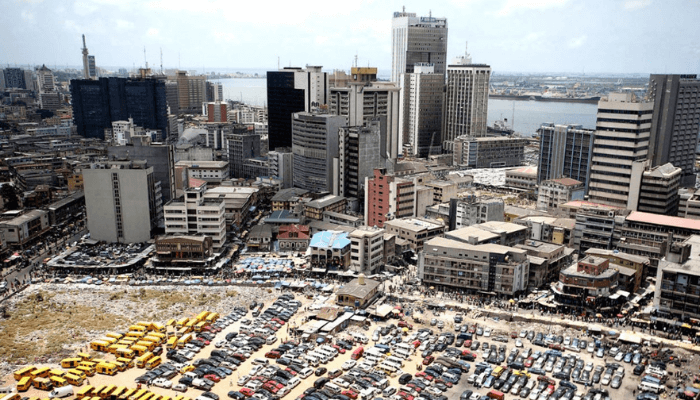
Every child born today receives exactly the same inheritance. Twenty-four hours per day. It is the only resource distributed with perfect equality. Presidents receive no more of it than plebeians. Nations are not allocated additional hours. Governments cannot borrow tomorrow’s time to compensate for today’s waste. Central banks cannot print new minutes. Time remains the world’s fairest currency.
- +The price of time: The most expensive thing Nigeria produces is delay
Yet by the end of every decade, some societies have transformed those same hours into prosperity, while others have converted them into unrealised ambitions.
Yet by the end of every decade, some societies have transformed those same hours into prosperity, while others have converted them into unrealised ambitions. This is one of the great paradoxes of development. Every nation begins Monday morning with the same twenty-four hours. By Friday evening, however, some have expanded economic opportunity while others have simply accumulated another week of delay.
Economists have traditionally explained prosperity through familiar variables: capital, trade and natural resources. Yet beneath them all lies another factor that receives remarkably little attention.
Not how much time a nation possesses, but how effectively it converts time into progress.
Human progress has never simply been about the accumulation of wealth, but the relentless compression of time. The wheel reduced the time required to move people and goods. The steam engine collapsed distances that had constrained commerce for centuries. Electricity extended productive hours beyond sunset. The internet compressed the distance between information and knowledge. Artificial intelligence is beginning to compress the distance between questions and answers.
Every great technological revolution has pursued the same objective, whether consciously or not: reducing the distance between intention and outcome. Civilisation, viewed through this lens, is little more than humanity’s long struggle against delay.
And that observation carries an implication far beyond technology itself. If progress depends upon reducing delay, then delay is one of the most expensive commodities any society can produce.
That is precisely Nigeria’s story.
When investors evaluate a country, they certainly examine inflation, exchange rates, taxation and political stability. But they also ask quieter questions. How quickly are contracts enforced? How predictable is customs clearance? How reliably are government decisions implemented? In other words, they are measuring not simply the cost of doing business, but the cost of waiting.
A manufacturer whose machinery remains trapped in a congested port does not merely lose days. Production schedules are disrupted. Customer orders are delayed. Workers remain underutilised.
Borrowing costs continue to accumulate. One delay triggers another until an entire chain of economic activity slows.
The same principle applies across every sector of society. A patient waiting months for a diagnosis does not merely lose time; the cost of treatment often rises as the illness progresses. A commercial dispute that remains in the courts for years does not simply inconvenience the parties involved; it discourages future investment because uncertainty itself becomes a business risk.
Delay does not merely postpone prosperity. It permanently diminishes it.
This is because economies do not grow in isolated events; they grow through compounding. Every productive activity creates opportunities for the next. A completed factory generates employment.
Employment generates household income. Household income stimulates consumption. Prosperity compounds because progress compounds. Delay interrupts that compounding process.
Financial markets understand this better than anyone. Investors routinely speak of the time value of money – the principle that one naira available today is worth more than the same amount received years later, because today’s capital can be invested and compounded. Yet nations seldom apply the same reasoning to public administration. Governments discuss budgets, projects and reforms in terms of financial cost, while paying remarkably little attention to the cost of the time consumed in delivering them.
Perhaps we should. For if money compounds, then so does time. Every unnecessary month consumed by bureaucracy, indecision or fragmented execution destroys value that can never be recreated. The true cost of delay is therefore measured in opportunities that disappear before they ever have the chance to exist.
The world’s most successful economies have understood this lesson. Their greatest competitive advantage is often not lower taxes or cheaper labour, but their extraordinary ability to shorten the distance between decision and delivery. Their advantage is that they have systematically removed delay from the machinery of national life.
Consider Estonia. Over the past two decades, it has transformed itself into one of the world’s leading digital societies by redesigning government around a deceptively simple principle: citizens should spend as little time as possible interacting with bureaucracy. Today, businesses can be established online in minutes, taxes are filed electronically, public records are digitally integrated, and government services are accessed almost instantly. Estonia did not simply digitise paperwork; it redesigned the relationship between citizens and the state around the value of time.
The same philosophy underpins Germany’s manufacturing strength. It is visible in Japan’s railways, where delays are measured in seconds rather than hours. It explains why South Korea can coordinate highly sophisticated industrial supply chains across thousands of firms with remarkable precision. It lies behind Amazon’s relentless optimisation of fulfilment systems and global logistics networks, where reducing delivery time by even a few hours can generate enormous competitive advantage.
These examples appear unrelated. Yet they are expressions of the same organising principle. Prosperous societies are rarely distinguished by speed for its own sake. They are distinguished by predictability. Decisions occur when expected. That confidence is itself an economic resource.
Businesses invest more readily where uncertainty is low. Banks lend more confidently where legal processes are dependable. Manufacturers hold smaller inventories when logistics systems function predictably. Entire economies become more productive not because people work harder, but because institutions waste less of everyone’s time.
The world’s highest-performing economies have not discovered how to manufacture more hours than anyone else. They have simply become exceptionally good at wasting fewer of them.