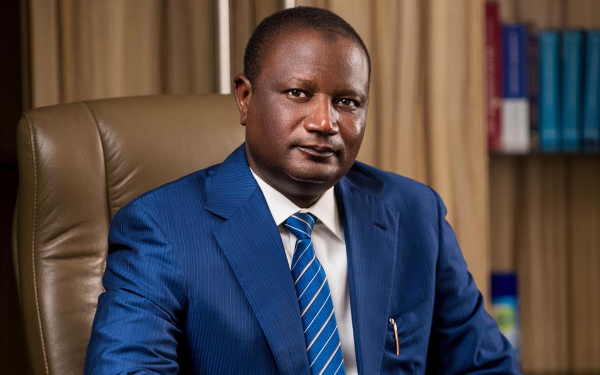
An English court has thrown a worldwide legal net over the assets of one of Nigeria’s most prominent oil traders, freezing his holdings across at least four countries after he failed to satisfy a $40 million judgment debt and allegedly threatened to spirit away his wealth rather than pay what he owes.
- +Nigerian oil trader faces global asset freeze after $40m debt default
- +“Will Not Pay, Rather Than Cannot Pay”
The High Court in London granted a worldwide freezing order on March 30 against Abdulrahman Musa Bashar, the chairman of the Rahamaniyya Group, and his UAE-registered trading vehicle, Ultimate Oil and Gas FZCO, following what the court described as a pattern of evasion, incomplete disclosure, and deliberate asset movement designed to place his fortune beyond the reach of creditors.
The High Court in London granted a worldwide freezing order on March 30 against Abdulrahman Musa Bashar, the chairman of the Rahamaniyya Group, and his UAE-registered trading vehicle, Ultimate Oil and Gas FZCO, following what the court described as a pattern of evasion, incomplete disclosure, and deliberate asset movement designed to place his fortune beyond the reach of creditors.
The order, one of the most powerful remedies available under English law, bars Bashar and his company from disposing of or dealing with any assets anywhere on the globe up to the value of the outstanding debt.
His disclosed holdings, spanning the United Arab Emirates, Nigeria, the United Kingdom, and France, were valued at close to $170 million as of the date the order was made.
The dispute has its roots in a series of oil trading deals struck between 2022 and 2023. Petrichor Energy FZCO, a Dubai-based commodity trading house, entered into spot and term contracts with Ultimate Oil and Gas for the supply of gasoil and Jet-A1 aviation fuel.
According to court documents, Ultimate received the cargoes but repeatedly failed to make full and timely payment, leaving Petrichor out of pocket and forcing the company to pursue recovery through simultaneous court and arbitration proceedings.
Seeking to draw a line under the dispute, Bashar signed a personal payment agreement in January 2024, backing it with a personal guarantee that made him individually liable for Ultimate’s debts if the company failed to pay.
He also handed over nine signed, undated cheques as additional security. Both instruments would prove worthless in practice. Ultimate never fully settled the debt, and when Petrichor presented the cheques, Bashar’s bank rejected every one of them.
By February 2025, the English court had entered judgment against both Bashar and Ultimate. Approximately $40 million remains outstanding.
“Will Not Pay, Rather Than Cannot Pay”
As Petrichor pushed toward enforcement, it found its path blocked at every turn, and the manner in which it was blocked alarmed the court.
Judges reviewing the application for a freezing order found that Bashar had sold multiple UAE properties worth roughly $3.8 million shortly after the English judgment was handed down, without directing any of those proceeds toward the debt.
More damaging still was testimony about a phone call on March 15 this year. According to evidence accepted by the court, Bashar told Petrichor’s managing director that if the creditor refused yet another revised repayment proposal, he would “dispose of” his assets to make enforcement harder. The court treated that threat as direct evidence of a risk that assets would be dissipated.
The picture was further complicated by questions over what Bashar had actually disclosed. Evidence before the court indicated that Nigerian assets, including petrol stations and a residential property reportedly worth more than $21 million, had not been included in earlier asset declarations.
The omission deepened concerns that the trader was concealing the full scope of his wealth. Presiding over the application, the judge concluded that this appeared to be a case of someone who “will not pay, rather than cannot pay.”
Bashar’s current predicament is not his first brush with the English courts. In February 2020, Justice Butcher of the England and Wales High Court sentenced him to ten months in prison for disobeying multiple court orders in a separate case brought by Sahara Energy Resources, after Rahamaniyya Oil and Gas failed to supply over 6,400 metric tonnes of gas under an existing agreement.
The pattern repeated itself in the Gulf. In January 2025, a Dubai court convicted him in absentia of issuing seven cheques totalling 126.45 million dirhams from an Emirates Islamic Bank account with deliberate signature mismatches that rendered them invalid, sentencing him to one year in prison. That conviction arose from a separate dispute with CI Energy Company, an oil and gas firm with no connection to the Petrichor matter.
Chris Williamson, partner at Watson Farley & Williams LLP, an international law firm with extensive experience in the energy sector in the region, said: “Selling on an open credit basis does mean that they are transacting completely on trust that they will be paid.
“Retaining control over the products that you own and have shipped to a destination market is important,” he added. If the facilities involved in the storage may be connected to the contracting parties, this can “amplify that risk”, Williamson added.
One other legal source, not involved in this case, claimed that third-party risk is higher when delivering into storage facilities that, rather than operating independently, may be linked to the same players buying the product.
With the freezing order now in place, Petrichor has moved swiftly to convert English court papers into hard recoveries. In addition to the London proceedings, the company has launched recognition and enforcement actions before the Dubai International Financial Centre Courts and in Nigerian courts, creating a three-jurisdiction enforcement grid intended to shut off any avenue through which Bashar might transfer or hide assets.
The English court added a further dimension to the pressure campaign on April 17, granting an injunction directing two of Bashar’s Nigerian affiliates, Rahamaniyya Oil and Gas Ltd and Zamson Global Resources Ltd, to allow Petrichor’s representatives access to a storage depot in Koko, Delta State, to lift gasoil cargoes supplied to Ultimate for which no payment was ever received.
Non-compliance with that order, the court warned, could expose Bashar himself to contempt proceedings and potential criminal liability as the controlling mind of both companies.
Bashar and Ultimate have challenged the freezing order and sought to have it set aside, but every such attempt has failed. The order remains in full effect.