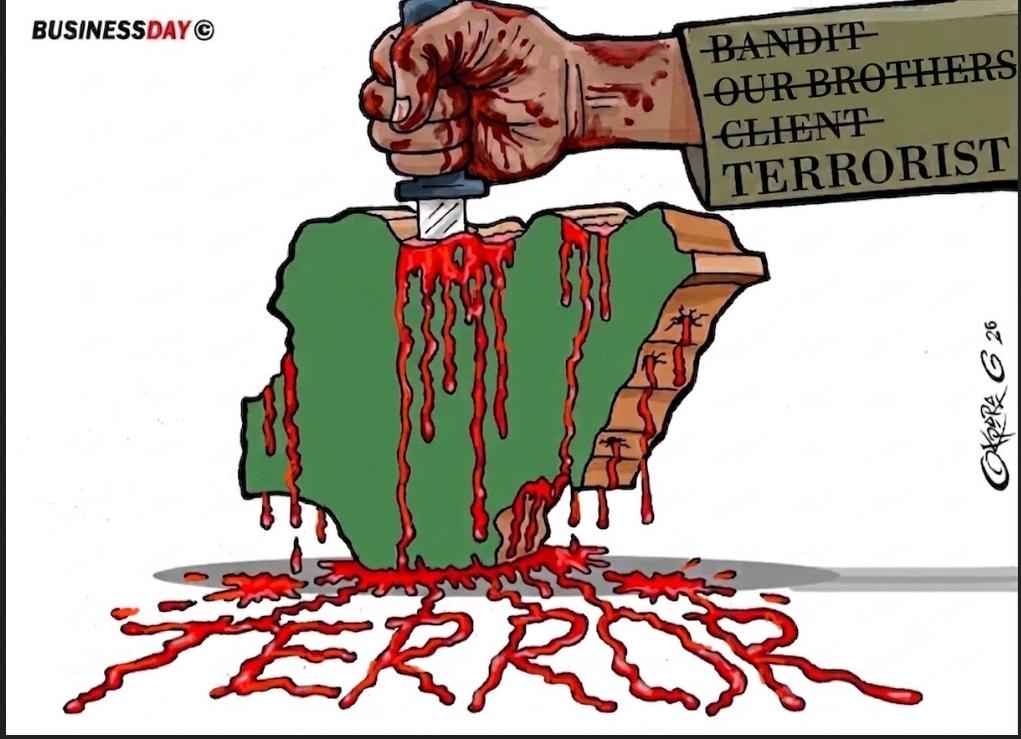
With less than seven months to Nigeria’s 2027 general elections, a multi-layer security crisis is rapidly escalating across the country and is emerging as one of the biggest threats to the polls, placing enormous pressure on security agencies and the Independent National Electoral Commission, INEC, to deliver a credible electoral process.
- +Rising insecurity casts shadow over 2027 elections
From the insurgency-ravaged North-East to bandit-infested communities in the North-West and deadly attacks in parts of the North-Central, kidnappings and abductions in the South-West and other parts of the country, concerns are mounting that continued violence could affect voter participation, electoral logistics, campaigns and the overall integrity of the elections.
From the insurgency-ravaged North-East to bandit-infested communities in the North-West and deadly attacks in parts of the North-Central, kidnappings and abductions in the South-West and other parts of the country, concerns are mounting that continued violence could affect voter participation, electoral logistics, campaigns and the overall integrity of the elections.
Security analysts warn that unless urgent measures are taken to contain the crisis, some communities may be effectively shut out of the democratic process. This has effectively placed a heavy burden on the military, police, forest guards, Department of State Services, DSS, Nigeria Security and Civil Defence Corps, NSCDC, and other security agencies in the country.
INEC has fixed August 19, 2026, for the commencement of campaigns for the presidential and National Assembly elections, while campaigns for governorship and state Houses of Assembly elections will begin on September 9, 2026.
Under the revised timetable, the commission scheduled the presidential and National Assembly elections for January 16, 2027, while the governorship and state Houses of Assembly elections will hold on February 6, 2027.
However, security forces are facing one of their toughest tests ahead of the polls. In Borno, Yobe and Adamawa states, Boko Haram and ISWAP fighters continue to attack communities, military formations and critical infrastructure, leaving scores dead and thousands displaced.
In the North-West, particularly Zamfara, Katsina, Kebbi and Kaduna states, bandits have maintained a reign of terror through mass abductions, killings and the imposition of illegal taxes on local communities.
The situation is equally troubling in Benue, Plateau, Niger and parts of Kwara states, where recurring attacks have displaced thousands of residents. In the South-West, rising cases of kidnapping and the recent abduction of schoolchildren have further heightened concerns about public safety ahead of the elections.
Adding a political dimension to the debate, President Bola Tinubu recently alleged that some individuals he called enemies were exploiting insecurity as part of efforts to undermine his administration and force him out of office.
Bello Matawalle, minister of State for Defence, also acknowledged the gravity of the security challenge, saying “Only God can bring a complete end to insecurity, alongside our collective prayers, support and determination.”
Speaking during a recent interview with BBC Hausa, Matawalle urged Nigerians not to politicise insecurity, describing it as a national challenge requiring collective action.
Kabiru Adamu, a security management and intelligence expert, however, argued that politicians bear part of the responsibility for the country’s worsening security situation.
According to him, some political actors have either directly or indirectly encouraged armed groups for political purposes, creating conditions that have strengthened criminal networks across the country.
Joash Amupitan, chairman of INEC, has warned that insecurity poses a significant threat to the conduct of free and fair elections.
During a recent engagement with the Inspector-General of Police, Tunji Disu, in Abuja, Amupitan stressed the need for comprehensive security planning ahead of the 2027 polls.
“The scale of insecurity across various parts of Nigeria presents a threat to the conduct of fair elections. It is essential that we carry out total security risk analysis ahead of the election,” he said.
Jackson Ojo, a security expert and member of the International Security Association, Switzerland, told BusinessDay that improved intelligence gathering and stronger collaboration among security agencies would be critical to ensuring elections hold in every part of the country.
Data from the Nigeria Watch project paints a grim picture, indicating that between 2006 and 2025, no fewer than 222,137 Nigerians lost their lives in 46,182 violent incidents nationwide.
Despite the deteriorating security environment, opposition parties have firmly rejected calls for postponement of the elections, while Nentawe Yilwatda, the ruling All Progressives Congress (APC) National Chairman, said the party is ready for the polls.
Officials of the African Democratic Congress (ADC), Peoples Democratic Party (PDP), Labour Party (LP), New Nigeria Peoples Party (NNPP) and Allied Peoples Movement (APM) all rejected suggestions that the polls should be delayed because of terrorist attacks, banditry and kidnappings.
Bolaji Abdullahi, the ADC National Publicity Secretary, said in an interview that while insecurity could affect voting in some communities, postponing the election would not improve the situation.
Ini Ememobong, PDP factional National Publicity Secretary, also said insecurity should be addressed rather than used as an excuse to delay democratic processes.
Similarly, Obiora Ifoh, the LP National Publicity Secretary; Dipo Olayokun, NNPP National Secretary; and Yusuf Dantalle, the APM National Chairman, all insisted that the 2027 elections should proceed as scheduled, but warned that the security agencies and the government must put an end to the crisis.
Their position reflects a growing consensus that while insecurity remains a serious threat, postponing the polls would amount to surrendering Nigeria’s democratic process to criminal elements.