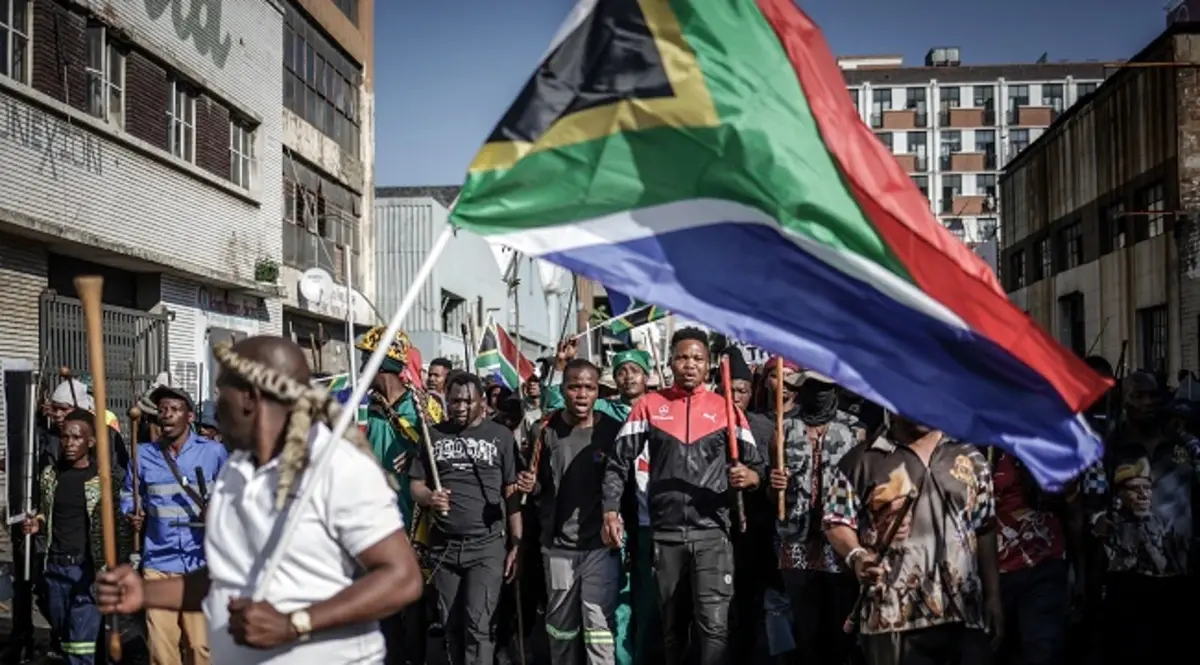
Nigeria rebukes South Africa over 30-year pattern of xenophobic attacks, demands action
Nigeria has issued a sharp diplomatic rebuke to South Africa over recurring attacks against its citizens, telling Pretoria directly that the violence has followed a documented pattern spanning three decades.
Nigeria has issued a sharp diplomatic rebuke to South Africa over recurring attacks against its citizens, telling Pretoria directly that the violence has followed a documented pattern spanning three decades.
Nigeria’s Minister of State for Foreign Affairs, Ambassador Sola Enikanolaiye, delivered the message on Monday during a meeting in Abuja with South Africa’s Minister of International Relations and Cooperation, Ronald Lamola.
The meeting, directed by President Bola Tinubu, came as the total number of Nigerians evacuated from South Africa since the latest wave of attacks reached approximately 1,500.
Enikanolaiye laid out a detailed historical record of anti-immigrant violence in South Africa, framing the current attacks not as isolated incidents but as part of a recurring pattern.
He pushed back directly against South Africa’s framing of the violence as a response to immigrant criminality.
Enikanolaiye raised the issue of state complicity directly, saying that police have been observed watching without intervening.
The minister’s response follows Lamola’s defence of Pretoria’s handling of the crisis at the meeting.
South Africa’s delegation cited “criminality” from immigrants, including drug peddling and wire fraud, as context for the anti-immigrant sentiment driving the protests.
President Tinubu, earlier this month, joined the call against xenophobic attacks on Nigerians and other foreigners in South Africa, urging African leaders to lead a united response.
It would be recalled that in the wake of widespread outrage against xenophobic attacks against foreigners in South Africa, the country itself admitted feeling the heat from all the outbursts.
Minister of Justice and Constitutional Development, Mmamoloko Kubayi, acknowledged that South Africa’s ongoing anti-migrant crisis is beginning to have economic repercussions beyond its borders.
Kubayi even disclosed that some South African artists have lost performance bookings in other African countries as a direct consequence of the international backlash over the crisis.
The xenophobic crisis in South Africa has irked many prominent including Air Peace CEO, Allen Onyema.
The Air Peace boss called on Nigerians to halt investments in South Africa and boycott the country as a response.
Onyema advocated economic measures against South Africa, while stressing that retaliation should not involve violence or actions that could harm South African businesses operating in Nigeria.