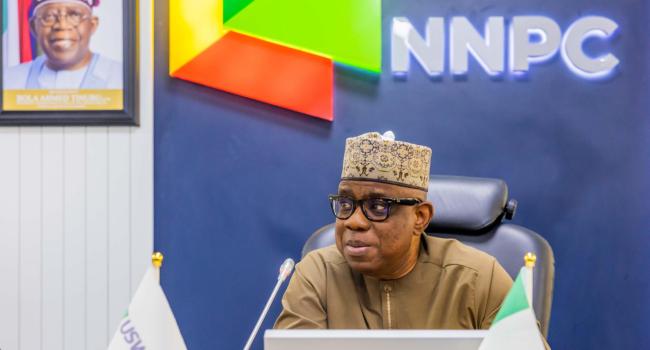
Nigeria’s state oil company has inked a memorandum of understanding with two Chinese industrial firms to revive two government-owned refineries that have collectively consumed more than $2.4 billion in public funds without producing a meaningful drop in refined fuel output.
- +NNPC signs China deal to revive state refineries that swallowed $2.4bn
The move is the most concrete step yet by the Nigerian National Petroleum Company Limited to turn those ghost assets into working infrastructure, and it signals a broader strategic pivot toward Chinese industrial capital in a sector that has embarrassed successive administrations for decades.
The move is the most concrete step yet by the Nigerian National Petroleum Company Limited to turn those ghost assets into working infrastructure, and it signals a broader strategic pivot toward Chinese industrial capital in a sector that has embarrassed successive administrations for decades.
The agreement, signed in Jiaxing City on China’s eastern seaboard, ties NNPC to Sanjiang Chemical Company Limited and Xinganchen (Fuzhou) Industrial Park Operation and Management Co. Ltd under a framework that the company describes as a potential Technical Equity Partnership, or TEP.
NNPC Group Chief Executive Bashir Bayo Ojulari, Sanjiang Chairman Guan Jianzhong, and Xinganchen Chairman Bill Bi executed the three-way accord.
The refineries in question, at Port Harcourt in Rivers State and Warri in Delta State, were once the backbone of Nigeria’s domestic fuel supply.
Together, they carry a combined nameplate capacity that, if fully operational, would meaningfully reduce the country’s dependence on imported refined products that have drained foreign reserves and kept pump prices volatile.
Instead, they have sat largely dormant for years, their rehabilitation contracts cycling through a series of contractors and budget lines without yielding results.
“All parties recognise mutually beneficial opportunities for the development and long-term sustainable profitability of NNPC’s refining assets in Nigeria, and the collective weight required for success,” said Bashir Bayo Ojulari, Group CEO, NNPC Ltd
Under the terms outlined Monday, the partnership would cover completion of outstanding construction and engineering work at both sites, followed by ongoing operation and maintenance aimed at what NNPC called “best-in-class, sustainable performance.”
The framework also contemplates upgrades to push both facilities toward cleaner fuel standards and more profitable product slates, a tacit acknowledgement that Nigeria’s refining infrastructure has lagged behind regional and global regulatory trends.
Perhaps the most commercially ambitious element of the arrangement is its downstream ambitions.
NNPC said the potential collaboration extends to expanding petrochemical capacities at both sites and developing co-located, gas-based industrial hubs, an industrial clustering model that China has deployed successfully in its own special economic zones and that Nigeria has struggled to replicate.
The Jiaxing signing location was itself symbolic: the city sits at the heart of China’s Yangtze River Delta industrial corridor, home to chemical and materials manufacturers of the precise type NNPC now hopes to transplant to the Niger Delta.
Ojulari, who took the helm of the state oil company last year and has moved quickly to restructure its refining strategy following the bruising failure of previous rehabilitation attempts, framed the MoU as the product of sustained bilateral effort rather than a rushed diplomatic gesture.
More than six months of technical and management-level engagement preceded the formal signing, he said, suggesting the parties have already worked through at least the preliminary engineering and commercial questions that have derailed earlier partnerships.
Still, the agreement carries the hedged language familiar to anyone who has tracked Nigeria’s long history of refinery announcements.
NNPC described the MoU as reflecting “shared intent to progress discussions in good faith,” with any binding and definitive arrangements to follow only after further negotiation and regulatory approvals.
In a sector where letters of intent and framework agreements have a poor record of converting into operational outcomes, market observers will be watching for concrete milestones: equipment mobilisation, equity term sheets, and actual commissioning schedules.
The backdrop to the deal is a Nigerian refining landscape under acute pressure from multiple directions. The Dangote Refinery in Lagos, Africa’s largest, with a nameplate capacity of 650,000 barrels per day, has begun reshaping domestic fuel economics, squeezing the commercial logic for any state-owned plant that cannot compete on cost or product quality.