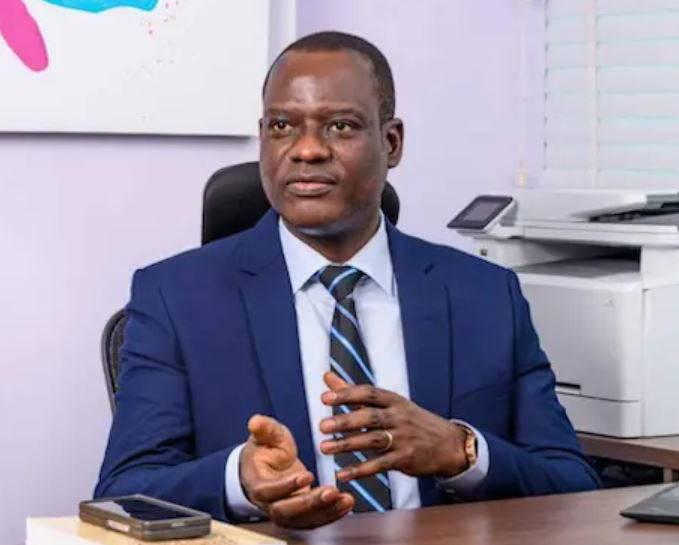
The Presidential Fiscal Policy and Tax Reforms Committee has denied reports that Minister of State for Finance, Taiwo Oyedele, admitted errors in Nigeria’s new tax laws, describing such claims as misleading.
- +Tax Reform Committee denies Oyedele admitted errors in new tax laws
The clarification was issued by the Presidential Fiscal Policy and Tax Reforms Committee in a statement shared on Oyedele’s X account, pushing back against what it called a misrepresentation of his remarks.
The clarification was issued by the Presidential Fiscal Policy and Tax Reforms Committee in a statement shared on Oyedele’s X account, pushing back against what it called a misrepresentation of his remarks.
On April 11, reports had suggested that Oyedele acknowledged errors in the new tax framework and indicated that a finance bill would be used to address them, an interpretation the Committee says distorts his actual position.
However, in their earlier statement, the Committee admitted that the discrepancies were “due to the law-making process,” adding that “Oyedele acknowledged that errors occurred due to manual processes and multiple stages of review.”
The Committee said the reports wrongly framed the Minister’s comments as an admission of faults in the tax laws.
It added that some publications falsely suggested that Oyedele asked Nigerians to wait for a legislative probe, stressing that such a process had already been concluded.
The Committee further warned that such interpretations risk confusing the public and undermining the intent of the reforms, noting that the narrative was “unhelpful” and misleading.
Oyedele, who also chairs the Presidential Fiscal Policy and Tax Reforms Committee, spoke at the 2026 Annual Conference of the Nigerian Bar Association Section on Legal Practice, where he outlined the rationale behind the reforms.
He explained that the changes were designed to correct structural inefficiencies in Nigeria’s tax system, particularly disparities in how individuals and companies are taxed.
While acknowledging that continuous improvements are part of any reform process, the Committee maintained that this should not be interpreted as an admission of errors in the laws themselves.
During a fireside chat at the conference in Lagos, Oyedele highlighted early indicators of success from the reforms, including a surge in tax registration and business formalisation.
According to the Committee, thousands of informal businesses are now seeking registration daily, while the number of individuals captured in the tax net has risen from fewer than 10 million to over 100 million.
It attributed these gains to features such as exemptions for small companies, higher thresholds for low-income earners, and tax relief on essential goods and services like food, healthcare, education, transportation, and rent.
The reforms also introduced a Tax Ombud to protect taxpayer rights.
The Committee emphasised that stakeholder engagement remains ongoing to refine implementation where necessary, noting that legislative updates through finance bills are part of a standard continuous improvement process, not evidence of fundamental flaws.
In June 2025, President Bola Ahmed Tinubu signed four major tax reform laws aimed at boosting revenue mobilisation and reducing reliance on oil earnings.
In March 2026, the Federal Government introduced presumptive tax rules targeting Micro, Small, and Medium Enterprises (MSMEs) to expand the tax base.
This is not the first time controversy has trailed the reforms. In December 2025, Abdulsammad Dasuki raised concerns over discrepancies between the gazetted versions of the tax Ottawa and those passed by the National Assembly.